A species
Portuguese man o' war
Physalia physalis
Not one jellyfish, but a whole colony afloat
You and the portuguese man o' war meet in the Animals branch, shown at about 700 million years ago (on 1 November, in a calendar from life's shared ancestor to today).
The Portuguese man o’ war is not a single jellyfish. It is a colony of specialised individuals called zooids, all with the same genetic make-up. They stay connected and depend on one another: none can live alone. It belongs to the same broad animal group as freshwater hydras. Moon jellyfish and corals sit on other branches of their wider family.
The colony divides up the essential jobs. Some parts keep it afloat, others catch prey, others digest food, and others handle reproduction. What looks like one animal is a team whose members do different work.
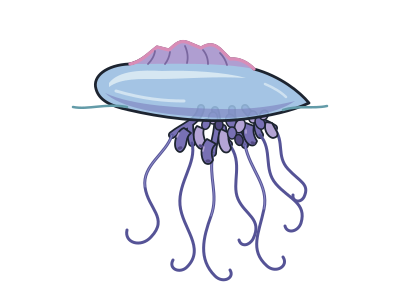
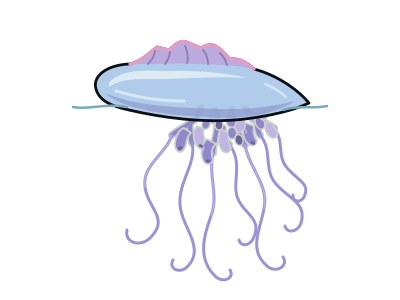
Its translucent purple float sits at the sea’s surface, while long bluish-violet tentacles trail below. A raised crest catches the wind like a sail. Unlike a swimming jellyfish, the colony cannot swim: winds and currents carry it along. That floating life can also bring it ashore. Even a dead colony or a detached tentacle can still sting, so washed-up specimens must not be touched.
A snail on a bubble raft
Violet sea snails eat man o’ wars. These snails float at the surface on rafts of bubbles.
Borrowed defences
Blue sea slugs called Glaucus eat man o’ wars and keep their stinging capsules for their own defence.
Named after a ship
Its common name comes from its supposed resemblance to an old sailing warship.
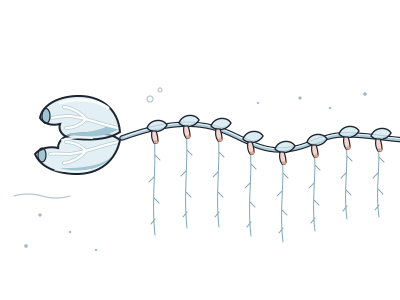
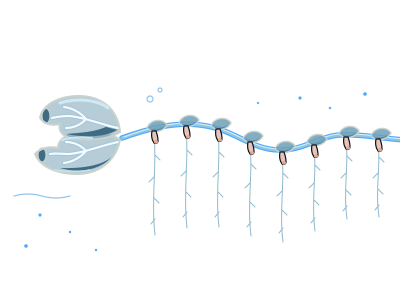
Next to it on the tree
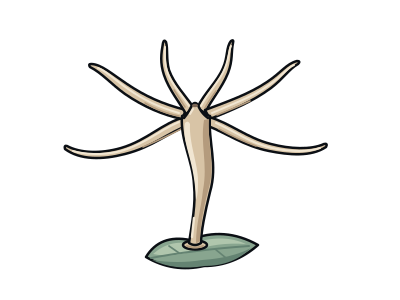
- Freshwater hydraA tiny freshwater polyp that can regrow its whole body from a small piece and barely seems to age.

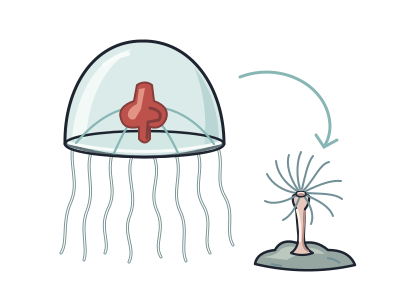
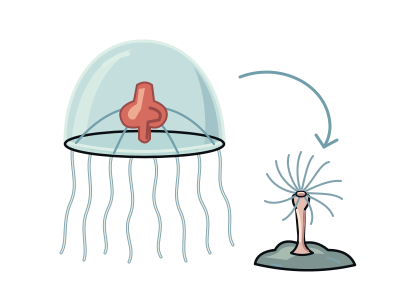
- Immortal jellyfishWhen injured or old, it can turn back into a baby polyp and start life again.
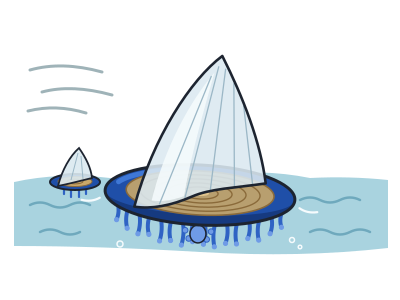
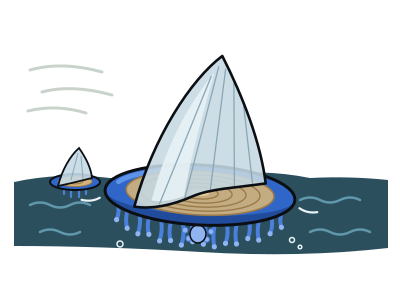
- By-the-wind sailorA blue raft with a stiff sail that drifts wherever the wind blows, sometimes washing ashore in millions.
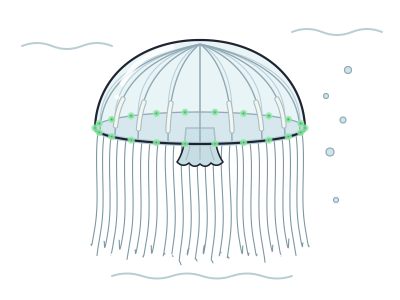
- Crystal jellyA clear jelly whose glowing green protein became a Nobel-winning tool for lighting up cells.
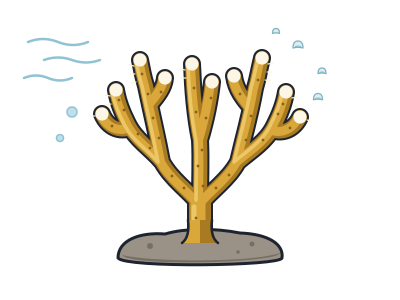
- Fire coralLooks like a coral and builds reefs, but is really a hydrozoan cousin of the man o' war.

- Giant siphonophoreA see-through string of linked individuals that can stretch as long as a blue whale.