A group of living things
Cypress family
Cupressaceae
From creeping junipers to the tallest tree on Earth, one conifer family grows on every continent but Antarctica.
This branch is shown at about 170 million years ago; its age is a rough estimate.
You and cypress family meet in the Eukaryotes branch, shown at about 1.8 billion years ago (on 28 July, in a calendar from life's shared ancestor to today).
A small, prickly juniper bush on a windy hill is related to the tallest tree on Earth. Both belong to the cypress family, which also includes cypresses, redwoods and giant sequoias. There are about 130 to 140 species, and they grow wild on every continent except Antarctica, from Arctic Norway all the way to southern Chile.
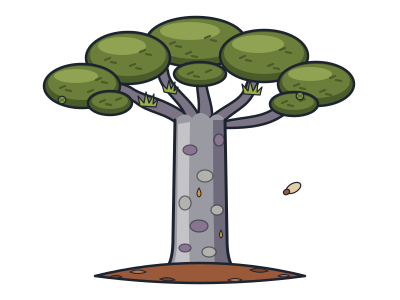
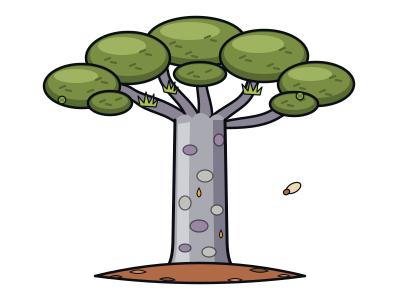
Sizes vary enormously. Common juniper can be a low shrub that spreads along the ground. A coast redwood in California called Hyperion is about 116 metres tall, which is roughly as tall as a 35-storey building. A giant sequoia called General Sherman is the biggest tree on Earth by volume. Its trunk alone weighs about as much as 15 blue whales.
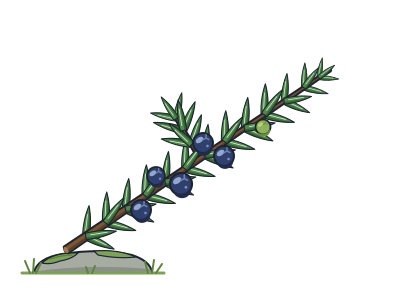
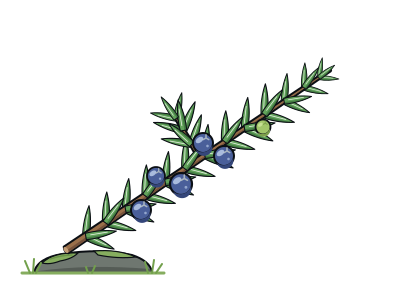
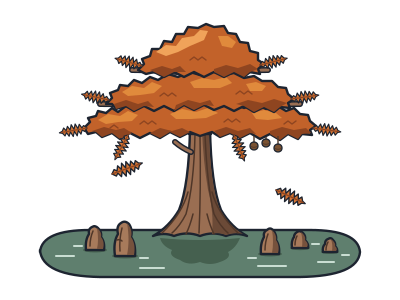
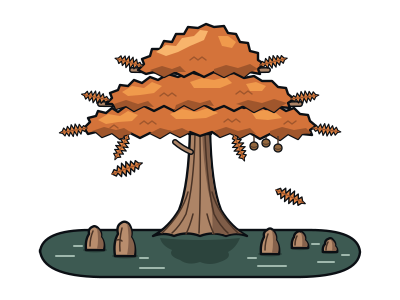
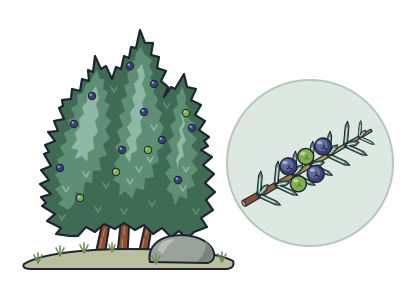
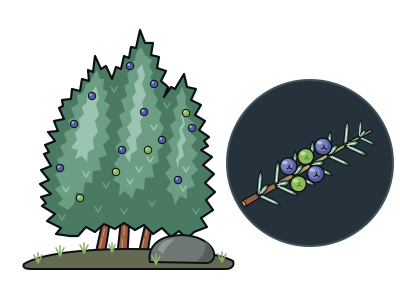
Young plants in this family usually have needle-like leaves, but many adults grow tiny leaves that overlap like scales. Most stay green all year. Bald cypress and dawn redwood are exceptions: they drop their needles every autumn. Common juniper's blue-black 'berries' are not really berries. They are soft seed cones that take about 18 months to ripen.
Redwoods and swamp cypresses were once put in a separate family. Studies of their DNA and their structure have since moved them into this one. The oldest fossil known for certain to belong to the family comes from Patagonia in Argentina and dates from the time of the early dinosaurs.
Where gin gets its name
Gin is flavoured with juniper seed cones. The word 'gin' traces back to an old French word for juniper.
The world's most widespread conifer
Common juniper grows naturally in more than 80 countries across Europe, Asia and North America. You can find it anywhere from sea level to more than 4,000 metres up mountains.
Champions of old age
Six of the ten longest-lived tree species belong to the cypress family.
Inside cypress family
- RedwoodsThree giant trees: the tallest, the most massive, and one known from fossils before it was found alive.
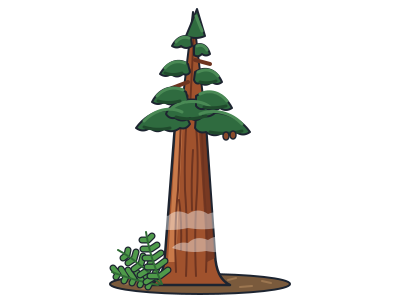
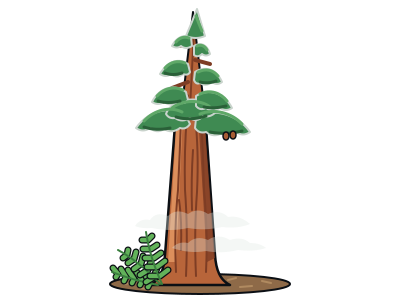
- Bald cypressA swamp conifer that drops its needles in autumn and pokes wooden knees out of the water.
- Common juniperGrows on more of the world than any other conifer; its blue cones flavour gin.
Next to it on the tree
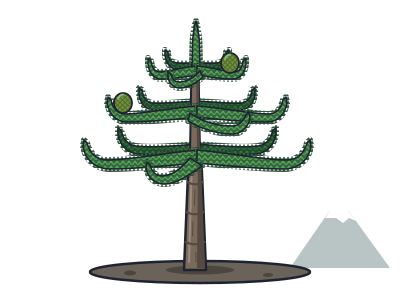
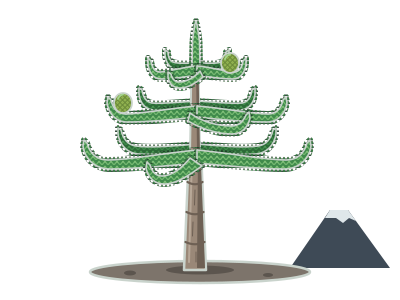
- Monkey puzzleSpiky branches covered in sharp scales; its family was already old when dinosaurs walked.
- Pine familyPines, spruces, firs and cedars: the conifers of northern forests.
- English yewAlmost every part is poisonous, yet it gave us a cancer drug; some trees are thousands of years old.
- Wollemi pineKnown only from fossils until 1994, when a few trees were found in an Australian canyon.
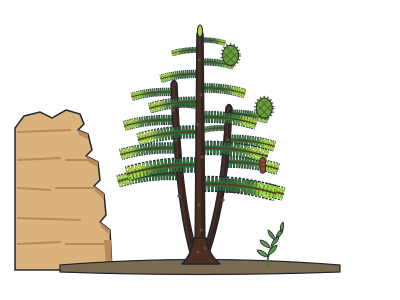
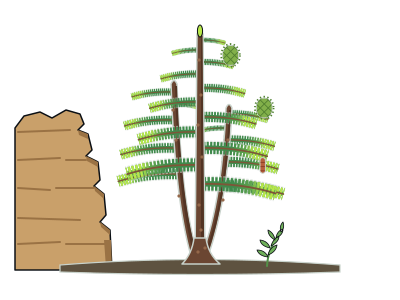
- KauriA giant New Zealand conifer; the biggest living one, Tāne Mahuta, may be 2,000 years old.