A species
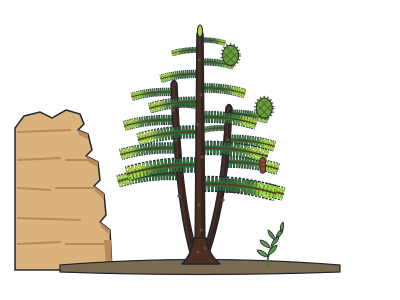
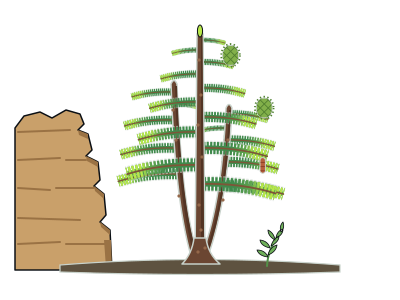
Wollemi pine
Wollemia nobilis
A tree known only from ancient fossils until 1994, when it turned up alive in a hidden Australian canyon.
You and the wollemi pine meet in the Eukaryotes branch, shown at about 1.8 billion years ago (on 28 July, in a calendar from life's shared ancestor to today).
Until 1994, trees like this one were known only from fossils. There were tiny grains of pollen in rocks more than 90 million years old, and fossil leaves that look almost the same. Scientists thought the group had died out. Then, in September 1994, a park officer named David Noble was exploring a deep canyon north-west of Sydney with two companions. He noticed some trees with strange bark.
The trees were so unusual that botanists had to give them a new genus, and they named the species after Noble. Its flat, narrow leaves made people first wonder if it was a fern. In fact it is a conifer. Despite its name, it is not a true pine. DNA shows its closest relatives are the kauri trees. Together, they are the sister group of the monkey puzzle and its kin.
Only about 100 or fewer adult trees grow in the wild. They grow in about four steep, damp sandstone gorges, and the exact places are kept secret. The species is listed as Critically Endangered. Wildfire is a big danger. So is a water mould that rots roots, found near the trees in 2005. As a backup, Wollemi pines are now grown in parks and gardens around the world, as far away as northern England.
Many trunks, one tree
Most wild Wollemi pines have several trunks, and some have more than 20. The tree keeps sprouting new stems from its base.
A giant instruction book
Its DNA is about 12 billion letters long. That is roughly four times as long as the DNA in a human.
Slow-ripening cones
Its female cones take about a year and a half to ripen. Then they fall apart and release seeds with wings.
Next to it on the tree
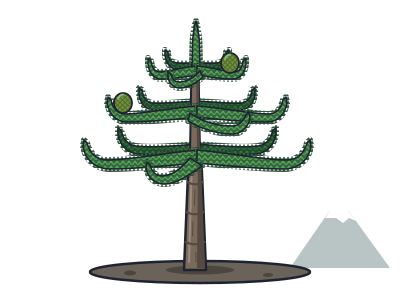
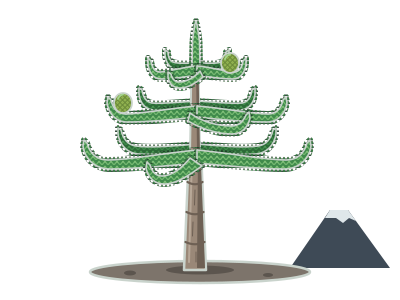
- Monkey puzzleSpiky branches covered in sharp scales; its family was already old when dinosaurs walked.
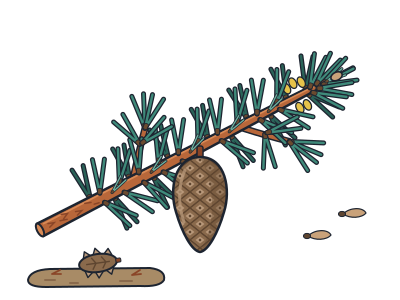
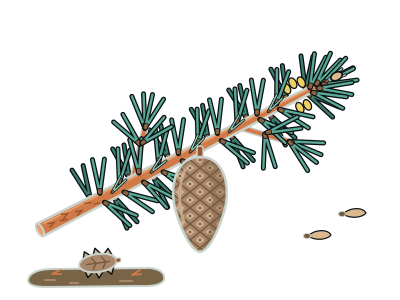
- Pine familyPines, spruces, firs and cedars: the conifers of northern forests.
- English yewAlmost every part is poisonous, yet it gave us a cancer drug; some trees are thousands of years old.
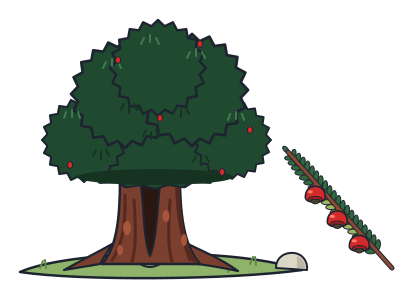
- KauriA giant New Zealand conifer; the biggest living one, Tāne Mahuta, may be 2,000 years old.
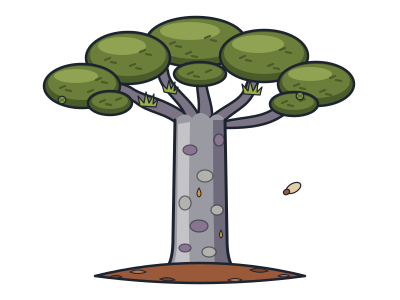
- Cypress familyJunipers, cypresses and redwoods: the conifer family found on every continent but Antarctica.