A species
English yew
Taxus baccata
A poisonous tree that helps fight cancer, and can live for thousands of years.
You and the english yew meet in the Eukaryotes branch, shown at about 1.8 billion years ago (on 28 July, in a calendar from life's shared ancestor to today).
Almost every part of the English yew is poisonous. Its needles, bark and seeds contain poisons that harm the heart. Only the sweet red flesh around each seed is not poisonous, and the seed inside it is still very poisonous.
Yet this dangerous tree helps save lives. Its needles contain a chemical that scientists turn into cancer drugs. Before, one of these drugs came from the bark of a relative, the Pacific yew, and stripping bark harmed those trees. Picking needles is kinder, because new needles grow back.
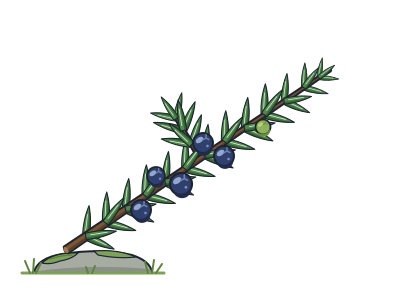
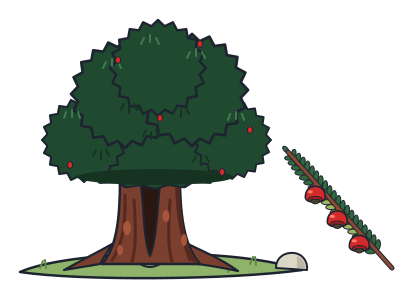
The yew is a conifer, so it is related to pines, redwoods and the monkey puzzle. That can be surprising, because it has no woody cones. Each red "berry" is really a tiny, much-changed seed cone holding just one seed. Birds such as thrushes eat the red flesh and pass the hard seeds out unharmed, which spreads them to new places.
Yews grow slowly and can live for a very long time. Some, like the Fortingall Yew in Scotland, are thought to be at least 2,000 years old. That means they may already have been growing in Roman times. Many old yews go hollow inside, so their rings cannot be counted and their true ages are hard to pin down.
A very old spear
A spear tip carved from yew wood about 400,000 years ago was found at Clacton-on-Sea in England. It is one of the oldest wooden tools known.
Bow wood
Yew wood was the classic material for medieval English longbows. The trade in yew for bows used up the good, mature trees across a huge part of Europe.
A branch that switched
The Fortingall Yew is a male tree, but in 2015 scientists noticed that one small branch had switched sex and started growing red berry-like arils.
Next to it on the tree
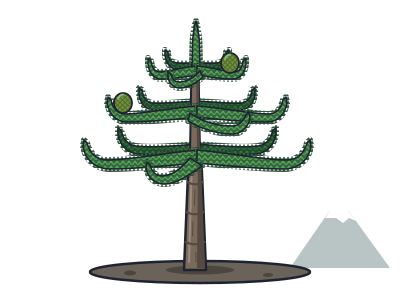
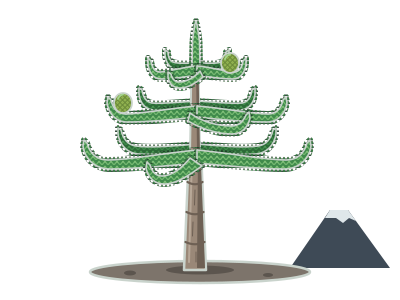
- Monkey puzzleSpiky branches covered in sharp scales; its family was already old when dinosaurs walked.
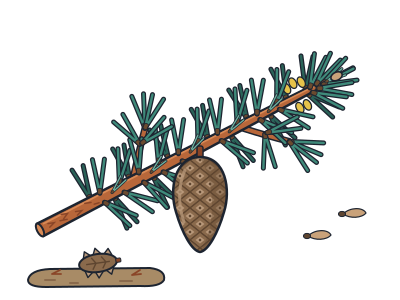
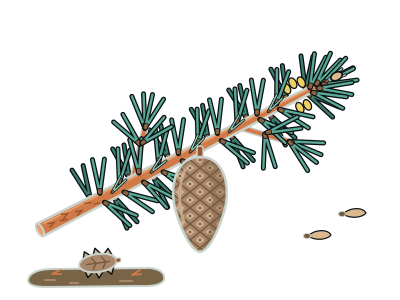
- Pine familyPines, spruces, firs and cedars: the conifers of northern forests.
- Wollemi pineKnown only from fossils until 1994, when a few trees were found in an Australian canyon.
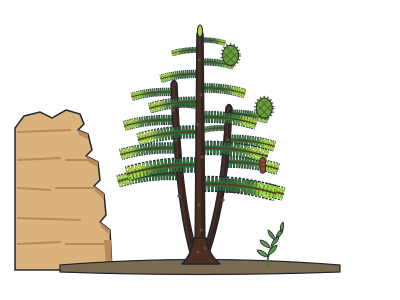
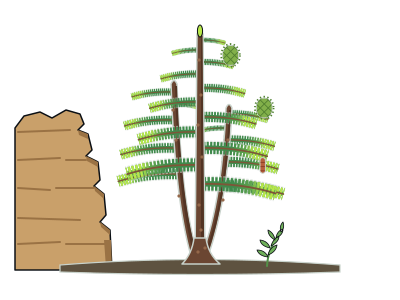
- KauriA giant New Zealand conifer; the biggest living one, Tāne Mahuta, may be 2,000 years old.
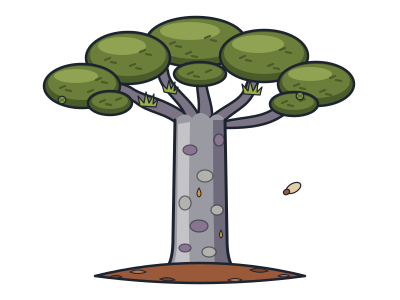
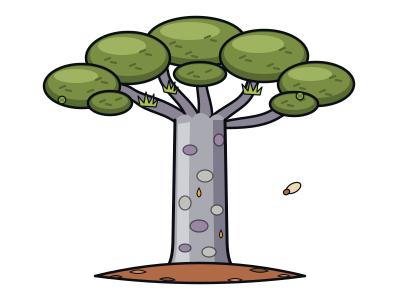
- Cypress familyJunipers, cypresses and redwoods: the conifer family found on every continent but Antarctica.