A species
Kauri
Agathis australis
A New Zealand giant that may have been growing for 2,000 years
You and the kauri meet in the Eukaryotes branch, shown at about 1.8 billion years ago (on 28 July, in a calendar from life's shared ancestor to today).
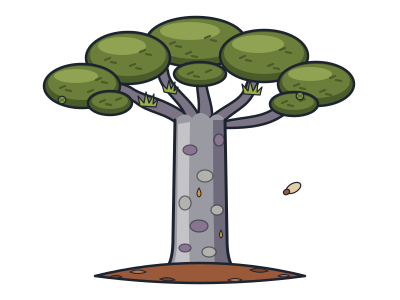
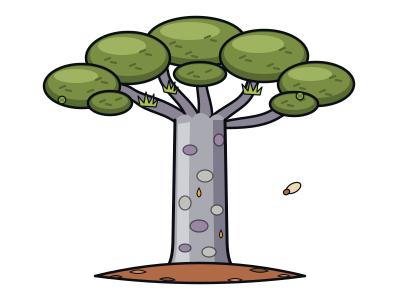
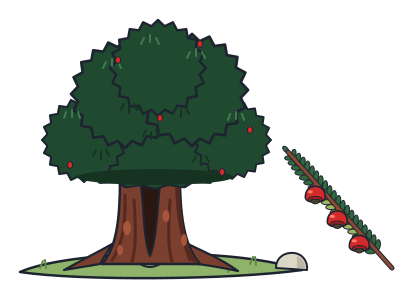
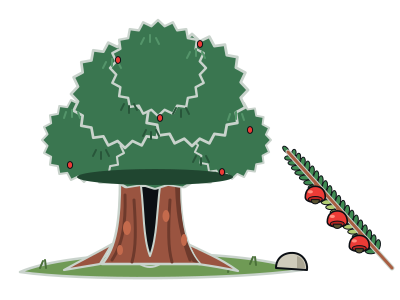
Deep in Waipoua Forest in northern New Zealand stands Tāne Mahuta, the biggest kauri alive. It is about 45 to 51 metres tall, roughly as long as four buses parked end to end. Its trunk is about 14 to 15 and a half metres around. Nobody knows its exact age. Estimates range from about 1,250 to 2,500 years, so it may well be around 2,000 years old.
Kauri is a conifer, but it is not a pine. Its leaves are flat, thick and leathery, not needles. Its closest relatives are the other kauri species. There are about 20 kinds in all, growing from Southeast Asia to Australia and the Pacific islands. Together they belong to a small family of conifers that also includes the Wollemi pine and the monkey puzzle tree. Most studies find that the Wollemi pine is the kauri group's closest relative in that family.
A kauri trunk looks like a giant pillar. It barely gets narrower as it goes up, and it often has no branches for the first 15 metres. The grey bark peels off in large flakes. Its round seed cones take about 18 to 20 months to ripen. Then they release seeds with papery wings that drift away on the wind.
Kauri forests once covered about 1.2 million hectares. Logging between about 1820 and 1920 cut most of them down, and only about 4% of the original untouched forest is left. Today kauri also face kauri dieback, a disease spread through the soil that has no cure.
Ancient logs in swamps
Old 'swamp kauri' logs can survive in waterlogged ground for tens of thousands of years. One tree from Ngāwhā in Northland lived about 42,000 years ago. The carbon in its rings recorded changes in the air while Earth's magnetic field was weakening.
Legs of a god
In Māori tradition, kauri trees are seen as the legs of Tāne, holding the sky apart from the earth. Kauri wood was used to make large waka (canoes).
Gum like amber
Sticky kauri gum hardens into golden-brown lumps that look like amber. People once dug it out of the ground or tapped living trees for it to make varnish.
Next to it on the tree
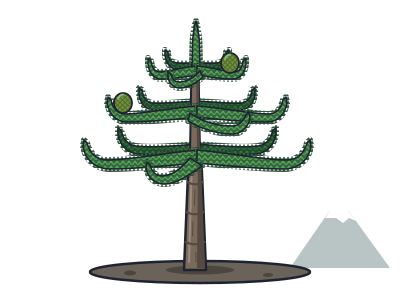
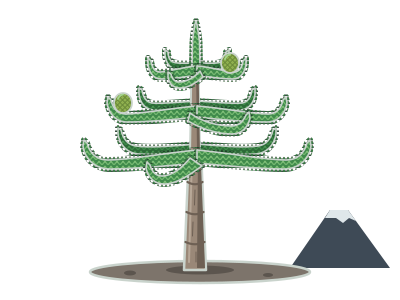
- Monkey puzzleSpiky branches covered in sharp scales; its family was already old when dinosaurs walked.
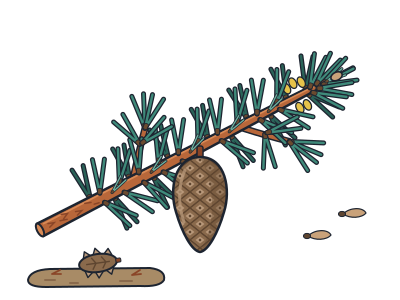
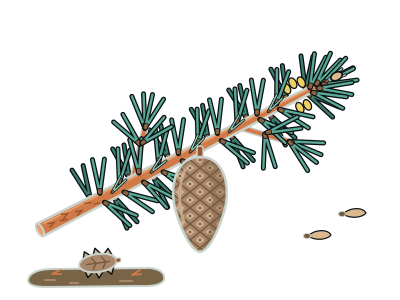
- Pine familyPines, spruces, firs and cedars: the conifers of northern forests.
- English yewAlmost every part is poisonous, yet it gave us a cancer drug; some trees are thousands of years old.
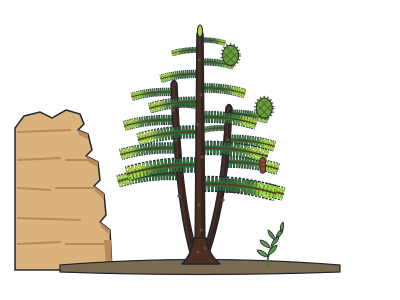
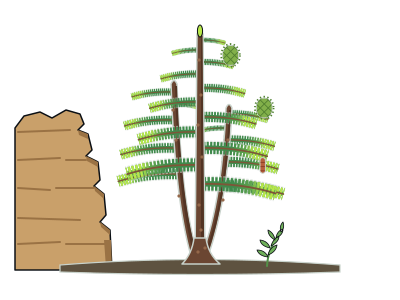
- Wollemi pineKnown only from fossils until 1994, when a few trees were found in an Australian canyon.
- Cypress familyJunipers, cypresses and redwoods: the conifer family found on every continent but Antarctica.