A group of living things
Redwoods
Sequoioideae
Three record-breaking trees: the tallest, the most massive, and one found as a fossil first
This branch is shown at about 70 million years ago; its age is a rough estimate.
You and redwoods meet in the Eukaryotes branch, shown at about 1.8 billion years ago (on 28 July, in a calendar from life's shared ancestor to today).
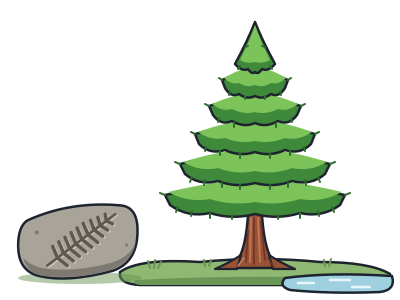
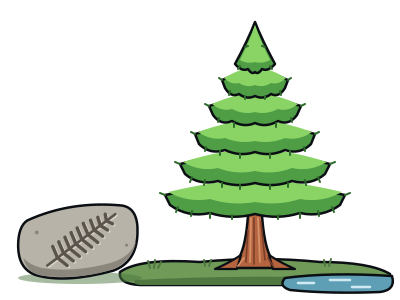
These three trees are close relatives, yet they could hardly look more different. Two are true giants of the American west coast. The third is a smaller tree from China that loses its needles and stands bare through winter. It holds a surprising record of its own.
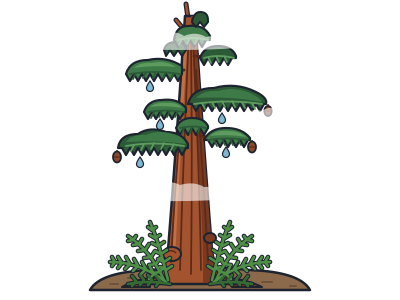
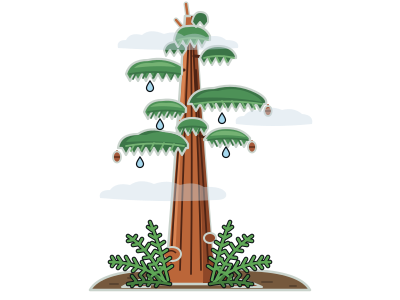
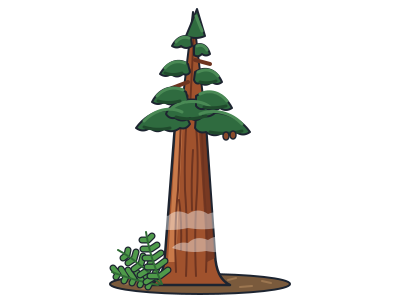
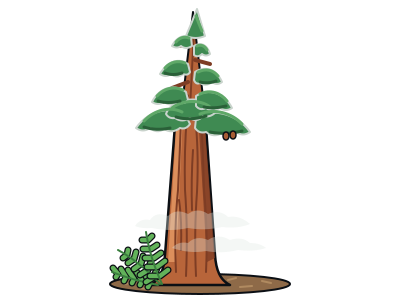
The coast redwood grows in a narrow, foggy strip along the coast of California and Oregon. Most grow about 60 to 100 metres tall, and the biggest can pass 112 metres, taller than a 35-storey building. The tallest known one is about 116 metres. They can live for about 2,000 years.
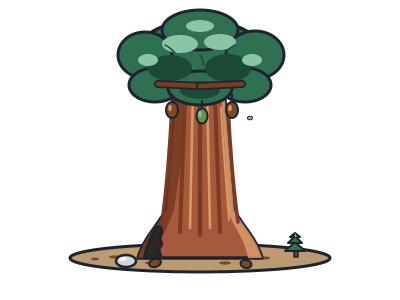
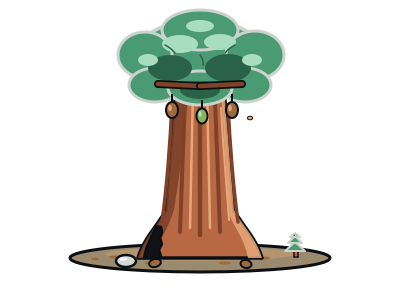
The giant sequoia is shorter but much bulkier. One giant sequoia, called General Sherman, is the largest tree in the world by volume. Its trunk alone weighs about 1,300 tonnes. That is about as much as 15 blue whales.
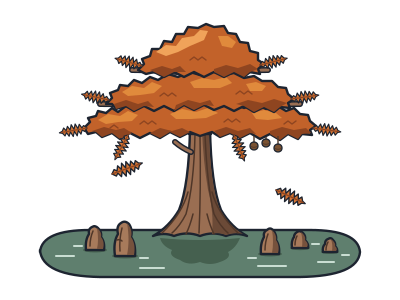
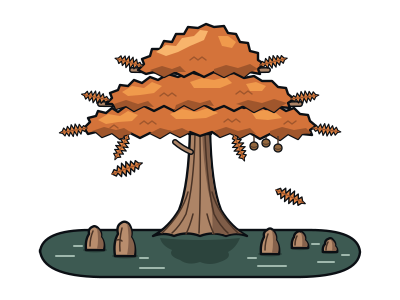
The dawn redwood is the surprise. In 1941 a Japanese scientist named it from fossils about 5 million years old. Within a few years, scientists realised that trees growing in central China belonged to it, so it was still alive. Unlike its giant relatives, it is much smaller and drops all its needles every autumn. Fossils show this group once grew across the Arctic, Europe, Asia and North America, before a cooling climate and later ice ages shrank its range.
Shallow but wide roots
Coast redwoods have no deep taproot. Their roots go down only about 3 to 4 metres, but they spread sideways for about 20 to 27 metres.
A very wide base
General Sherman is about 84 metres tall and about 11 metres across at the base. That is wider than a two-lane road.
All three in danger
All three kinds of redwood are listed as Endangered.