A species
Dawn redwood
Metasequoia glyptostroboides
A tree known from fossils, then found alive in a Chinese village
You and the dawn redwood meet in the Eukaryotes branch, shown at about 1.8 billion years ago (on 28 July, in a calendar from life's shared ancestor to today).
In 1941, a Japanese scientist named a new group of trees using only fossils. They looked a lot like California redwoods, and scientists thought they had died out long ago. Around the same time, a Chinese forester spotted a big tree he did not recognise in a village in central China. The local people called it 'water fir'.
A few years later, Chinese botanists realised that the village tree belonged to the same group as the 'extinct' fossils. Seeds collected in 1947 were sent to about 76 gardens, institutions and people around the world, so today you can find this tree in parks in many countries.
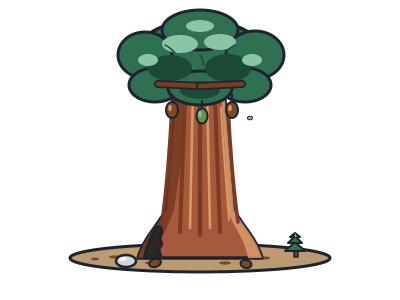
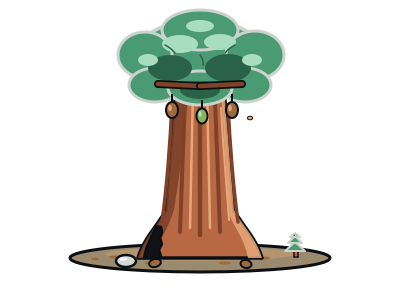
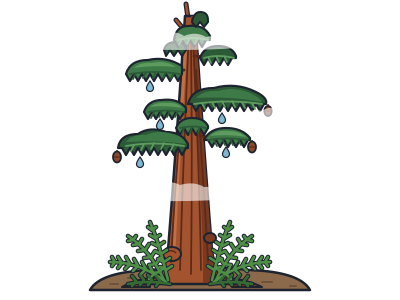
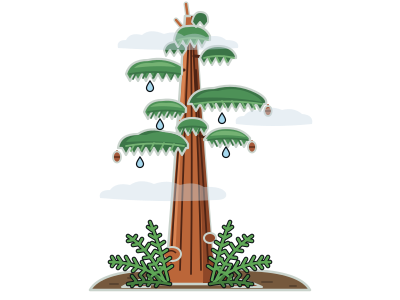
Its closest living relatives are the coast redwood and the giant sequoia. But unlike them, and unlike most conifers, it is deciduous. Every autumn its soft needles turn reddish-brown and fall off. It is also much shorter. Coast redwoods can grow taller than 100 metres. The tallest dawn redwoods reach about 50 metres, roughly as tall as a 15-storey building.
Fossils show that its group has been around since the time of the dinosaurs. It once grew right across the northern half of the world, even in the Arctic. Today wild trees survive only in damp valleys and along streams in one small part of central China, and they are endangered.
The clue was in the pairs
The scientist who named the fossils noticed that their leaves and cone scales grew in pairs, opposite each other, and that the cones hung on long stalks. That is how he told them apart from redwoods and bald cypress.
The first tree still stands
The original tree in the village was measured at about 33 metres tall, with a swollen base about 3.3 metres across. It still stands there today.
A big family from a few parents
Many dawn redwoods in Western gardens come from just one to three trees collected in 1947. In China, millions of young trees are now grown from cuttings every year.