A group of living things
Cabbage family
Brassicaceae
Mustard, cabbage and cress: plants that fight back with a peppery bite.
This branch is shown at about 40 million years ago; its age is a rough estimate.
You and cabbage family meet in the Eukaryotes branch, shown at about 1.8 billion years ago (on 28 July, in a calendar from life's shared ancestor to today).
Mustard, horseradish, wasabi, cabbage and cress all belong to one big plant family. Their sharp, peppery bite is no accident. It is a weapon against hungry insects and other plant-eaters.
The plants store mild chemicals and, kept apart from them, an enzyme that can change them. When an insect chews a leaf, the two mix and make sharp, toxic mustard oils. Scientists call this the 'mustard oil bomb'. The same oils give mustard and horseradish their kick when we eat them.
The bomb does not stop everyone. Cabbage white caterpillars have a gut protein that redirects it, so they are not harmed. The butterflies even use the plant's chemicals to find the right leaves to lay their eggs on. Plants and butterflies have kept evolving new tricks against each other.
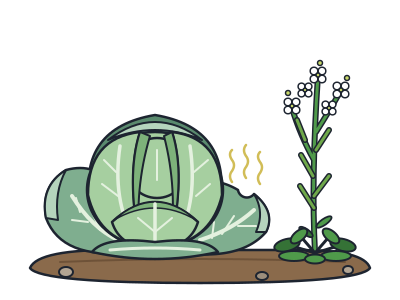
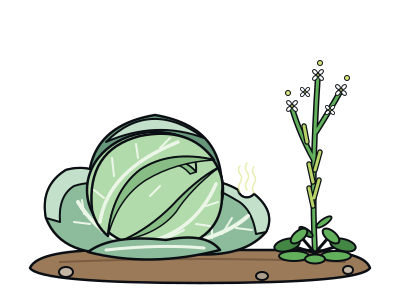
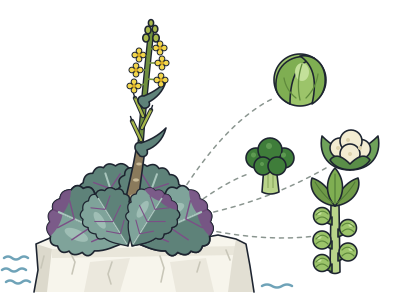
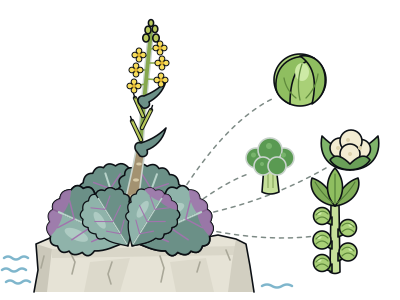
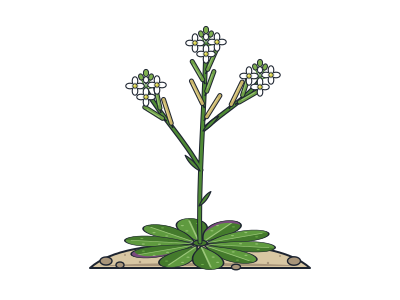
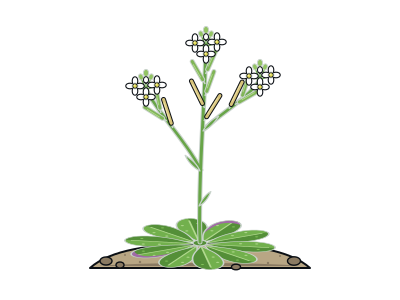
Look closely at most flowers from this family and you will see four petals in a cross shape. The family has thousands of species, from small weeds like thale cress, shorter than a school ruler, to big leafy crops. Kale, broccoli, cauliflower, Brussels sprouts and cabbage were all bred by people from just one wild plant: wild cabbage.
Oil from yellow fields
Rapeseed, the plant behind bright yellow fields in spring, belongs to this family and is grown for vegetable oil.
Metal collectors
Over a hundred members can soak up metals such as zinc and nickel. No other plant family has a bigger share of these metal-collecting species.
Cliff-top ancestor
Wild cabbage clings to windswept limestone sea cliffs. In its first year it grows a sturdy rosette of big, thick, fleshy leaves that store water.
Inside cabbage family
- Wild cabbageOne species bred into cabbage, broccoli, cauliflower, kale and Brussels sprouts.
- Thale cressA tiny weed that became the lab mouse of plant science.
- RadishA peppery root ready to harvest in just three weeks from sowing.
- RapeseedTurns spring fields bright yellow and gives us canola oil.
- WasabiA stream-side plant whose grated stem gives sushi its nose-tingling heat.
Next to it on the tree
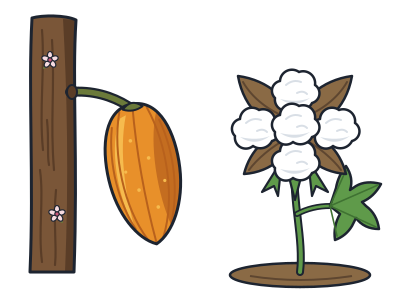
- Mallow familyCocoa, cotton, baobabs and hibiscus are all members of one family.
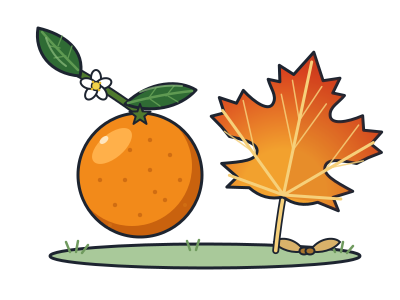
- Citrus, maples and mangoesOranges, maples, mangoes and cashews are all close relatives.
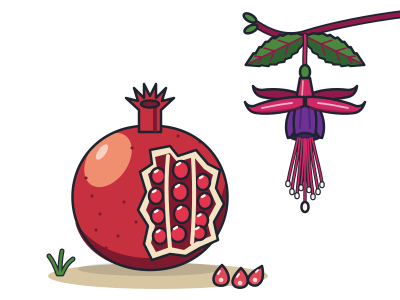
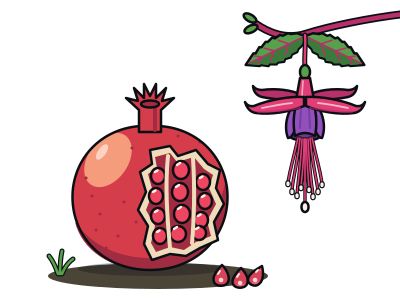
- Myrtle orderEucalyptus, cloves, pomegranates and fuchsias share one branch.
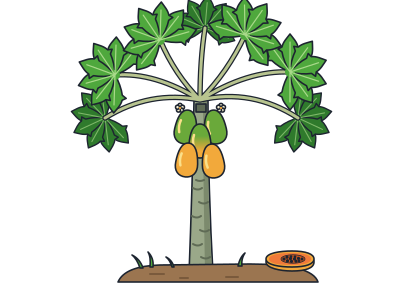
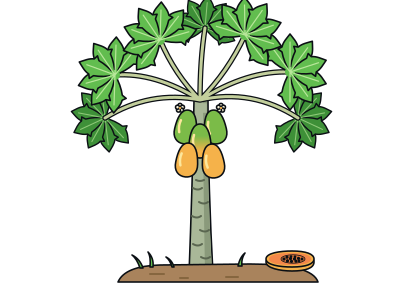
- PapayaA fast-growing fruit tree that can bear fruit in its first year.