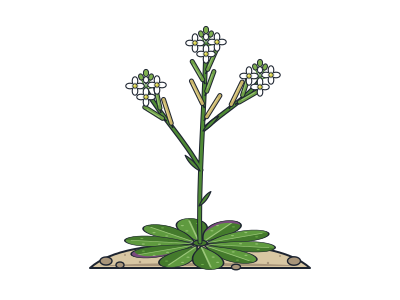
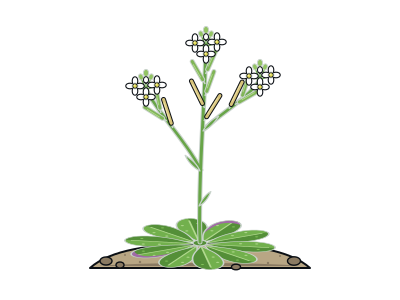
A species
Thale cress
Arabidopsis thaliana
A tiny weed that became the lab mouse of plant science.
You and the thale cress meet in the Eukaryotes branch, shown at about 1.8 billion years ago (on 28 July, in a calendar from life's shared ancestor to today).
Animal scientists have the lab mouse. Plant scientists have this scraggly little weed, and you may have walked past it on the footpath. It grows in pavement cracks, at the bottom of walls and along field edges. It belongs to the cabbage family, so cabbage, broccoli and mustard are its relatives. People don't grow it to eat, though, and it has no use as food or medicine. To people, its real value is as a research plant.
Why this weed? It is small, so lots of plants fit in a little space in the lab. It goes from seed to new seed in about five to six weeks, so scientists can grow several generations in a year. It usually pollinates itself, which makes it easy to keep steady family lines going. And its genome is small, only about one twenty-fifth the size of ours.
In December 2000 it became the first plant to have its whole genome read. Labs in France, the UK, Germany, the US and Japan worked on it together for several years. The first international meeting about it, in 1965, had only about 25 people. Today, stock centres keep ready-made plants with changes in most of its genes, so scientists can see what each gene does.
Named after a doctor
Johannes Thal, a German doctor in the 1500s, found it in the Harz Mountains. Linnaeus named it after him in 1753, and that is where 'thale cress' comes from.
A trip to the Moon
Its seeds went to the Moon on China's Chang'e-4 lander in 2019. It has also grown from seed to seed on the International Space Station.
Seeds by the thousand
One plant can make up to about 10,000 seeds, each about as small as a grain of sand.
Next to it on the tree
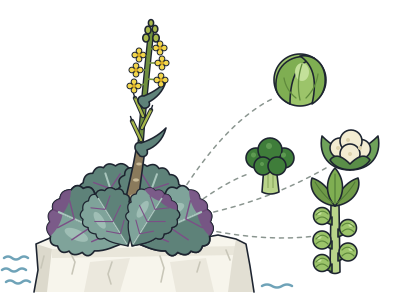
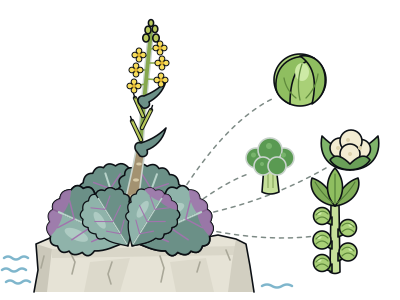
- Wild cabbageOne species bred into cabbage, broccoli, cauliflower, kale and Brussels sprouts.
- RadishA peppery root ready to harvest in just three weeks from sowing.
- RapeseedTurns spring fields bright yellow and gives us canola oil.
- WasabiA stream-side plant whose grated stem gives sushi its nose-tingling heat.