A species
Rapeseed
Brassica napus
Turns spring fields bright yellow and gives us canola oil.
You and the rapeseed meet in the Eukaryotes branch, shown at about 1.8 billion years ago (on 28 July, in a calendar from life's shared ancestor to today).
EukaryotesAmoebas, fungi and animalsFungi and animalsAnimals and their single-celled cousinsAnimalsTwo-sided animalsStarfish, sea squirts and usChordatesVertebratesJawed vertebratesBony fish and their descendantsLobe-finned fishFish on the way to landFour-limbed animalsAmniotesMammals and their ancestorsMammalsLive-bearing mammalsPlacental mammalsPrimates, rodents and rabbitsPrimatesApesGreat apesHumans and chimpanzeesHumanPlants and red algaeGreen plantsLand plants and their algal kinLand plantsVascular plantsFerns and seed plantsSeed plantsFlowering plantsEudicotsRosidsCabbages, cotton and citrusCabbage familyRapeseed
Turns spring fields bright yellow and gives us canola oil.
The full page for Rapeseed is still being written and drawn.
Next to it on the tree
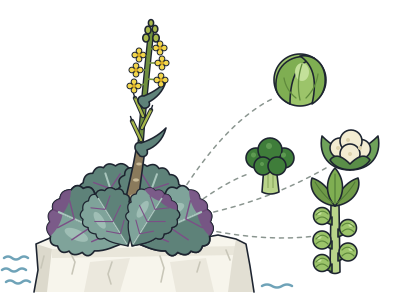
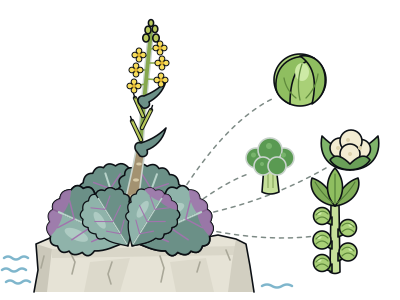
- Wild cabbageOne species bred into cabbage, broccoli, cauliflower, kale and Brussels sprouts.
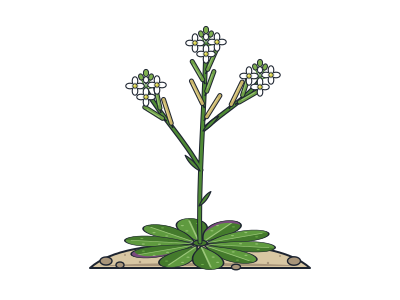
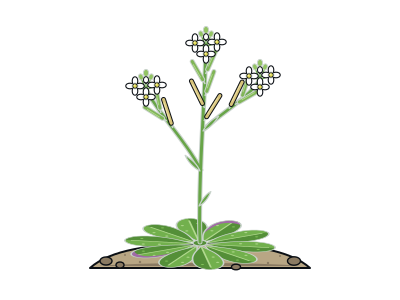
- Thale cressA tiny weed that became the lab mouse of plant science.
- RadishA peppery root ready to harvest in just three weeks from sowing.
- WasabiA stream-side plant whose grated stem gives sushi its nose-tingling heat.