A group of living things
Radiolarians
Radiolaria
Single cells with skeletons like glass snowflakes
This branch is shown at about 600 million years ago; its age is a rough estimate.
You and radiolarians meet in the Eukaryotes branch, shown at about 1.8 billion years ago (on 28 July, in a calendar from life's shared ancestor to today).
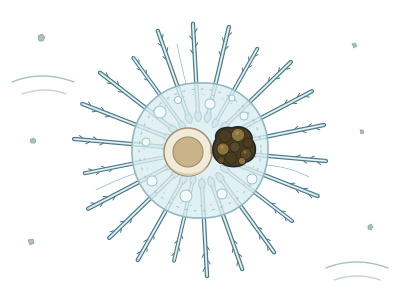
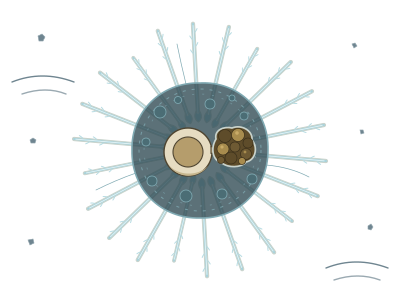
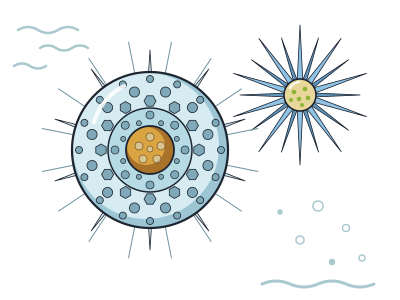
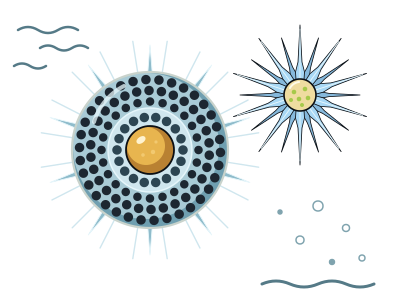
Imagine a snowflake made of glass, drifting in the sea. Under a microscope, many radiolarians look a bit like that. Each one is a single cell, and most are about 0.1 to 0.2 mm across, smaller than a grain of sand. Ernst Haeckel drew them in fine detail, including many collected by the HMS Challenger expedition in the 1870s. His famous prints from around 1900 made their lace-like skeletons known all over the world.
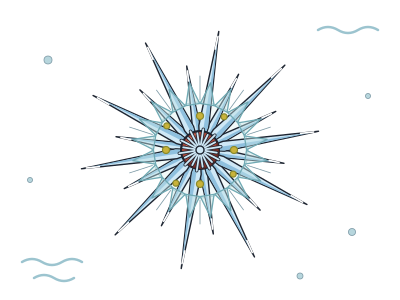
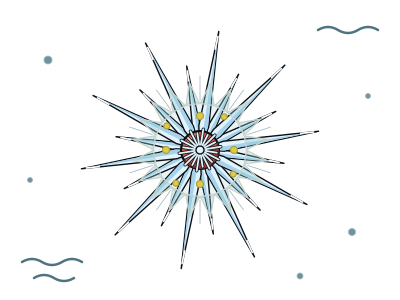
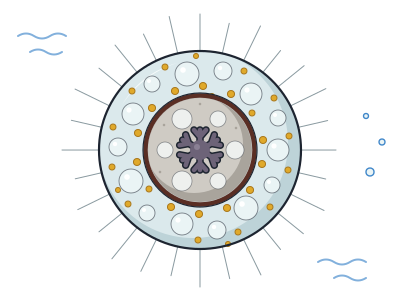
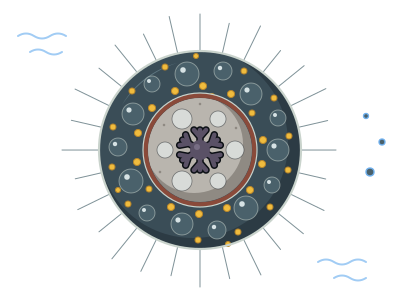
Most radiolarians build their skeletons from silica, the same material as glass. The skeletons can be spheres full of holes, cones or helmet shapes, often with spikes. Thin, needle-like threads of the cell poke out through the skeleton and help it stay afloat. Acantharians are the odd ones out. They usually grow a star of 20 crystal spines made of a different mineral, strontium sulfate.
Despite all that glass, radiolarians are only distant relatives of diatoms. Diatoms are algae on a separate branch within the same big part of the tree. Radiolarians are not animals either. On this tree their nearest relatives are the forams, along with others such as the green amoeba alga, the sea grape and clubroot.
Radiolarians feed in several ways. Some filter food from the water and some hunt tiny prey. Many also carry tiny algae inside them, and the algae make food from sunlight. Their glassy skeletons have left fossils going back more than 500 million years.
Inspired art and buildings
Haeckel's drawings, full of radiolarians, inspired Art Nouveau designers such as René Binet and Émile Gallé. They also partly inspired the Amsterdam Commodities Exchange building.
Colonies up to 3 metres long
Some radiolarians live together as colonies of hundreds to thousands of cells set in a shared jelly. The longest colony on record was about 3 metres long.
Rock made of skeletons
On very deep sea floor, about 5,000 metres down, glassy skeletons pile up and can turn into a rock called radiolarite. In the Swiss National Park, red radiolarite gave a valley its name, and Stone Age people made tools from it.
Inside radiolarians
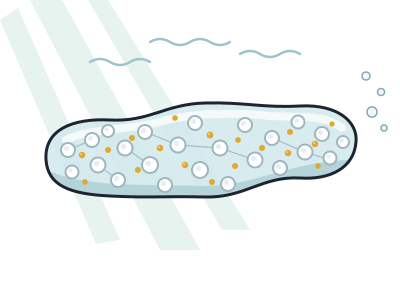
- Colonial radiolarianThousands of cells share a jelly tube that can stretch longer than a person.
- AcanthariansThe only living things that build skeletons from celestite, a crystal also used in fireworks.
- Jelly-ball radiolarianA single cell the size of a pea, glowing with algae it farms inside its jelly.
Next to it on the tree
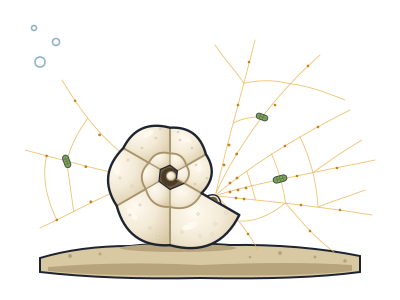
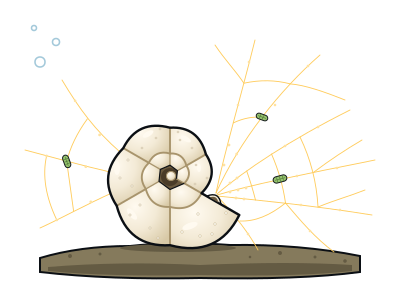
- ForamsShell-building single cells whose fossils fill limestone and record past ocean temperatures.
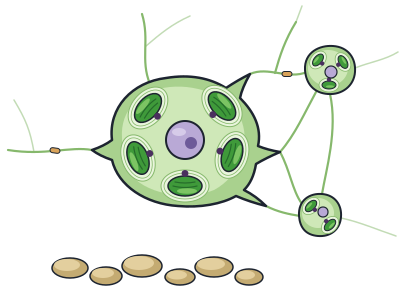
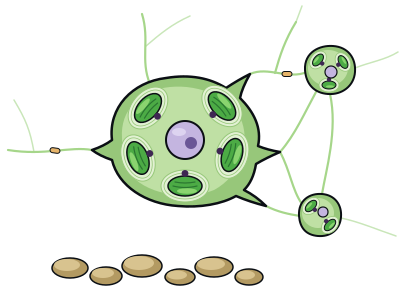
- Green amoeba algaAn amoeba that captured a green alga, which still keeps a miniature leftover nucleus.
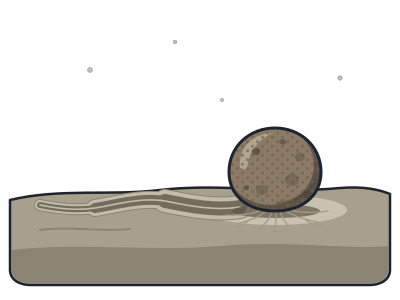
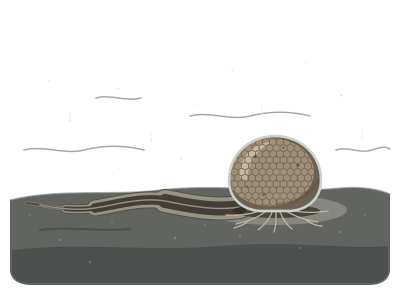
- Sea grapeA grape-sized single cell that rolls along the deep seabed, leaving tracks like an animal's.
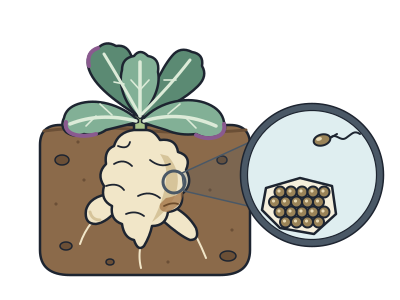
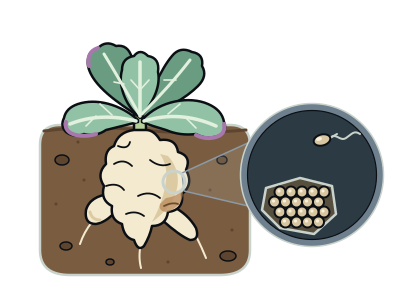
- ClubrootA cabbage disease that swells roots into knobbly clubs; it is a rhizarian, not a fungus.
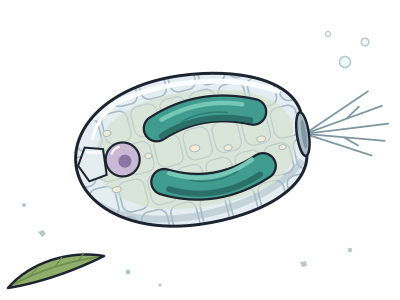
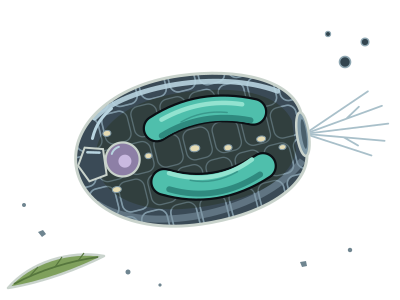
- PaulinellaA shelled amoeba that swallowed a cyanobacterium and made its own solar panel, separately from plants.
- Glass-scale amoebaBuilds a see-through shell from overlapping glass scales, like a tiny shingled urn.
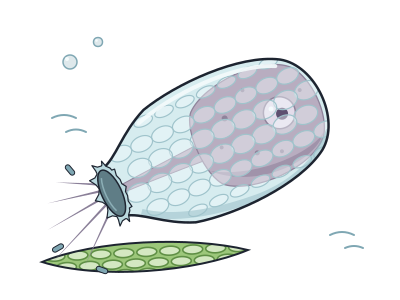
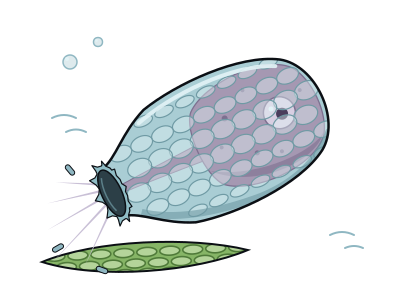
- PhaeodarianA deep-sea plankton cell bristling with hollow glass spines around a dark food bundle.