A group of living things
Forams, radiolarians and kin
Rhizaria
Single cells that build shells of chalk or glass
This branch is shown at about 1 billion years ago; its age is a rough estimate.
You and forams, radiolarians and kin meet in the Eukaryotes branch, shown at about 1.8 billion years ago (on 28 July, in a calendar from life's shared ancestor to today).
Picture a single cell, soft and shapeless like an amoeba, that builds itself a home of chalk or glass. Many members of this group do just that. Most are tiny, many no bigger than a grain of sand, but some deep-sea forams grow to about 20 cm across. That is bigger than your hand, and it is still just one cell.
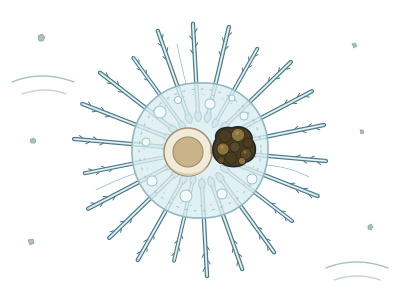
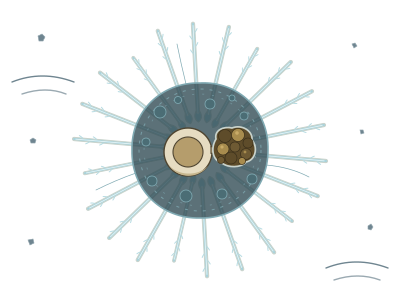
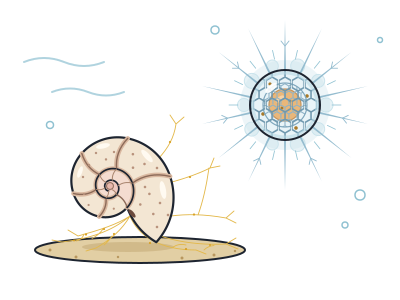
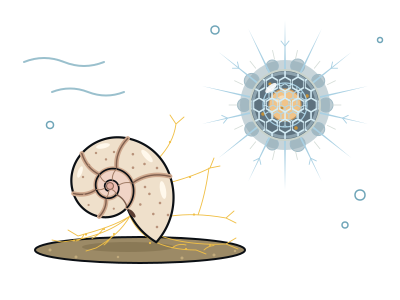
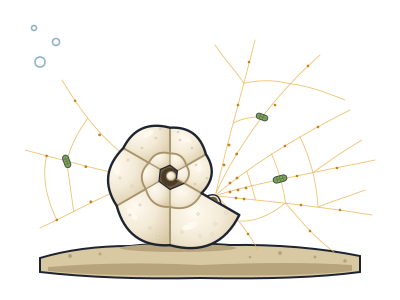
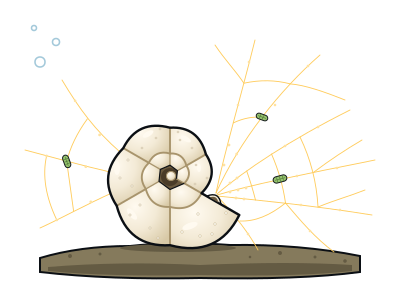
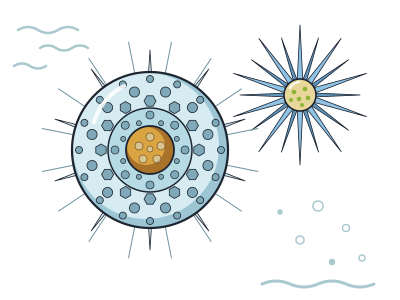
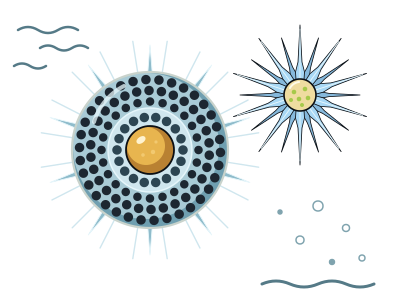
Many forams build chalky shells, though some glue together grains of sand instead. Lots of these shells are a spiral of chambers that get bigger as they go, like a tiny snail shell. Most radiolarians make glassy skeletons shaped like see-through balls or cages full of holes, often with long spines sticking out like a starburst. Most members of the group reach out with very thin threads or needles to catch and swallow their food.
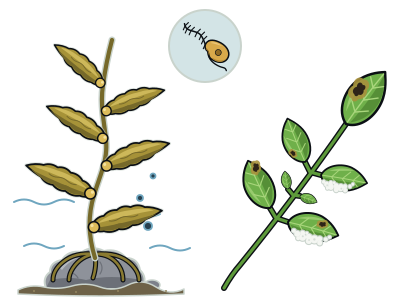
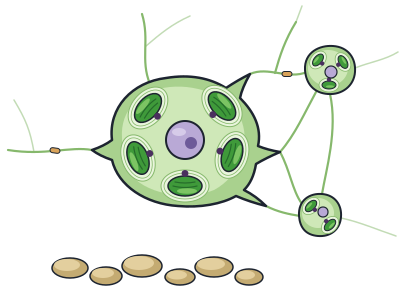
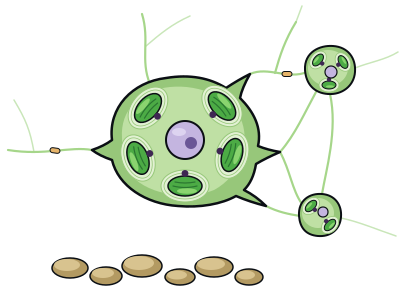
Not every member builds a shell. The group also includes a small green sea amoeba. Long ago its ancestor swallowed a green alga and kept it. The alga became a built-in food-making part of the cell, and a tiny leftover of the alga's own nucleus is still inside. The tiny parasite that causes clubroot belongs here too. Clubroot is a garden disease that makes the roots of cabbages and their relatives swell into knobbly clubs. The parasite is often mistaken for a fungus.
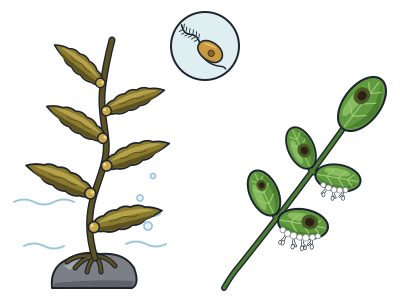
These cells look so different from one another that scientists group them by their DNA, not their looks. They belong to a bigger family branch that also includes kelp and diatoms, as well as dinoflagellates and the malaria parasite.
Lentils in the pyramids?
The limestone used to build the Egyptian pyramids contains coin-shaped fossil forams. The ancient Greek writer Strabo thought they were the workers' leftover lentils, turned to stone.
Not a sponge after all
Giant deep-sea forams, which glue mud and bits of shell into lumpy mounds, were once thought to be sponges. DNA studies showed they are really forams.
A very old family line
Radiolarian fossils go back more than 500 million years, to long before the dinosaurs.
Inside forams, radiolarians and kin
- ForamsShell-building single cells whose fossils fill limestone and record past ocean temperatures.
- RadiolariansPlankton with glass or crystal skeletons like snowflakes, made famous by Ernst Haeckel's drawings.
- Green amoeba algaAn amoeba that captured a green alga, which still keeps a miniature leftover nucleus.
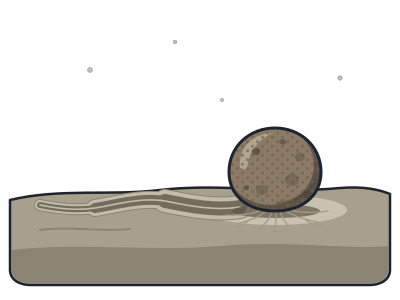
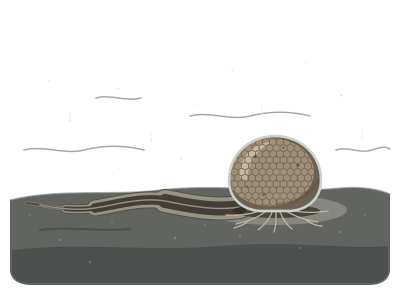
- Sea grapeA grape-sized single cell that rolls along the deep seabed, leaving tracks like an animal's.
- ClubrootA cabbage disease that swells roots into knobbly clubs; it is a rhizarian, not a fungus.
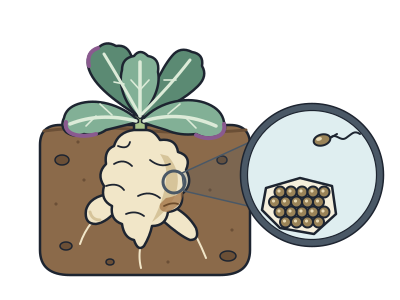
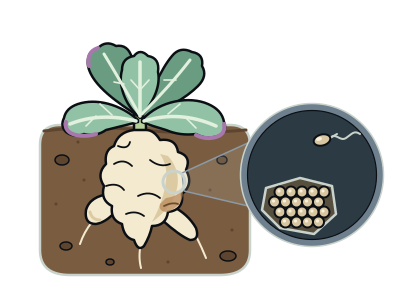
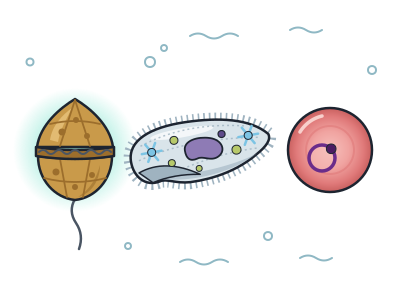
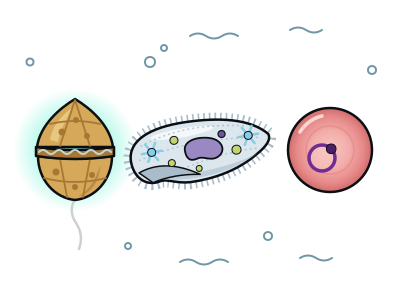
- PaulinellaA shelled amoeba that swallowed a cyanobacterium and made its own solar panel, separately from plants.
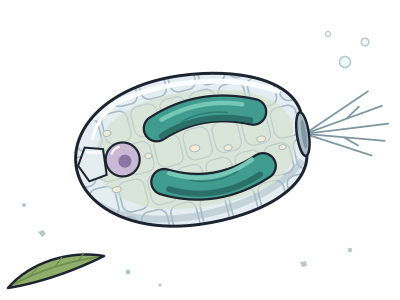
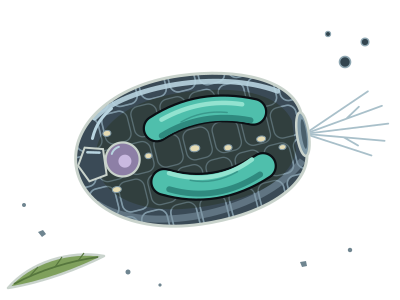
- Glass-scale amoebaBuilds a see-through shell from overlapping glass scales, like a tiny shingled urn.
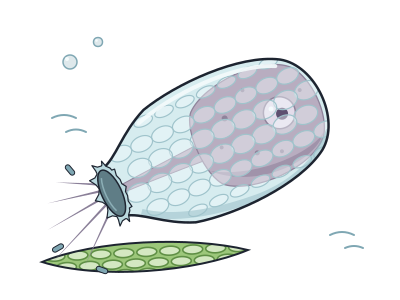
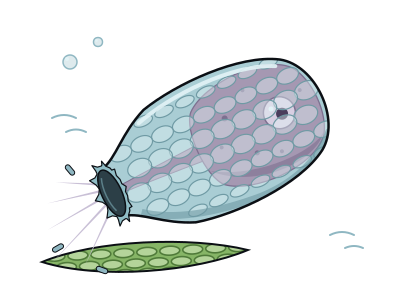
- PhaeodarianA deep-sea plankton cell bristling with hollow glass spines around a dark food bundle.