A group of living things
Dinoflagellates, malaria and ciliates
Alveolata
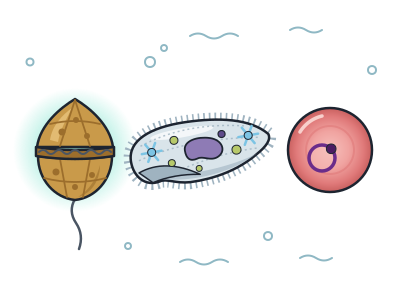
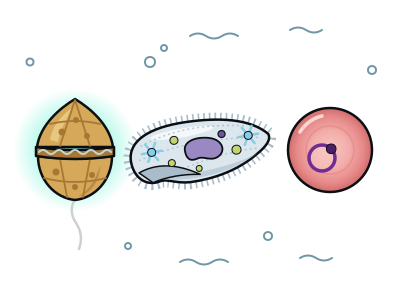
Glowing sea sparkle, the malaria parasite and hairy Paramecium are close cousins.
This branch is shown at about 1.1 billion years ago; its age is a rough estimate.
You and dinoflagellates, malaria and ciliates meet in the Eukaryotes branch, shown at about 1.8 billion years ago (on 28 July, in a calendar from life's shared ancestor to today).
A glowing speck in a night-time wave, the germ behind malaria and the hairy Paramecium in a drop of pond water seem to have nothing in common. Yet they are close cousins. All three are single cells on the same branch of the tree of life.
What links them is hidden just under the cell's outer skin. There is a layer of flat, tightly packed sacs called alveoli, which help support the cell's surface. In the early 1990s, scientists compared their genes and showed that these very different microbes belong together.
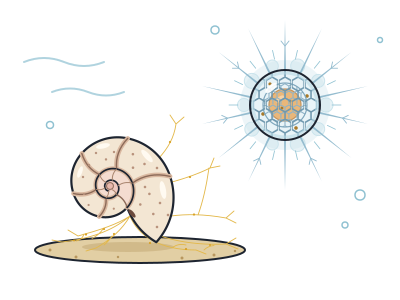
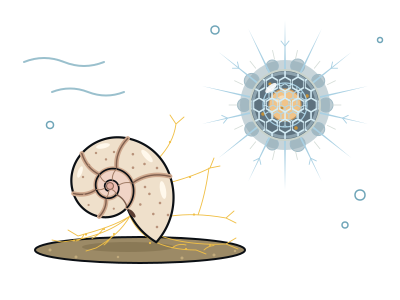
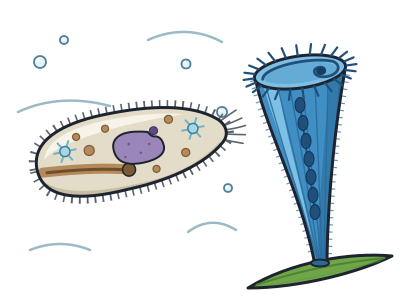
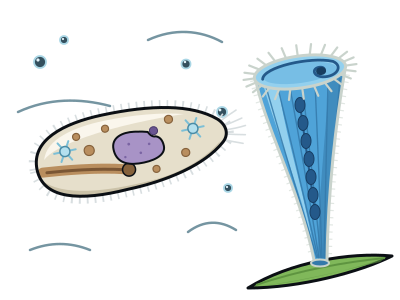
Each branch then went its own way. Most dinoflagellates drift in the sea, pushed along by two whip-like tails. One of them, sea sparkle, flashes blue-green when waves stir the water. Most ciliates move and feed using tiny beating hairs called cilia. Paramecium, a slipper-shaped cell up to about 0.3 mm long, is covered in rows of them. The malaria parasite and all its close relatives are parasites for at least part of their lives.
The biggest surprise is hidden inside the malaria parasite. It still carries a leftover chloroplast, the part that plants and algae use to capture sunlight. This one can no longer use light, but it is a strong sign that the parasite's ancestors were once algae.
Coral's kitchen
Reef-building corals get much of their food from dinoflagellates living inside them. Up to about 90 percent of the food these tiny partners make from sunlight goes to the coral.
Two control centres
Each ciliate cell has two kinds of nucleus. A big one runs everyday life, and a small one keeps the copy of the genes that gets passed on.
A clue from Sydney
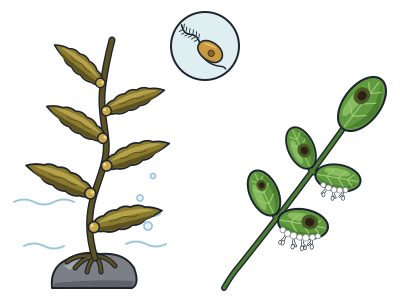
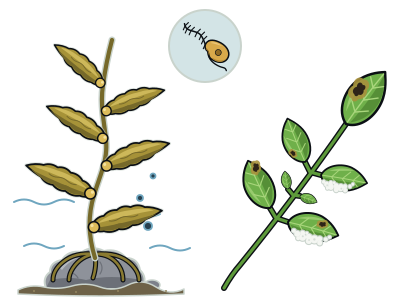
One of the closest known relatives of the malaria parasite that still lives on sunlight is a tiny alga. It was first found in 2001 living with a coral in Sydney Harbour.
Inside dinoflagellates, malaria and ciliates
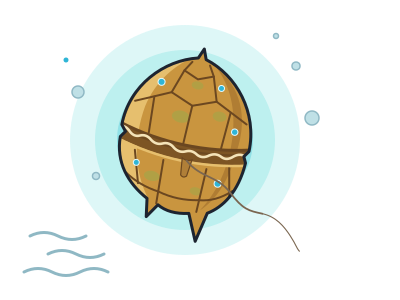
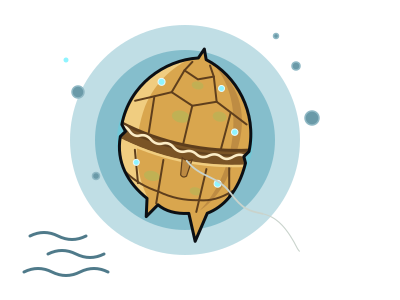
- DinoflagellatesArmoured, spinning swimmers behind glowing waves, red tides and healthy coral reefs.
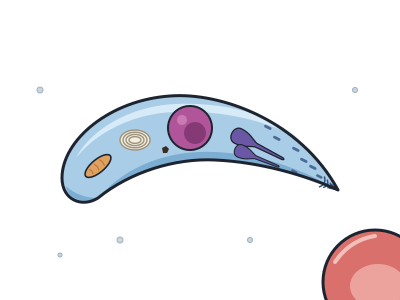
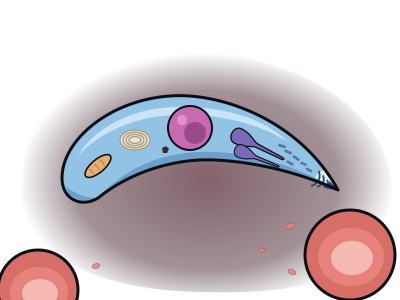
- Malaria parasite and kinParasites that carry a ghost of a plastid from photosynthetic ancestors.
- CiliatesCells covered in thousands of beating hairs, with one nucleus for everyday life and one for swapping genes.
- ChromeraA tiny golden-brown alga that lives inside corals, first discovered on an Australian reef in 2008.