A species
Sun animalcule
Actinophrys sol
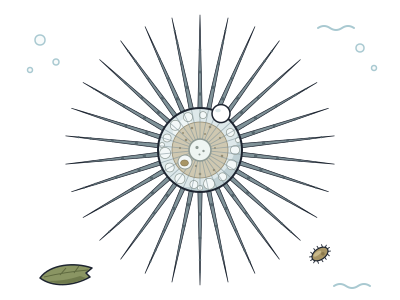
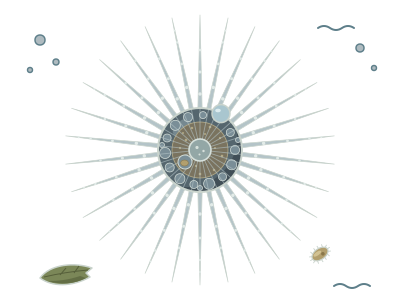
A tiny pond sun whose sticky, spoked rays trap passing prey.
You and the sun animalcule meet in the Eukaryotes branch, shown at about 1.8 billion years ago (on 28 July, in a calendar from life's shared ancestor to today).
Picture a tiny sun floating in a pond. The sun animalcule is a single glassy ball, usually about 40 to 50 micrometres across. That is roughly half the width of a human hair. Dozens of stiff, needle-like rays stick out evenly all round it, and each one is often about twice as long as the body is wide. An inner rod holds each ray straight and runs right in to the large nucleus at the very centre.
The rays work like a sticky, spoked trap. Tiny granules along them grab small creatures that bump into them. The prey then slides slowly down a ray towards the body, or the ray quickly collapses and pulls it in. One was seen catching a gastrotrich, a tiny animal made of many cells, and wrapping it in a food bubble in about 15 minutes.
Here is the surprise. This colourless hunter has no chloroplasts, yet a large genetic study found it is closely related to diatoms, golden algae and brown seaweeds such as kelp. Its DNA even carries some genes that came from algae. Water moulds such as potato blight are more distant cousins in the same wider group.
Shared dinners
Two sun animalcules were once seen sharing one gastrotrich inside a single joined food bubble. They split apart again once digestion was finished, within about six hours.
A mineral-walled shelter
When food runs short, it can seal itself inside a resting cyst. The cyst has many layered walls that contain silica and iron. Inside, the cell divides, and two sex cells made from that one parent then fuse together.
Built-in water pumps
Clear bubbles at the edge of the cell slowly fill with water and then suddenly empty it outside. This stops the cell from swelling up with pond water.
Next to it on the tree
- DiatomsSingle cells living in glass houses; they make a large share of the oxygen you breathe.
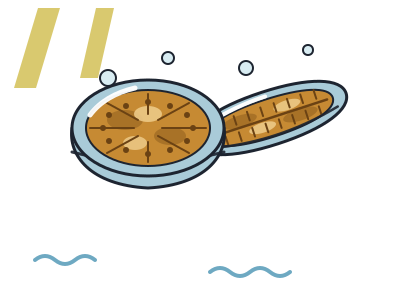
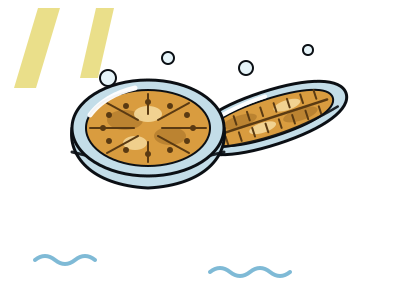
- Potato blightLooks like a fungus but is kin to kelp; it caused the Irish potato famine of the 1840s.
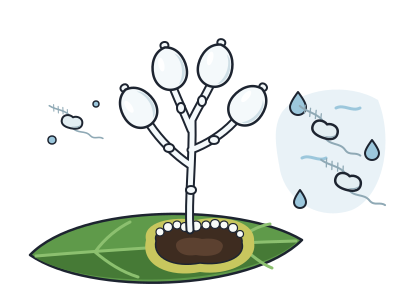
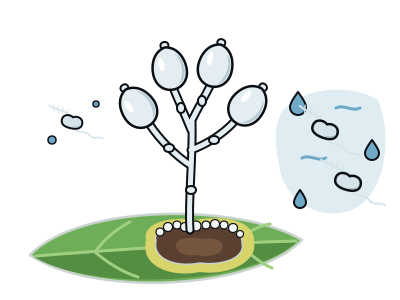
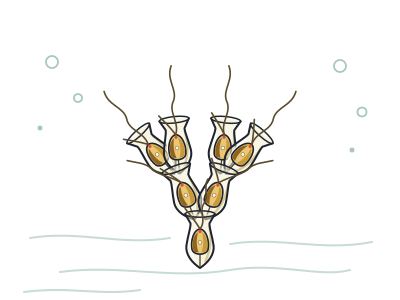
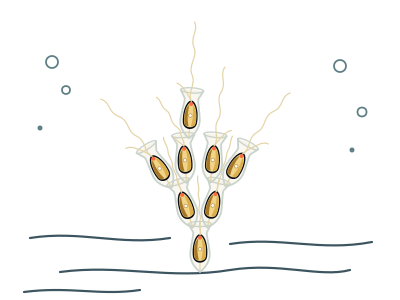
- Golden algaeGolden-brown freshwater algae, some living in stacked vase-shaped homes.
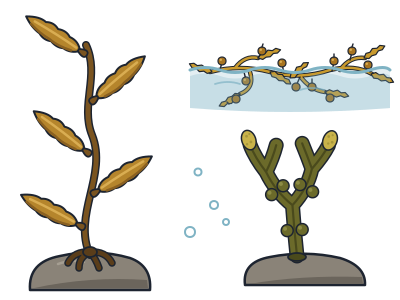
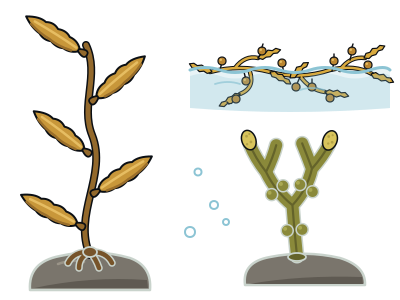
- Brown seaweedsKelp forests, floating golden rafts and rocky-shore wracks are all brown algae, not plants.
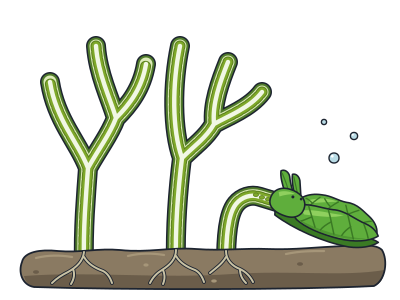
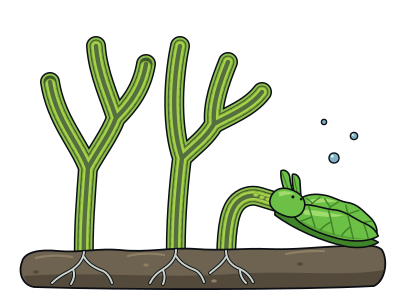
- Water feltA tube-shaped alga whose chloroplasts a sea slug steals and keeps working for months.