A group of living things
Golden algae
Chrysophyceae
Tiny golden-brown algae, some living in stacks of see-through vases.
This branch is shown at about 280 million years ago; its age is a rough estimate.
You and golden algae meet in the Eukaryotes branch, shown at about 1.8 billion years ago (on 28 July, in a calendar from life's shared ancestor to today).
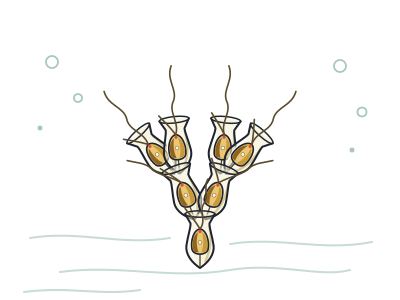
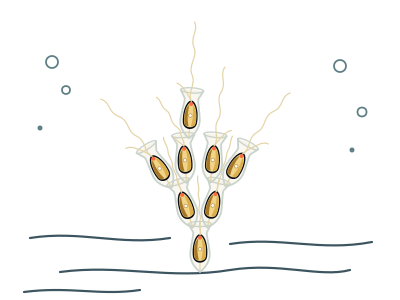
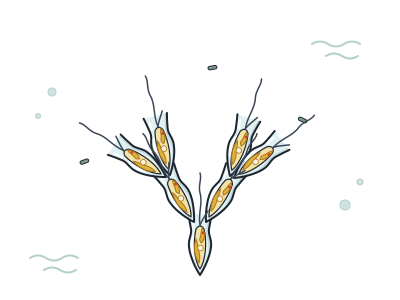
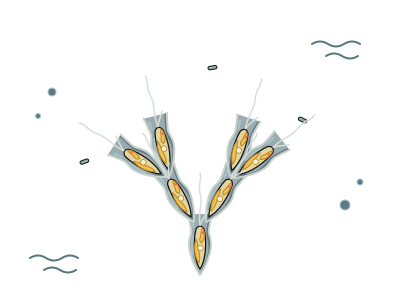
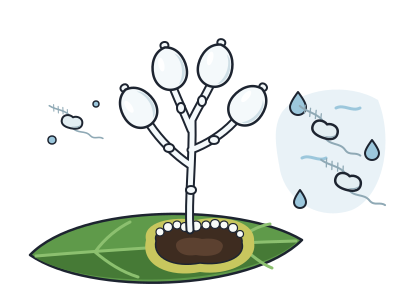
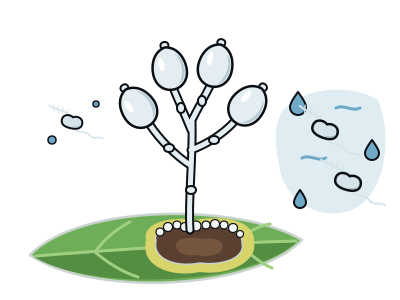
Scoop a jar of water from a clear lake or pond and you may catch golden algae. Many of these tiny golden-brown living things drift in the water, while others cling to surfaces. Some even build homes. One kind, called Dinobryon, lives in see-through cases shaped like little vases. Each new case sits in the mouth of the one below, so the stacks branch out like a tiny bush.
Golden algae are not plants. They belong to the same big group as diatoms and kelp seaweeds. They are also more closely related to the water mould behind potato blight than to any land plant. Many cells in this big group swim with two whip-like tails that are not alike: one is hairy and one is smooth. Swimming golden algae such as Dinobryon have them too, a long hairy one and a short smooth one.
Their golden colour comes from a pigment that hides the green of their chlorophyll. Most make food from sunlight. But many can also eat bacteria, especially when light is low. In some clear lakes with few nutrients, Dinobryon is one of the main bacteria-eaters. Golden algae are also an important food for tiny lake animals.
Sleeping through bad times
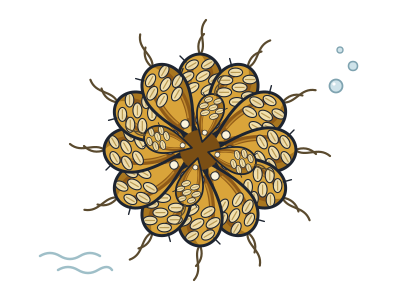
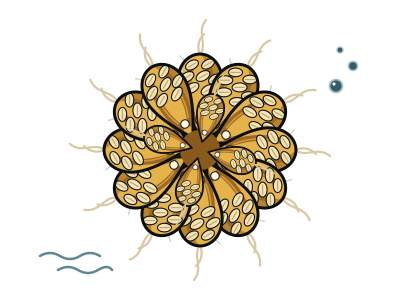
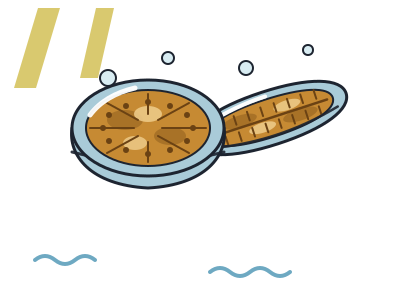
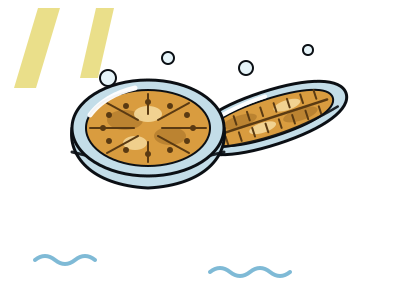
When conditions turn bad, a golden alga can build a resting cyst. This is a little ball with a glassy wall and a single pore. Later, when things improve, a new cell grows out of it.
Lake history books
Golden algae have a fairly complete fossil record going back to the late age of the dinosaurs. Scientists study their glassy cysts in lake mud to work out what lakes were like long ago.
Not just in lakes
Some golden algae live in the sea, in soil or even on snow. In the sea, some of the kinds that eat other cells are quite common.
Inside golden algae
Next to it on the tree
- DiatomsSingle cells living in glass houses; they make a large share of the oxygen you breathe.
- Potato blightLooks like a fungus but is kin to kelp; it caused the Irish potato famine of the 1840s.
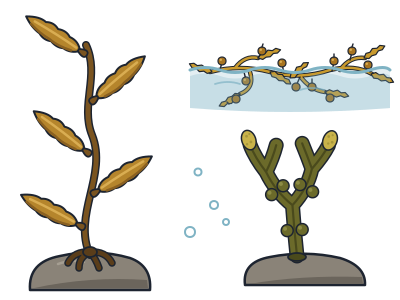
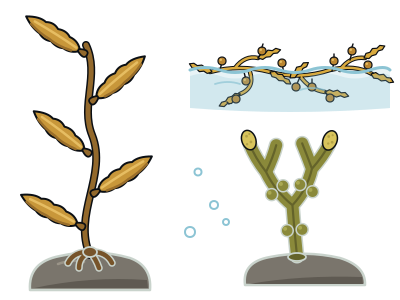
- Brown seaweedsKelp forests, floating golden rafts and rocky-shore wracks are all brown algae, not plants.
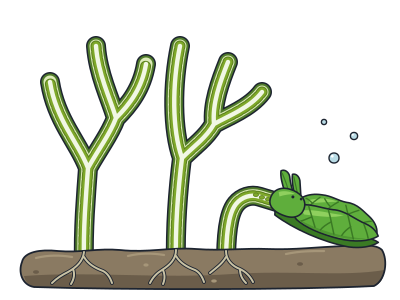
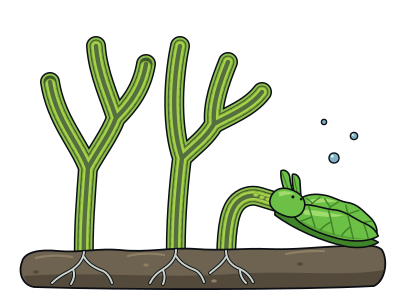
- Water feltA tube-shaped alga whose chloroplasts a sea slug steals and keeps working for months.
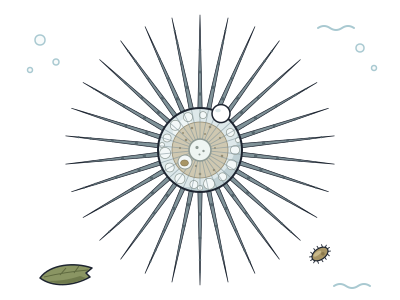
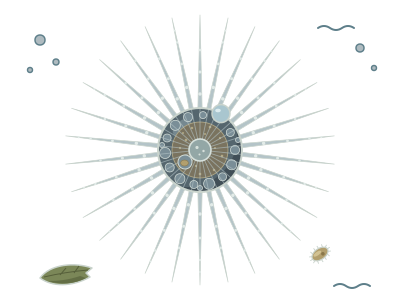
- Sun animalculeA tiny pond sun with stiff, sticky rays that catch passing prey like a spoked trap.