A species
Vase golden alga
Dinobryon divergens
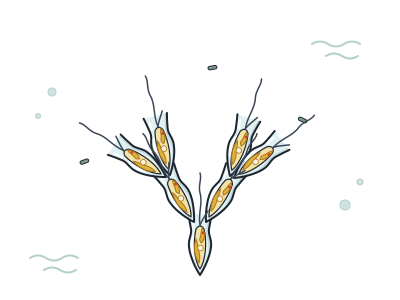
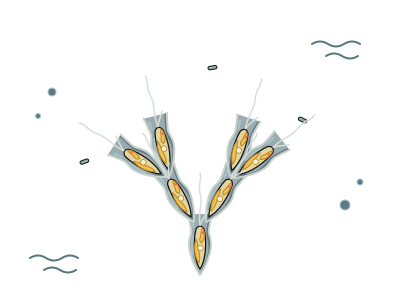
A tiny tree built from see-through vases, each with a living cell inside.
You and the vase golden alga meet in the Eukaryotes branch, shown at about 1.8 billion years ago (on 28 July, in a calendar from life's shared ancestor to today).
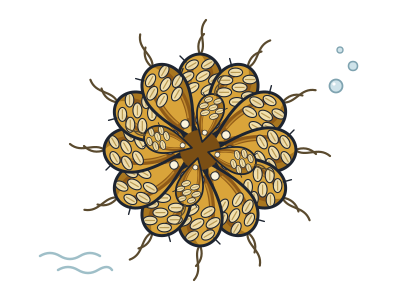
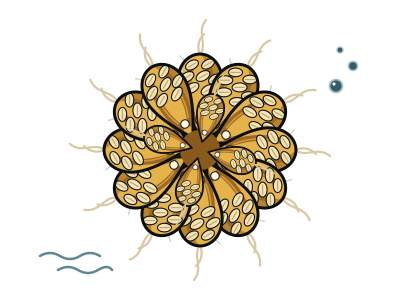
Picture a tiny vase that you can see right through, with a single living cell sitting inside. Now picture more vases, each standing in the rim of the one before. Each new vase holds its own cell, and they branch out like a little bush. That is this golden alga. Its branches spread out wide, so a colony looks loose and airy.
Despite the word 'alga', it is not a plant. Golden algae belong to a different branch of life, along with diatoms and the big brown seaweeds called kelp. A whole colony is only about half a millimetre across, so you could only just see it as a tiny speck. Each vase is roughly half the width of a human hair.
This alga also lives a double life. Each cell has two golden-brown parts that make food from sunlight, like a plant does. It also catches and swallows bacteria, a bit like a tiny hunter. Eating bacteria gives it nutrients that are hard to find, so it does well in clear lakes that are low in nutrients.
In temperate lakes and ponds it often appears in large numbers in spring. When conditions turn bad, it can make a tough resting cyst that waits on the lake bottom until the water warms.
Not a glass vase
The vase is made of cellulose, the same kind of material found in plant cell walls. Only the resting cyst has a hard wall of silica, the main ingredient in glass.
Poor food for small lake animals
Tiny lake animals do badly when this alga is all they have to eat. It has only about a third of the fat of a good food alga that scientists compared it with. Copepods (tiny crustaceans) fed only on it had nearly ten times fewer young.
Lake history in the mud
Golden algae leave their silica resting cysts in lake mud. These cysts make a fairly complete fossil record, and scientists use it to work out how lakes have changed over time.