A species
Water felt
Vaucheria litorea
The alga whose green parts a sea slug steals and keeps working for months
You and the water felt meet in the Eukaryotes branch, shown at about 1.8 billion years ago (on 28 July, in a calendar from life's shared ancestor to today).
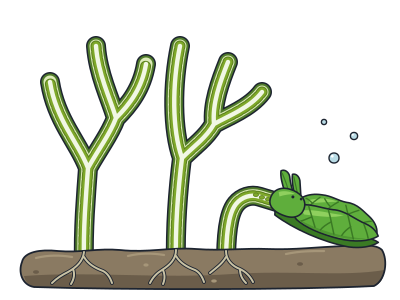
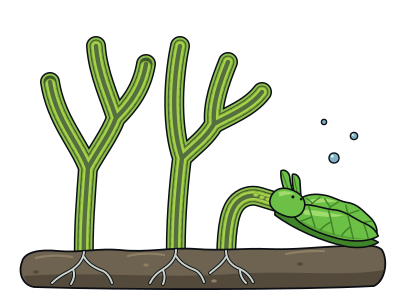
This dark green alga has a famous fan: a small sea slug that eats it and keeps some of its parts working. The slug pierces a strand and sucks out the insides, like drinking through a straw. It keeps only the chloroplasts, the tiny green parts that use sunlight to make food. They sit inside the cells lining the slug's gut and keep working for months. They spread through its branching gut and turn the slug bright green, so it looks like a leaf.
That is a real puzzle. A chloroplast normally relies on the rest of the alga's cell for most of what it needs, and none of that comes with it. Scientists think this alga's chloroplasts are unusually tough, and that the slug helps protect and look after them.
Despite its colour, water felt is not a plant or a green alga. It is a yellow-green alga, a relative of kelp and diatoms. Each strand is one long tube about as wide as a human hair. It has no inside walls dividing it up, and it holds many nuclei. The tubes fork into two again and again. They tangle into soft, felt-like mats on muddy ground between the tides.
A nursery for slugs
The slug's larvae need the alga's strands to settle on before they can change into their adult form.
Born brown
Young slugs start out brown with red spots. They only turn green after they eat the alga, so each new generation has to steal its own chloroplasts.
Separate sexes
Water felt can grow new strands from broken pieces or from large swimming spores. It can also reproduce sexually. Separate male and female algae make swimming sperm and eggs that stay put.
Next to it on the tree
- DiatomsSingle cells living in glass houses; they make a large share of the oxygen you breathe.
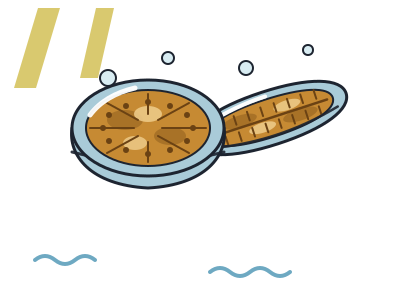
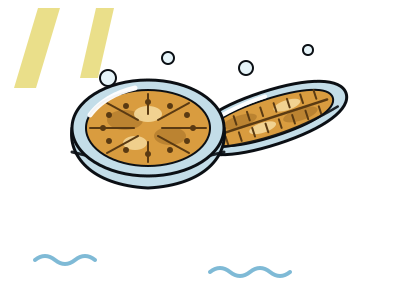
- Potato blightLooks like a fungus but is kin to kelp; it caused the Irish potato famine of the 1840s.
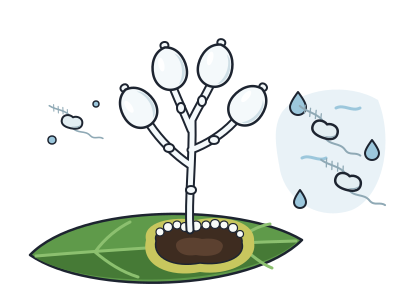
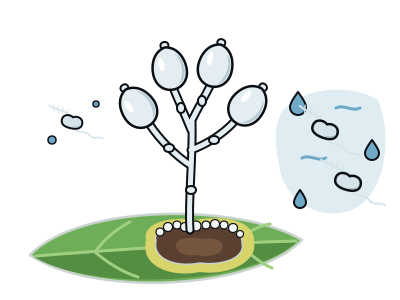
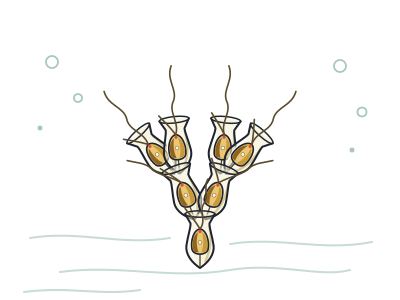
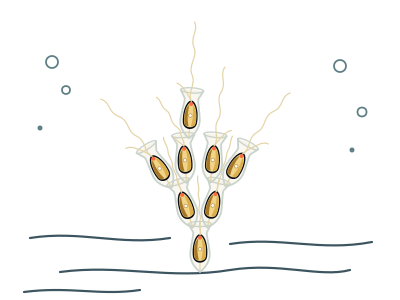
- Golden algaeGolden-brown freshwater algae, some living in stacked vase-shaped homes.
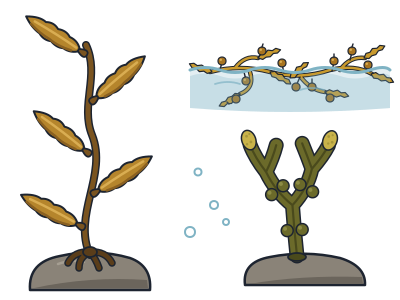
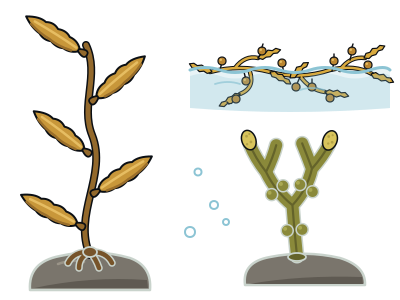
- Brown seaweedsKelp forests, floating golden rafts and rocky-shore wracks are all brown algae, not plants.
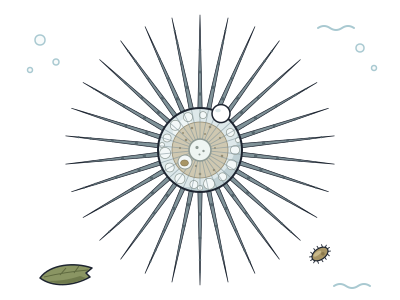
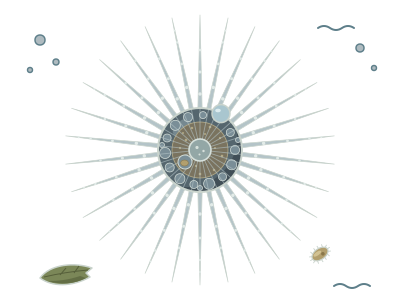
- Sun animalculeA tiny pond sun with stiff, sticky rays that catch passing prey like a spoked trap.