A species
Wakame
Undaria pinnatifida
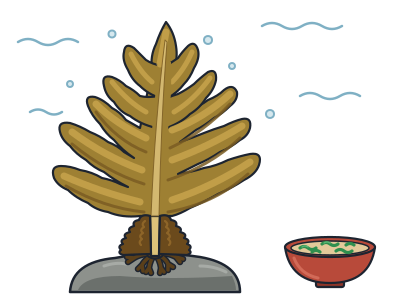
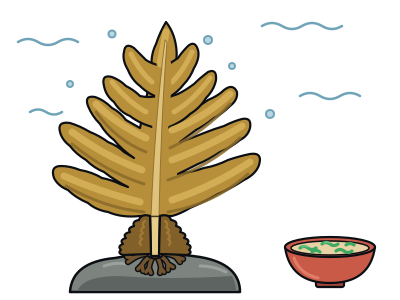
The silky green ribbons in miso soup, now travelling the world on boat hulls.
You and the wakame meet in the Eukaryotes branch, shown at about 1.8 billion years ago (on 28 July, in a calendar from life's shared ancestor to today).
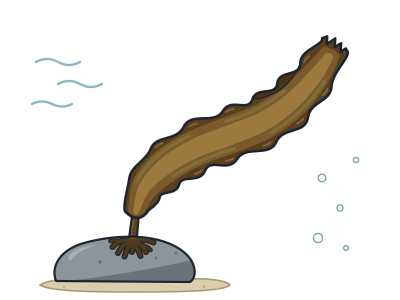
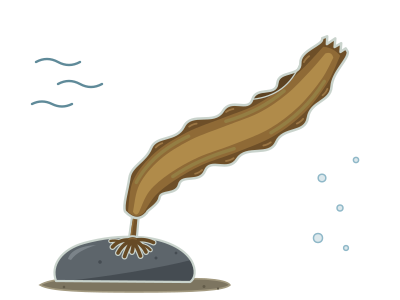
Those silky green ribbons in your miso soup started out as a golden-brown seaweed growing in the sea. Wakame is a kelp from the cool coasts of Japan, Korea, China and Pacific Russia. People in Japan have eaten it since at least the eighth century, more than 1,200 years ago, and it is even mentioned in poems from that time. Since the mid-20th century it has been farmed on a huge scale. In 2013 alone, farms around the world harvested more than 2 million tonnes of fresh wakame.
Wakame looks leafy, but it is not a plant. It is a brown seaweed, related to giant kelp, bull kelp and kombu. It belongs to a bigger group that also includes tiny diatoms and water moulds. A brown pigment hides its green chlorophyll. The bright green you see in your bowl only shows up after it is processed or cooked.
Wakame is also a great traveller. Outside Asia it was first found in France in the early 1970s. Since then it has settled in at least 13 countries on four continents, including Australia, New Zealand, the UK and the USA. Its spores often settle only a few metres from the parent plant. So how does it get so far? It hitches rides. Young plants grow on boat hulls, and it gets moved around by accident with farmed shellfish.
It grows fast, up to about 1.7 centimetres a day. A big one can end up about as long as a tall adult is high.
A name that means 'young'
The Japanese name is usually taken to mean 'young seaweed'. In old Japanese, 'me' was a word for edible seaweeds.
Frilly snack
The ruffled frills that coil around the bottom of the stalk are where it makes its spores. In Japan and Korea people eat them separately as 'mekabu', and they are prized for being slippery.
A hidden stage
For much of the year wakame lives as a microscopic stage you can't see. This tiny stage can survive at least 7 months in complete darkness, at temperatures from about −1 to 30 °C.
Next to it on the tree
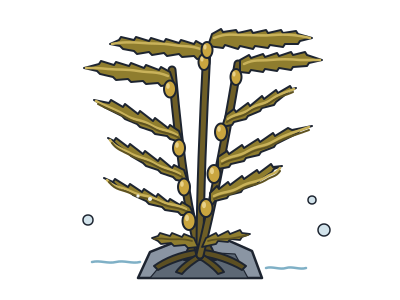
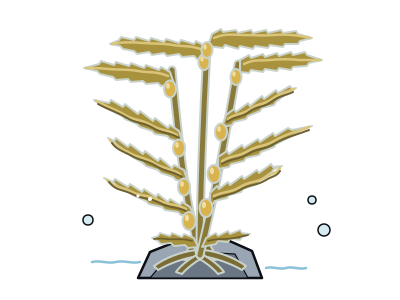
- Giant kelpLooks like a plant, is not one; grows up to half a metre a day.
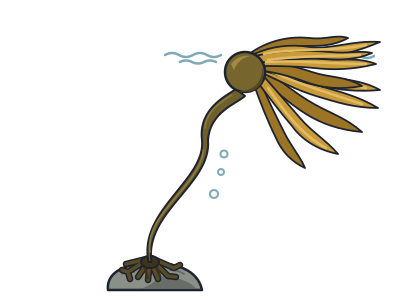
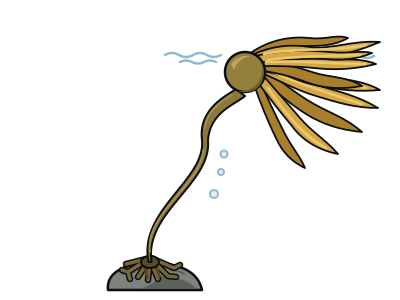
- Bull kelpA single gas-filled float, the size of a fist, holds up a crown of blades on a whip-thin stalk.
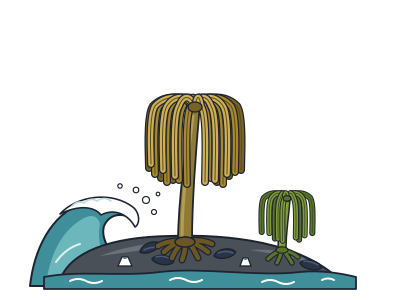
- Sea palmA seaweed shaped like a tiny palm tree that thrives where the biggest waves crash.
- KombuThe seaweed in Japanese soup stock, whose savoury taste led to the discovery of umami.