A group of living things
Kelps
Laminariales
The great brown seaweeds that build forests under the sea
This branch is shown at about 73 million years ago; its age is a rough estimate.
You and kelps meet in the Eukaryotes branch, shown at about 1.8 billion years ago (on 28 July, in a calendar from life's shared ancestor to today).
Kelps are the great brown seaweeds that build forests under the sea. They range from bull kelp, which has one big gas-filled float, to kombu, the kelp that gives Japanese soup stock its flavour. Kelp makes its food from sunlight, but it is not a plant. Its relatives include tiny diatoms and water moulds. It is not closely related to land plants or to green and red seaweeds.
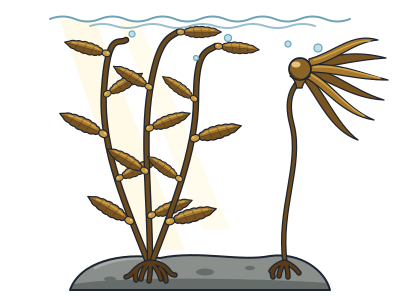
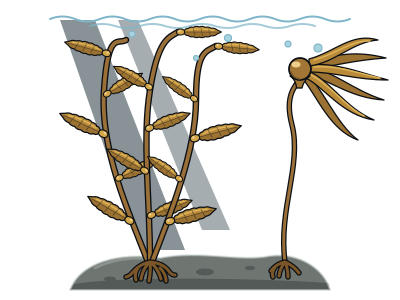
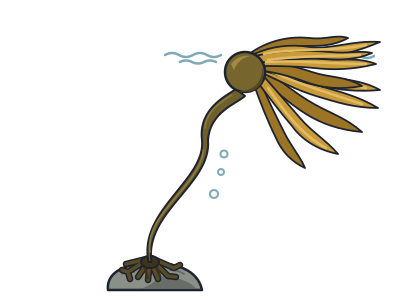
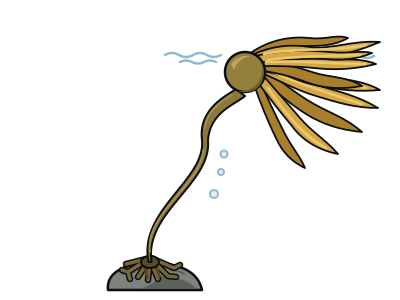
A kelp has a holdfast that grips the rock, a stem-like stalk and flat, leaf-like blades. Some kinds also have gas-filled floats that lift their blades up towards the light. In bull kelp, one round float sits at the top of a long, hollow stalk, with many ribbon-like blades streaming from it. Kelps can grow amazingly fast. In ideal conditions, giant kelp can add up to about 60 cm in a single day.
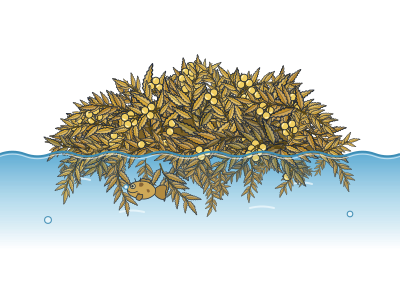
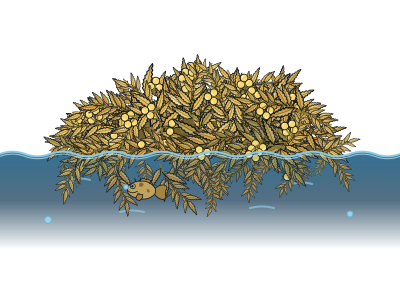
Kelps need cool to cold water that is rich in nutrients. They also need sunlight, so they grow in shallow seas near the coast, rarely deeper than about 15 to 40 metres. Their forests give food and shelter to thousands of kinds of fish, small sea creatures without backbones, and sea mammals such as seals, sea otters and whales.
A mystery gas
The float of a bull kelp holds carbon monoxide gas, and no one knows what it is for.
The taste of umami
In 1908 a Japanese scientist, Kikunae Ikeda, used kombu to find out what causes the savoury taste called umami.
A one-year wonder
Bull kelp usually lives for only about a year, sometimes up to about 18 months, yet in that time it can grow up to about 36 metres long.
Inside kelps
- Giant kelpLooks like a plant, is not one; grows up to half a metre a day.
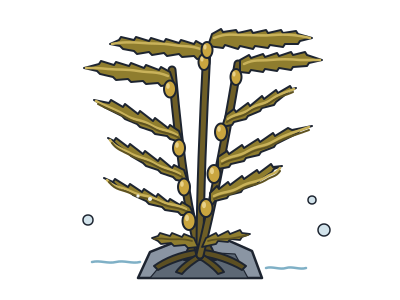
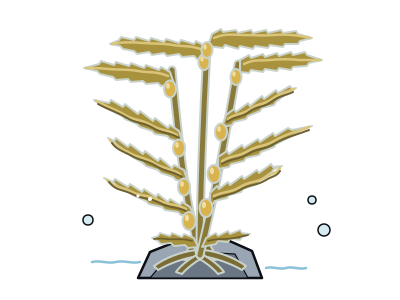
- Bull kelpA single gas-filled float, the size of a fist, holds up a crown of blades on a whip-thin stalk.
- Sea palmA seaweed shaped like a tiny palm tree that thrives where the biggest waves crash.
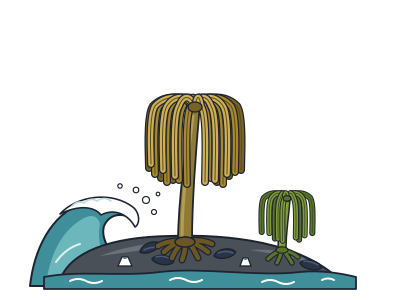
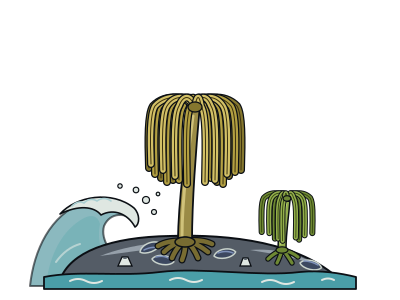
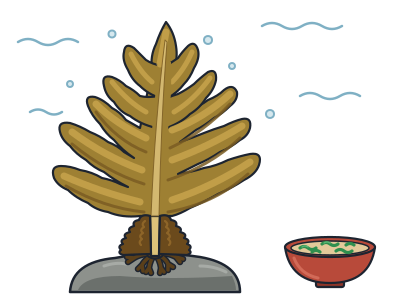
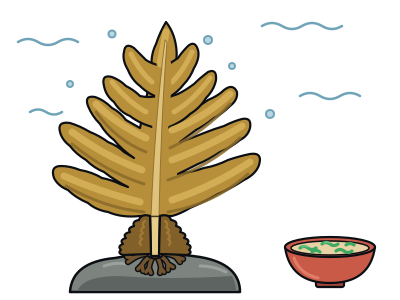
- KombuThe seaweed in Japanese soup stock, whose savoury taste led to the discovery of umami.
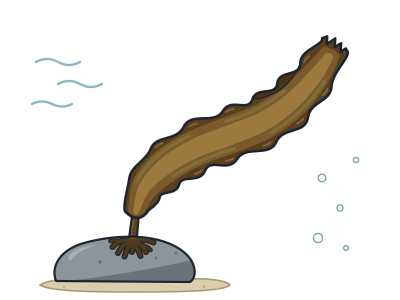
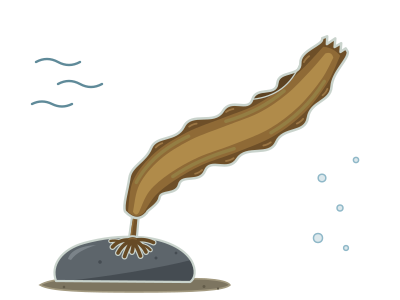
- WakameThe silky green ribbons in miso soup, farmed in Asia and now spreading around the world.