A species
Bladderwrack
Fucus vesiculosus
The rubbery seaweed with pop-able air bubbles, and it isn't a plant at all.
You and the bladderwrack meet in the Eukaryotes branch, shown at about 1.8 billion years ago (on 28 July, in a calendar from life's shared ancestor to today).
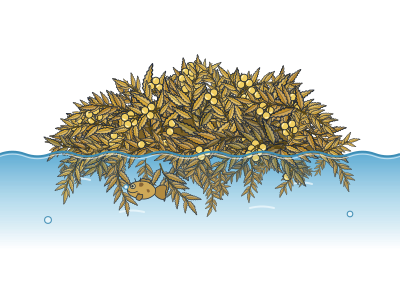
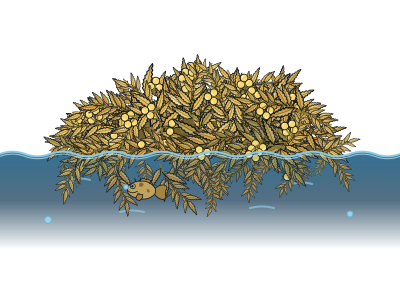
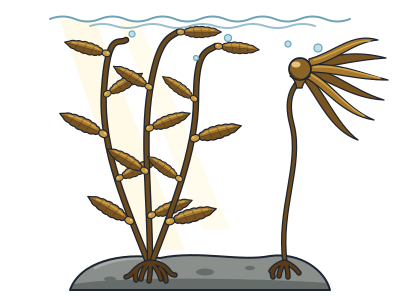
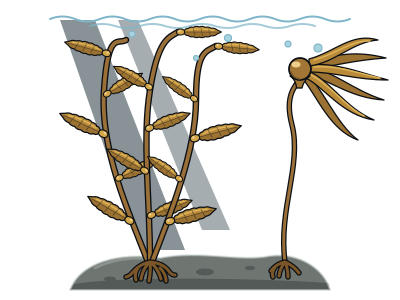
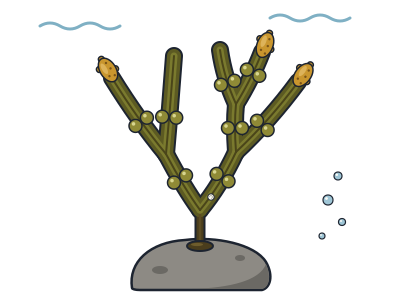
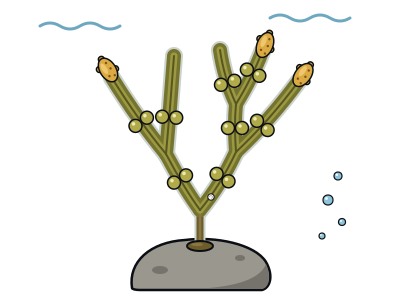
Walk along a rocky shore at low tide and you may find slippery, rubbery mats of olive-brown seaweed dotted with shiny round bubbles. These bubbles are air-filled floats. They usually come in pairs, one on each side of a raised rib running down the middle of each frond. When the tide comes in, they lift the fronds up towards the light so the seaweed can make food from sunlight.
Here is the surprise: bladderwrack is not a plant. It is a brown seaweed, part of a big group that also includes tiny diatoms and water moulds. It is only distantly related to land plants, animals and fungi. Brown seaweeds are one of only about five groups of living things that built complex bodies out of many cells all on their own. The others are animals, green plants, fungi and red seaweeds. Its neighbours on the tree are sargassum, a closer relative from the same wrack group, and giant kelp. Bladderwrack is a wrack, not a true kelp.
How big it grows depends on the waves. On sheltered shores it reaches about a metre long, about as tall as a six-year-old. On wave-battered rocks it rarely grows past about 20 cm and may have no bubbles at all. It also gives shelter to small sea creatures. Tiny tube worms live on its fronds, and periwinkle snails graze on it.
A violet surprise
Iodine was discovered in 1811 from brown seaweed. A French chemist added acid to seaweed ash and saw a beautiful violet vapour rise.
A million eggs
One plant can make more than 1,000 swollen tips for making young, and over a million eggs. On British shores it is most fertile around May and June.
Slow and steady
A bladderwrack usually lives about 4 to 5 years. In summer it can grow almost a centimetre a week, about the width of your fingernail.