A species
Kombu
Saccharina japonica
The seaweed in Japanese soup stock that led to the discovery of umami.
You and the kombu meet in the Eukaryotes branch, shown at about 1.8 billion years ago (on 28 July, in a calendar from life's shared ancestor to today).
More than a hundred years ago, a Japanese chemist named Kikunae Ikeda studied a simple kombu broth. He was sure its rich, savoury taste was not sweet, salty, sour or bitter. In 1908 he traced it to glutamate, which this seaweed holds in large amounts, and called the taste "umami". He got about 30 grams of glutamate from about 12 kilograms of kombu.
Kombu looks a bit like a plant, but it isn't one. It is a brown seaweed, and brown seaweeds are only distantly related to green plants. They are one of only a few groups of living things that built complex, many-celled bodies on their own. On this tree, its relatives include giant kelp and wakame.
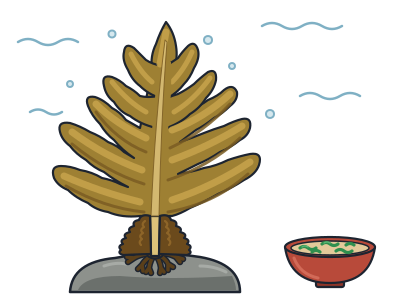
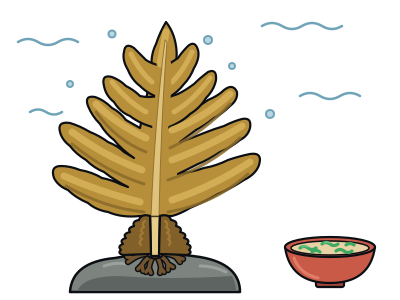
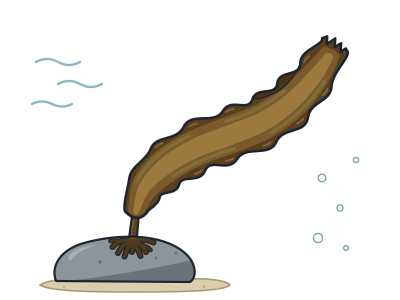
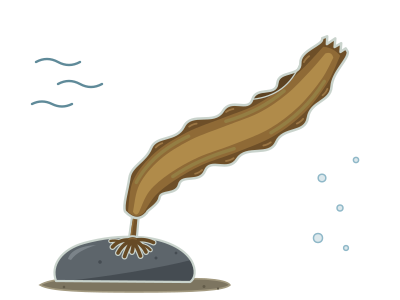
Kombu grows on rocky seabeds in cold water below the low-tide line, from northern Japan through the Sea of Japan to the Sea of Okhotsk. A root-like holdfast grips the rock, and a short stalk holds up one long blade that is thick in the middle and ruffled at the edges. After a year on a farm, a blade is often 2 to 4 metres long. The longest are nearly as long as a family car. Water warmer than about 23 °C makes the blades break down.
Two winters in the wild
Left alone in the sea, kombu usually lives about two years and survives two winters. On farms, its life is cut down to just one winter.
A huge sea crop
In 1952 China produced only about 22 tonnes of dried kombu. By 2000 it was growing more than 4 million tonnes of fresh kombu a year.
A tasty team
Traditional Japanese stock pairs kombu with dried bonito fish flakes. In 1913 one of Ikeda's students found that these flakes hold a second umami substance.
Next to it on the tree
- Giant kelpLooks like a plant, is not one; grows up to half a metre a day.
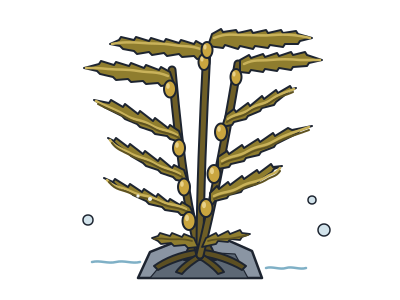
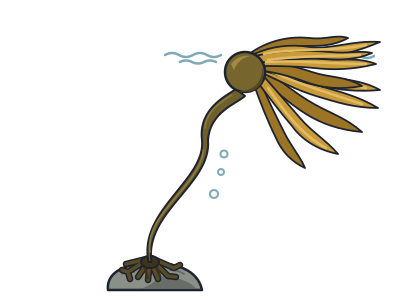
- Bull kelpA single gas-filled float, the size of a fist, holds up a crown of blades on a whip-thin stalk.
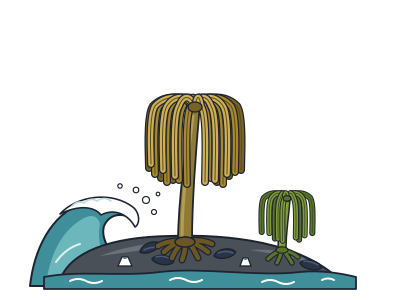
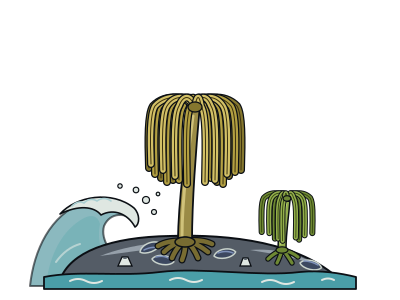
- Sea palmA seaweed shaped like a tiny palm tree that thrives where the biggest waves crash.
- WakameThe silky green ribbons in miso soup, farmed in Asia and now spreading around the world.