A species
Bull kelp
Nereocystis luetkeana
One fist-sized float holds up a whole crown of golden blades.
You and the bull kelp meet in the Eukaryotes branch, shown at about 1.8 billion years ago (on 28 July, in a calendar from life's shared ancestor to today).
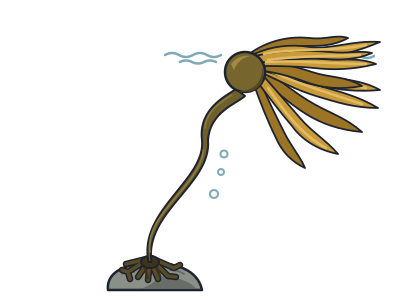
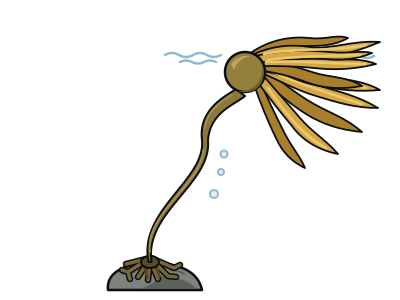
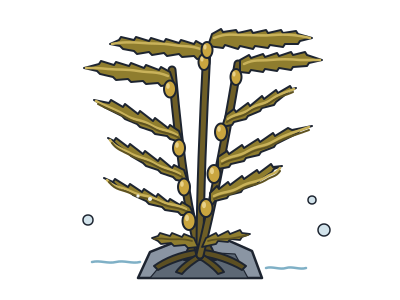
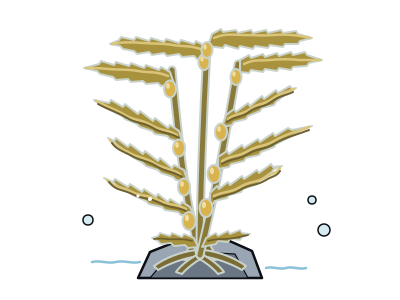
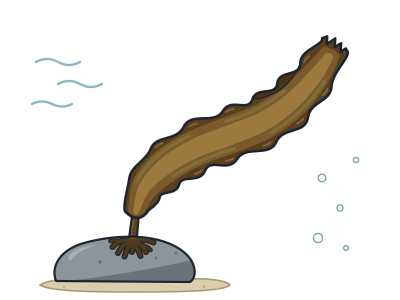
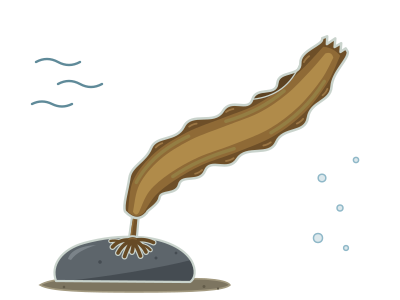
Picture one round float, about the size of your fist, bobbing at the sea surface. Below it hangs a whip-thin stalk, up to about 35 metres long, reaching down to the rocks. That is about as long as three buses end to end. A crown of long, narrow, golden-brown blades spreads from the top of the float and trails in the current.
Bull kelp looks like a plant, but it is not one. It is a brown seaweed, more closely related to tiny diatoms and water moulds than to trees or grass. Its 'root' is a holdfast that grips the rock, and its 'leaves' are called blades. Giant kelp and the sea palm belong to the same kelp family. Giant kelp has many small floats, one at the base of each blade, instead of one big one.
Most bull kelp lives for only about a year. In that time it grows from a tiny spore to full size, sometimes adding up to about 25 centimetres in a single day. It grows on rocky coasts with strong currents, from central California to Alaska. Its floating forests give shelter, food and nursery areas to hundreds of sea creatures, including young fish.
A strange gas
The gas inside the float includes carbon monoxide, along with oxygen and nitrogen. Scientists do not know of any use it has for the kelp.
Kelp fishing line
Indigenous peoples of the Pacific Northwest made fishing lines, ropes and nets from the stalks, and stored oils in the bulbs.
A forest vanished
Between about 2013 and 2017, more than 90% of bull kelp disappeared along about 350 km of northern California coast. A sea star disease, a marine heatwave and a huge rise in purple sea urchins all played a part.
Next to it on the tree
- Giant kelpLooks like a plant, is not one; grows up to half a metre a day.
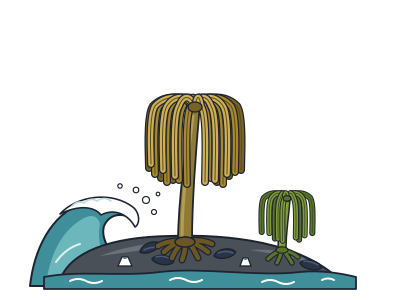
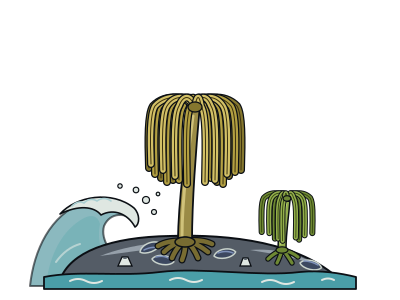
- Sea palmA seaweed shaped like a tiny palm tree that thrives where the biggest waves crash.
- KombuThe seaweed in Japanese soup stock, whose savoury taste led to the discovery of umami.
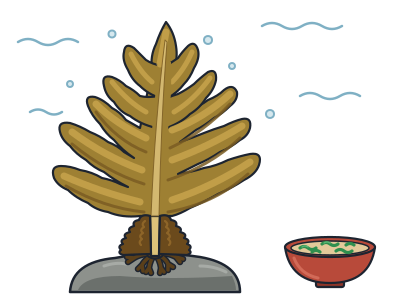
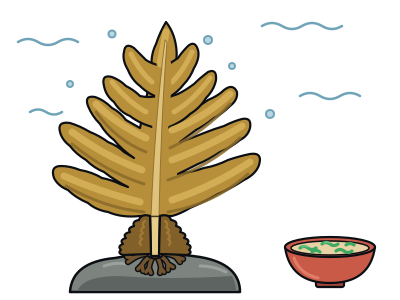
- WakameThe silky green ribbons in miso soup, farmed in Asia and now spreading around the world.