A species
Chromera
Chromera velia
A tiny golden-brown coral alga that turned out to be a sunlight-powered cousin of the malaria parasite
You and the chromera meet in the Eukaryotes branch, shown at about 1.8 billion years ago (on 28 July, in a calendar from life's shared ancestor to today).
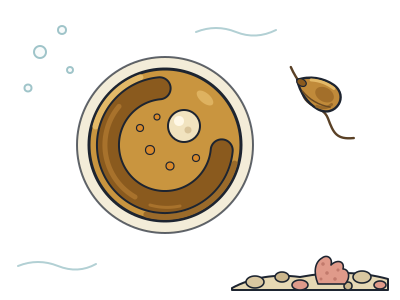
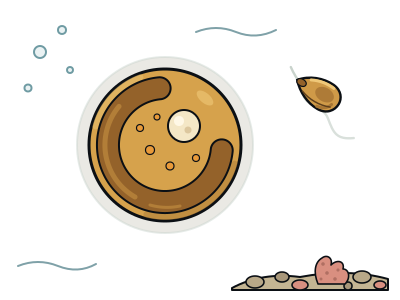
Meet a tiny golden-brown alga that lives with corals. A student at the University of Sydney first collected it from a coral in Sydney Harbour in the early 2000s, while he was searching for other algae. Scientists formally named it in 2008. Under a microscope it looks like 'little brown balls'. But its genes held a big surprise. It is one of the malaria parasite's closest known relatives, yet unlike the parasite it still makes its own food from sunlight.
Malaria parasites carry a leftover chloroplast that can no longer use sunlight, although the parasite still needs it for other jobs. This alga has a working chloroplast of the same origin. That gave strong support to the idea that the malaria parasite's ancestors were once algae living on sunlight. Its genes share features with both dinoflagellates and the malaria parasite group, which helped settle a long debate about where malaria parasites came from.
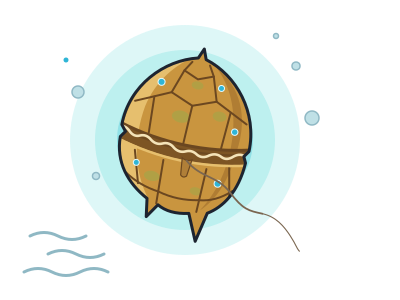
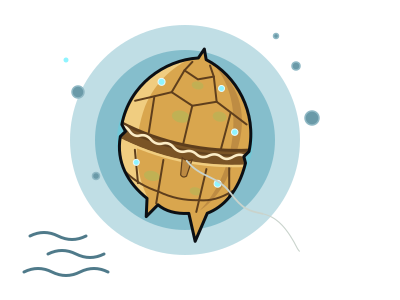
Its round resting cell is only about 5 thousandths of a millimetre across. About 200 lined up in a row would span a single millimetre. Most of the time it is a round cell that does not move. It can also become a swimmer with two whip-like tails that zig-zags quickly through the water.
Besides Sydney Harbour, it has been found with corals on the Great Barrier Reef and in the Caribbean. Experiments with young corals suggest it is not a helpful partner to them.
A stand-in for malaria research
Malaria parasites are hard to grow, but this alga is easy and cheap to grow in the lab. Scientists have suggested using it as a safe stand-in for testing antimalarial drugs.
Passed down through eggs
A 2013 study found that in a reef coral called Montipora digitata, the alga is passed from parent to young inside the coral's eggs.
Alga of the Year
The German Phycological Society named it 'Alga of the Year 2020'.
Next to it on the tree
- DinoflagellatesArmoured, spinning swimmers behind glowing waves, red tides and healthy coral reefs.
- Malaria parasite and kinParasites that carry a ghost of a plastid from photosynthetic ancestors.
- CiliatesCells covered in thousands of beating hairs, with one nucleus for everyday life and one for swapping genes.