A group of living things
Malaria parasite and kin
Apicomplexa
Parasites that still carry a ghost of their algal past
This branch is shown at about 800 million years ago; its age is a rough estimate.
You and malaria parasite and kin meet in the Eukaryotes branch, shown at about 1.8 billion years ago (on 28 July, in a calendar from life's shared ancestor to today).
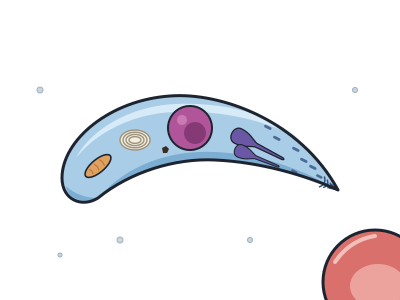
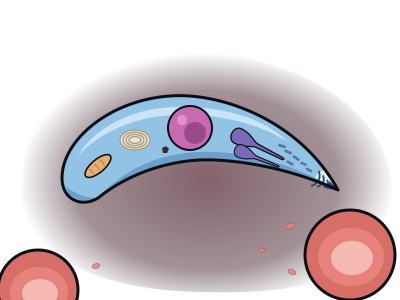
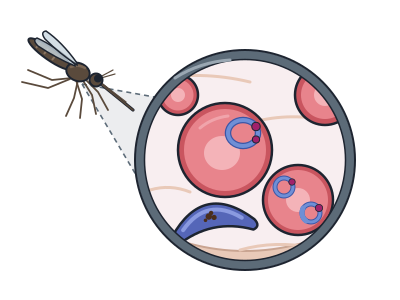
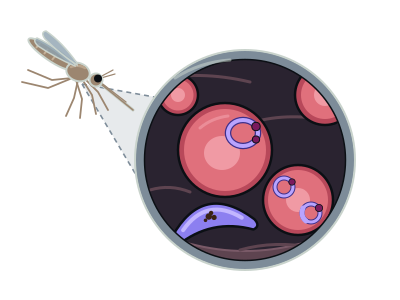
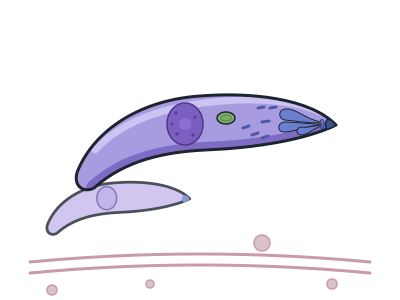
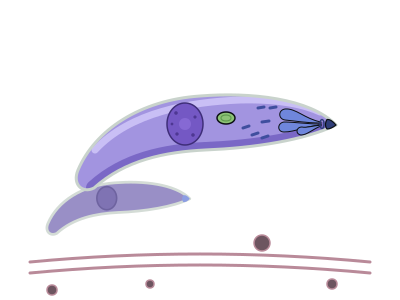
The parasites behind malaria carry a strange leftover inside their cells. Long ago, their ancestor swallowed a red alga and kept it. Over time, that captured alga shrank into a tiny, colourless part called the apicoplast. It no longer uses sunlight to make food. It still makes fats and other useful chemicals, though, and malaria and Toxoplasma parasites cannot survive without it.
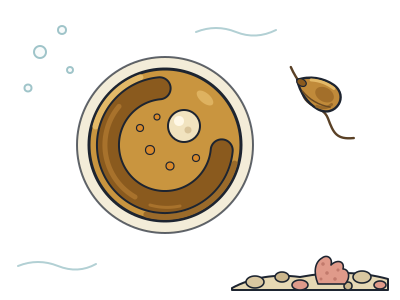
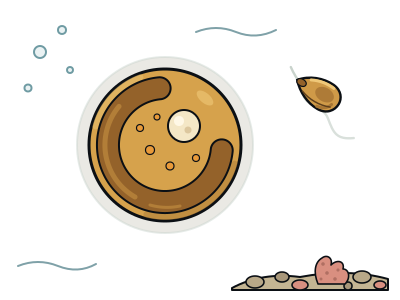
This ghost links them to some surprising relatives. Dinoflagellates are tiny swimmers that sit beside them on the tree, and many of them carry plastids that trace back to the same red-algal partner. In 2008, scientists described a living alga, first collected from Australian corals, that still uses sunlight with this same kind of plastid. It is the closest known relative of these parasites that can still do so.
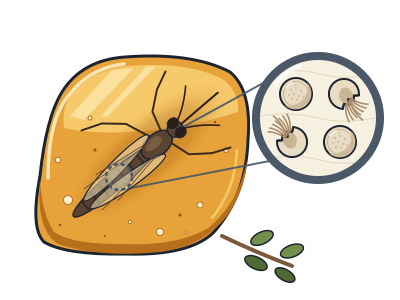
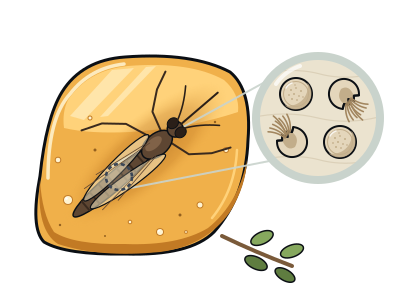
Almost all members of this group live inside other animals, from insects to farm animals and people. Their trademark is a pointed tip at one end of the cell. It works like a set of break-in tools that lets the parasite slip into its host's cells. The stages that break in have no tails or hairs to swim with, so they glide smoothly instead.
Hidden in the reefs
In 2019, scientists found members of this group living inside about 70% of the world's corals. These coral dwellers still have the genes for making chlorophyll, the green pigment plants use to catch sunlight, but they do not photosynthesise.
A giant you can see
One member that lives in lobsters grows to about 2.6 millimetres long while feeding. That is big enough to see without a microscope. It is also the fastest glider recorded in the group.
Many ways in
Members of this group reach new hosts in different ways. Some ride in mosquitoes and other carriers, some spread through dirty droppings, and some pass along when one animal eats another.
Inside malaria parasite and kin
Next to it on the tree
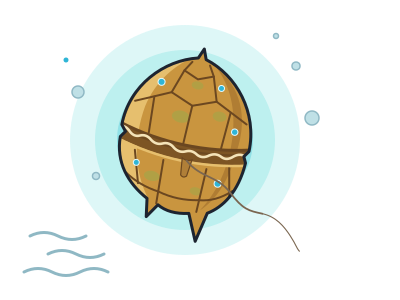
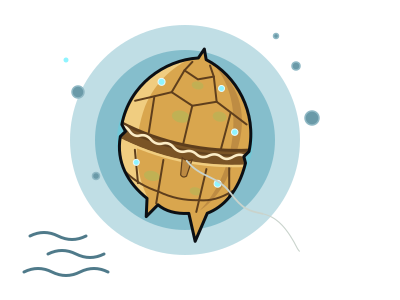
- DinoflagellatesArmoured, spinning swimmers behind glowing waves, red tides and healthy coral reefs.
- CiliatesCells covered in thousands of beating hairs, with one nucleus for everyday life and one for swapping genes.
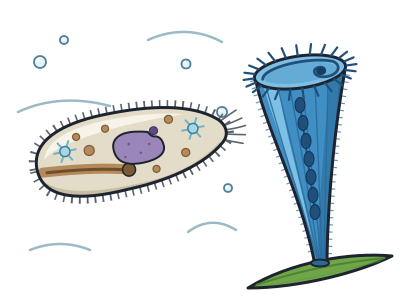
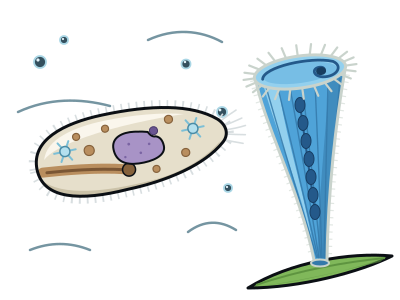
- ChromeraA tiny golden-brown alga that lives inside corals, first discovered on an Australian reef in 2008.