A species
Malaria parasite
Plasmodium falciparum
A single cell that rides in mosquitoes, hides in our blood, and has left its mark on human genes.
You and the malaria parasite meet in the Eukaryotes branch, shown at about 1.8 billion years ago (on 28 July, in a calendar from life's shared ancestor to today).
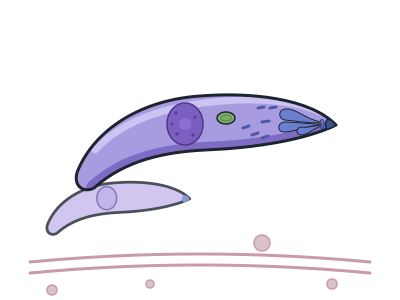
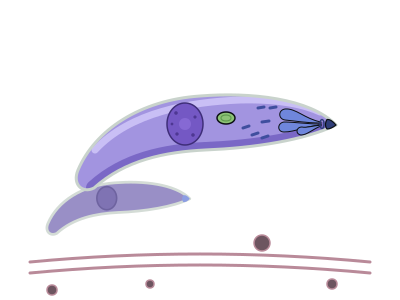
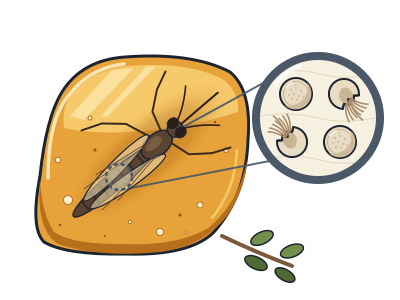
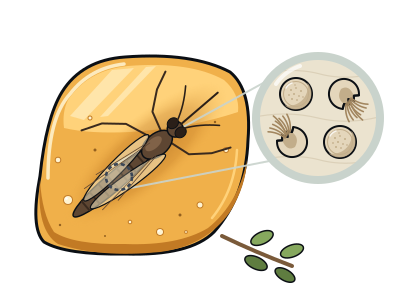
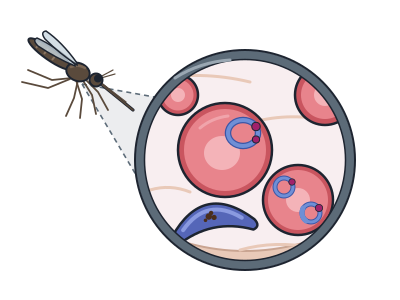
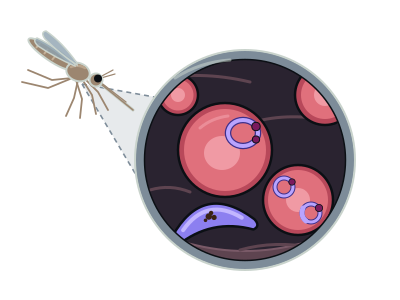
This tiny single cell travels in the bite of a female Anopheles mosquito and ends up hiding inside our red blood cells. First, though, it multiplies in the liver. Then it slips into red blood cells, where each parasite grows and splits into many new ones, often about 16. About every two days the cells burst and the new parasites invade more cells. These bursts help cause the bouts of fever that come with malaria. Of the five kinds of malaria parasite that infect people, this one is the deadliest.
It has changed us, too. Scientists call malaria the strongest known force of natural selection on human genes in recent history. People with one copy of the sickle-cell gene are about ten times less likely to get severe malaria. That is why the gene stayed common in malaria regions, even though having two copies causes sickle-cell disease.
Its family story is surprising. It is related to Toxoplasma, another parasite, and its distant ancestors were algae. A close relative still uses sunlight for energy and is found with corals. That relative was first found in a coral in Sydney Harbour.
Who found it
Alphonse Laveran first saw the parasite in human blood in 1880. Ronald Ross showed in 1897 that mosquitoes carry malaria parasites. In 1898, Giovanni Battista Grassi showed that Anopheles mosquitoes pass it to people.
Hardest hit
About 95% of malaria cases and deaths happen in the World Health Organization's African Region, which covers most of Africa. There, about three out of every four people who die from malaria are children under five.
New vaccines
The World Health Organization recommends two malaria vaccines, and they are being rolled out in many African countries. Mixes of medicines built around one called artemisinin are the main treatment.