A group of living things
Dinoflagellates
Dinoflagellata
Spinning, armoured single cells that make waves glow and keep coral reefs alive
This branch is shown at about 650 million years ago; its age is a rough estimate.
You and dinoflagellates meet in the Eukaryotes branch, shown at about 1.8 billion years ago (on 28 July, in a calendar from life's shared ancestor to today).
Dinoflagellates are single cells that spin as they swim. Many wear armour made of small plates fitted together like tiles. They are behind three famous sights in the sea: waves that sparkle blue at night, many red tides, and the food that keeps coral reefs healthy.
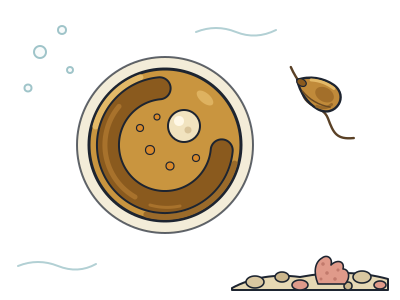
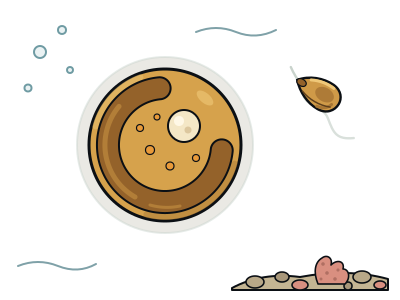
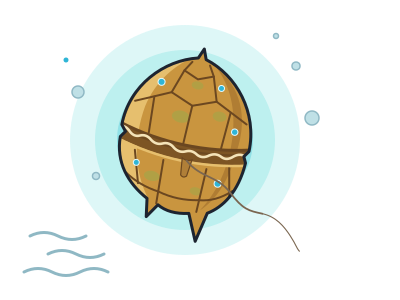
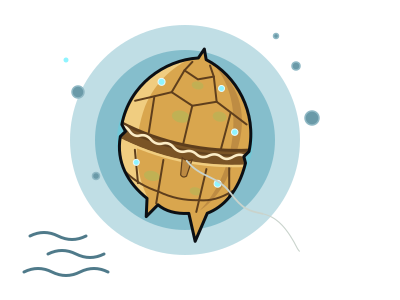
A swimming dinoflagellate has two tiny beating tails called flagella. One is flat like a ribbon and lies in a groove that circles the middle of the cell like a belt. The other trails behind like a tail. Together they make the cell whirl, which is how the group got its name. Most are far too small to see. About half can make their own food from sunlight, and many others eat other living things.
Some live inside reef corals and pass on food that gives the coral up to about 90% of its energy. When stressed corals push them out, the coral turns white. This is called bleaching. Corals can recover if the stress is short, but long stress can kill them. Other kinds multiply into harmful blooms. The cause of the Florida red tide makes a nerve poison. Breaking waves throw it into the air, where it can irritate beachgoers' breathing, and it builds up in shellfish.
Here is the surprise: they are not close relatives of plants. On this tree they sit beside the malaria parasite and its kin, and the ciliates. All of these are single cells with tiny flat sacs just under their surface. Studies suggest the malaria parasite and its kin are their closest cousins of the three.
Packed with DNA
Dinoflagellates carry far more DNA than most other living things with complex cells. Sometimes it fills about half the cell.
Glowing on a timetable
In many of the kinds that glow, the light follows a daily body clock. They are dimmest by day and brightest about 2 hours after dark.
A giant single cell
Sea sparkle is huge for one cell. It is usually about 0.4 to 1.5 mm across and sometimes up to about 2 mm, so it is just big enough to see, like a grain of sand.
Inside dinoflagellates
- Sea sparkleMakes breaking waves glow electric blue at night when the water is disturbed.
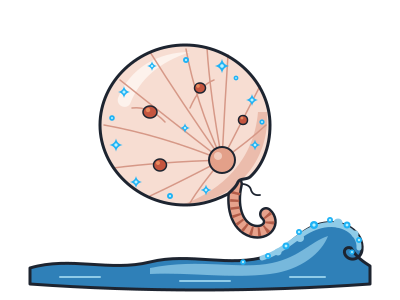
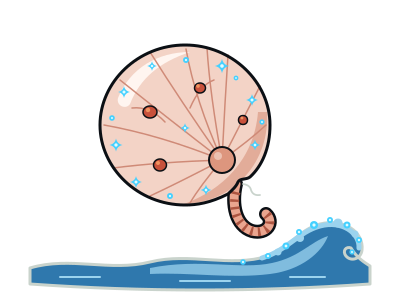
- Coral's algae partnerLives inside coral and feeds it sugar; when heat drives it out, the coral bleaches white.
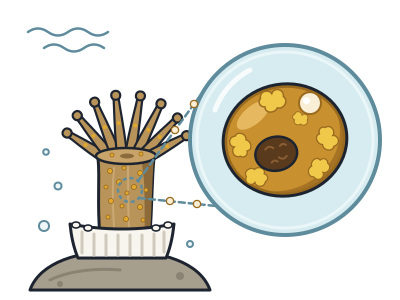
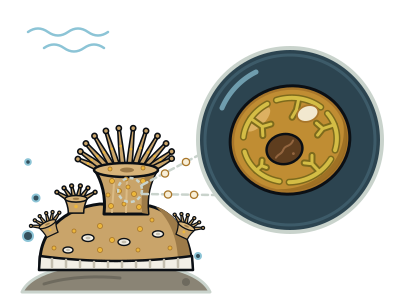
- Florida red tideIts blooms tint the sea red-brown and release toxins that kill fish and make beachgoers cough.
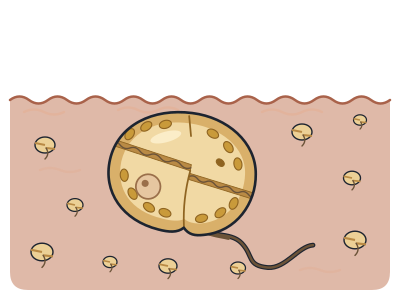
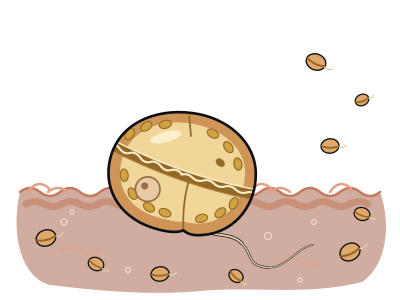
- Bioluminescent bay glowMakes the famous glowing bays of Puerto Rico, where every paddle stroke lights up blue.
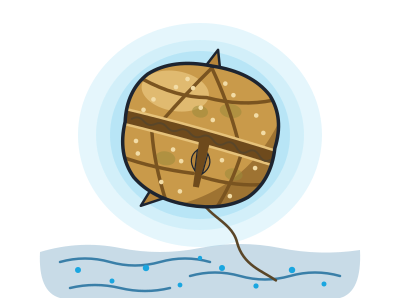
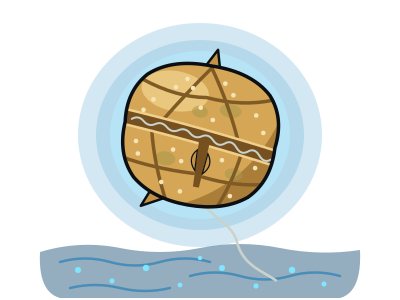
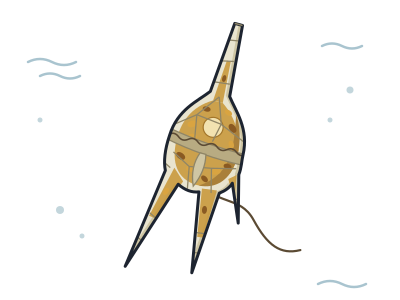
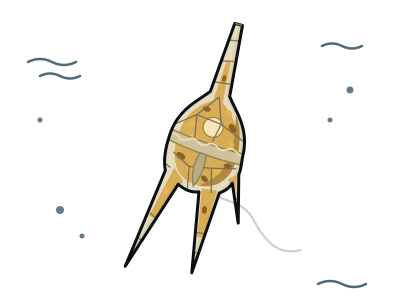
- Horned dinoflagellateAn armoured cell with long horns, common in lakes and a favourite under school microscopes.
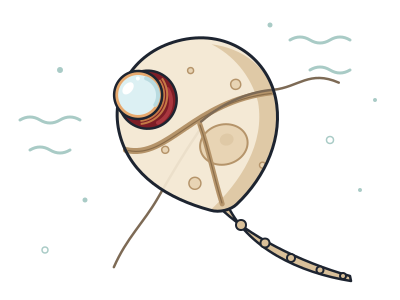
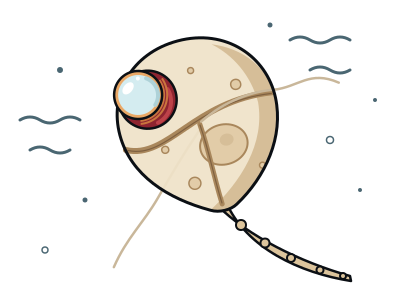
- Single-celled eyeA single cell with a camera-like eye, complete with a lens, built from its own parts.
Next to it on the tree
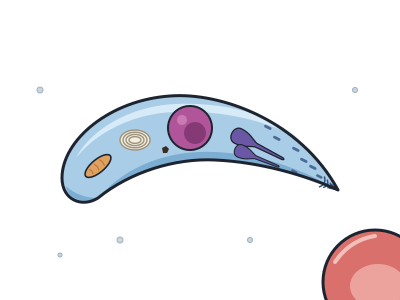
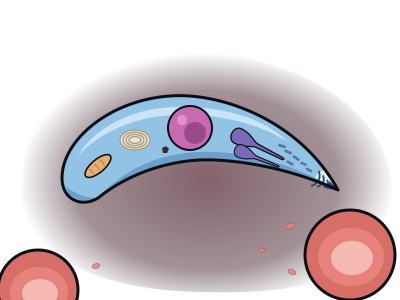
- Malaria parasite and kinParasites that carry a ghost of a plastid from photosynthetic ancestors.
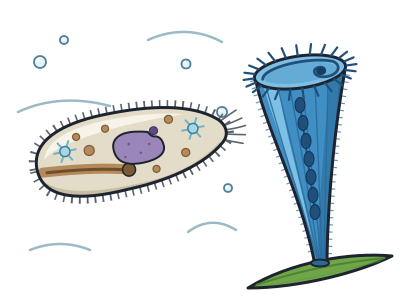
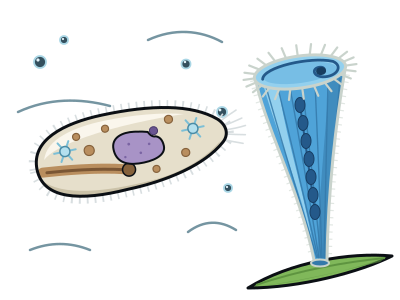
- CiliatesCells covered in thousands of beating hairs, with one nucleus for everyday life and one for swapping genes.
- ChromeraA tiny golden-brown alga that lives inside corals, first discovered on an Australian reef in 2008.