A species
Sea sparkle
Noctiluca scintillans
A single cell that makes waves glow electric blue at night
You and the sea sparkle meet in the Eukaryotes branch, shown at about 1.8 billion years ago (on 28 July, in a calendar from life's shared ancestor to today).
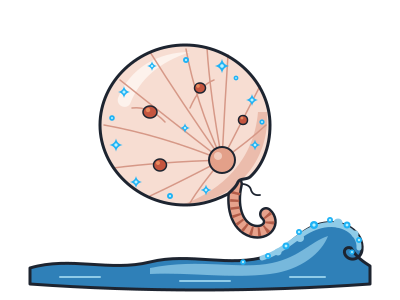
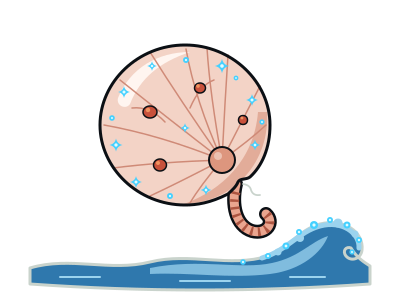
On some nights, every breaking wave flashes electric blue. Footprints in wet sand sparkle, and a swimmer's arms leave trails of light. The glow comes from sea sparkle, a tiny drifting living thing made of just one cell. It lights up only when something pushes or bends it, such as a wave, a boat or a passing fish. Each flash comes from many tiny light-making parts inside the cell.
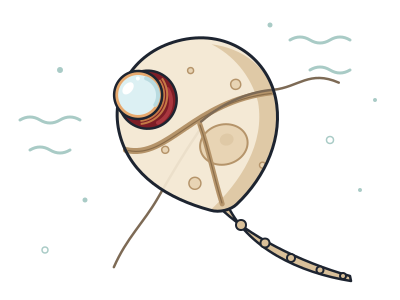
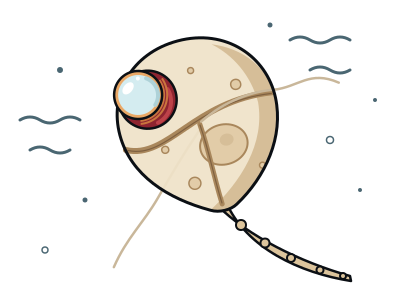
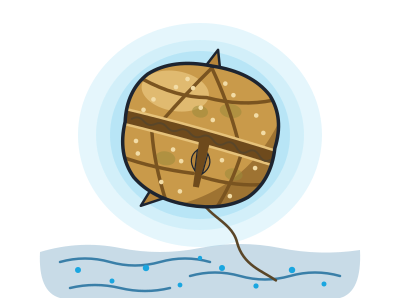
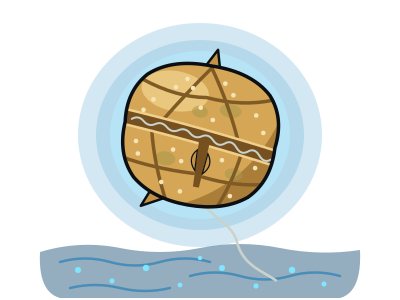
For a single cell, it is a giant. Most are about the size of a grain of sand, so you can just about see one with the naked eye. It looks like a see-through balloon with one sticky tentacle. It uses the tentacle to catch other plankton, and you can see the food inside its clear body.
Sea sparkle is a dinoflagellate. On the tree, it sits beside the tiny algae that live with corals and beside the Florida red tide. Many of its dinoflagellate relatives make food from sunlight like plants, but the common red form of sea sparkle cannot. Instead it feeds on diatoms and fish eggs. Unlike the Florida red tide, it makes no poison and is generally safe to swim in. Very thick blooms can still harm fish and other sea life, because ammonia builds up and oxygen runs low.
A green version
A second form, green sea sparkle, carries tiny green algae inside it that make food from sunlight. It still eats plankton when there is plenty around. It lives mainly in tropical seas such as the Arabian Sea and the Red Sea.
Red by day
A big bloom can pack about 2.4 million cells into a litre of water. By day, that many cells can turn the sea pink, orange or red.
Moving south
In Tasmania, sea sparkle was first seen in 1994 and was much more common by 2004. Its spread is linked to the warming East Australian Current carrying warm water south.
Next to it on the tree
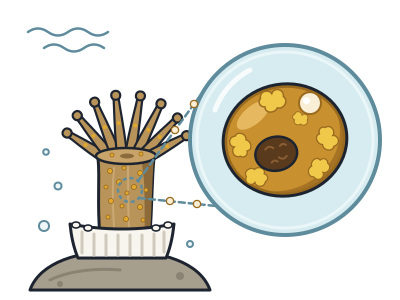
- Coral's algae partnerLives inside coral and feeds it sugar; when heat drives it out, the coral bleaches white.
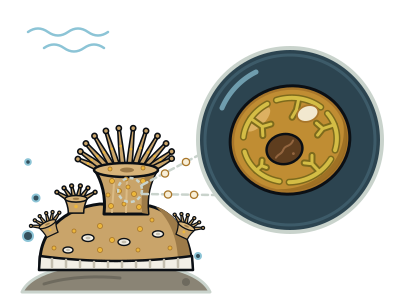
- Florida red tideIts blooms tint the sea red-brown and release toxins that kill fish and make beachgoers cough.
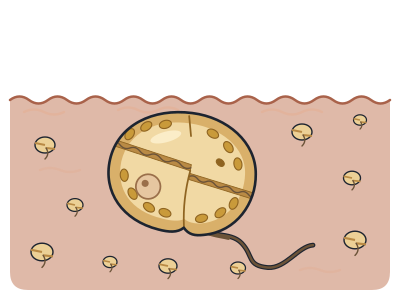
- Bioluminescent bay glowMakes the famous glowing bays of Puerto Rico, where every paddle stroke lights up blue.
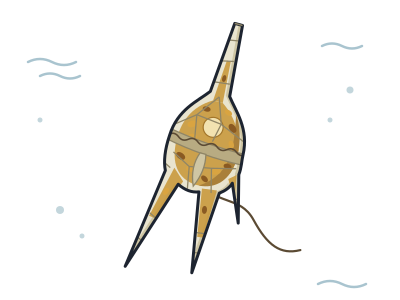
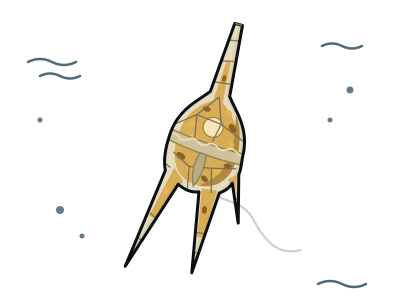
- Horned dinoflagellateAn armoured cell with long horns, common in lakes and a favourite under school microscopes.
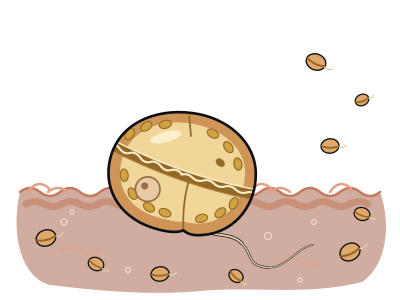
- Single-celled eyeA single cell with a camera-like eye, complete with a lens, built from its own parts.