A species
Florida red tide
Karenia brevis
A microscopic swimmer whose blooms turn the sea red-brown and make beachgoers cough
You and the florida red tide meet in the Eukaryotes branch, shown at about 1.8 billion years ago (on 28 July, in a calendar from life's shared ancestor to today).
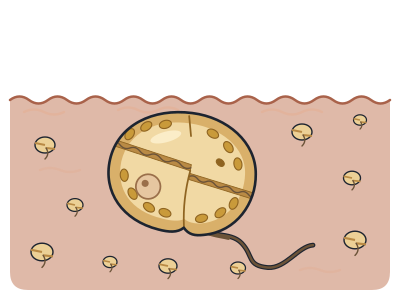
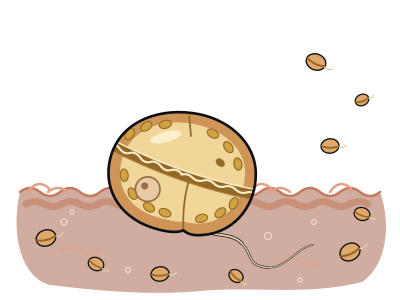
When this tiny swimmer multiplies into the millions, it can tint the sea red-brown. Its cells hold powerful nerve poisons that kill fish and make marine mammals, sea turtles and seabirds sick. The cells are fragile and break open easily, so wind and waves throw the poison into sea spray. People on the beach breathe it in, and many get sore eyes, a stuffy nose and a dry cough.
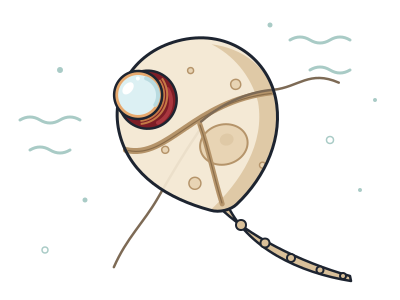
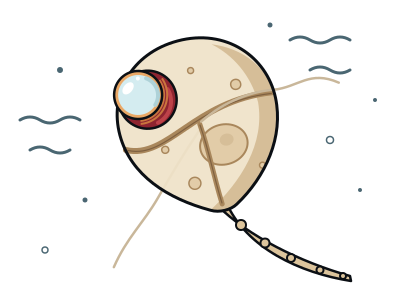
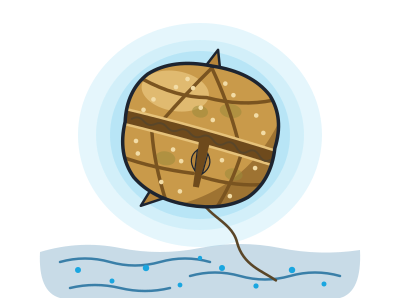
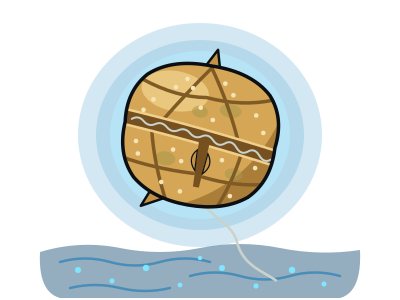
Each cell is far too small to see without a microscope. It has no hard shell. It has two whip-like threads that spin it through the water, and it swims towards the light, which keeps it near the surface.
It is not a plant or a seaweed. It belongs to the dinoflagellates, a group of mostly swimming single cells. On the tree it sits beside sea sparkle and an algae partner that lives inside some corals. Here is the surprise: its golden-brown colour comes from the same pigment found in kelp and diatoms, not the one most of its dinoflagellate relatives use.
Blooms usually start in late summer or autumn, about 15 to 65 kilometres out to sea. Wind and currents then push them towards the coast. It can only live in salt water.
Named after a scientist
In 2000 scientists moved it into a new group called Karenia, named in honour of the red tide researcher Karen A. Steidinger.
A slow swimmer
It swims only about one metre an hour. Crossing a 10-metre backyard pool would take it about ten hours.
Bad news in shellfish
Eating clams or oysters that hold its poison can make people throw up and cause nerve symptoms. Even so, no human deaths from this kind of shellfish poisoning have ever been recorded.
Next to it on the tree
- Sea sparkleMakes breaking waves glow electric blue at night when the water is disturbed.
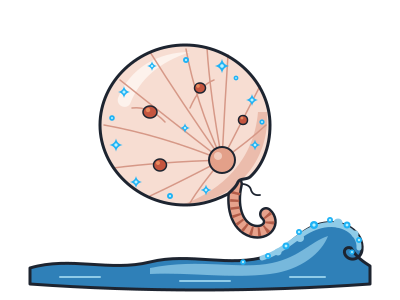
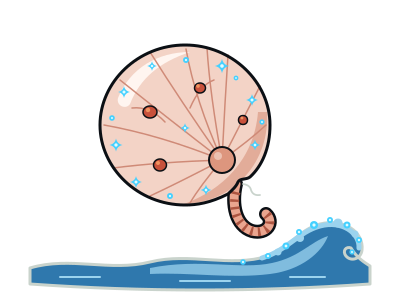
- Coral's algae partnerLives inside coral and feeds it sugar; when heat drives it out, the coral bleaches white.
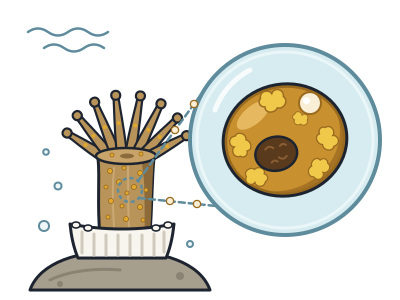
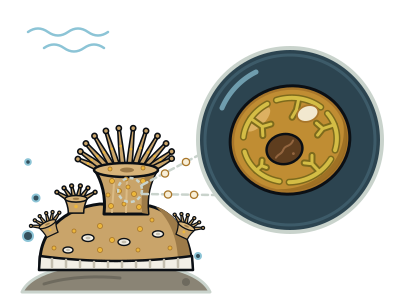
- Bioluminescent bay glowMakes the famous glowing bays of Puerto Rico, where every paddle stroke lights up blue.
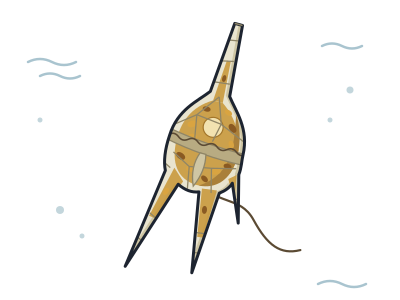
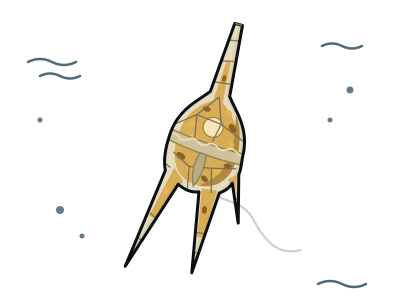
- Horned dinoflagellateAn armoured cell with long horns, common in lakes and a favourite under school microscopes.
- Single-celled eyeA single cell with a camera-like eye, complete with a lens, built from its own parts.