A species
Bioluminescent bay glow
Pyrodinium bahamense
The tiny cells that make Puerto Rico's bays glow blue with every paddle stroke.
You and the bioluminescent bay glow meet in the Eukaryotes branch, shown at about 1.8 billion years ago (on 28 July, in a calendar from life's shared ancestor to today).
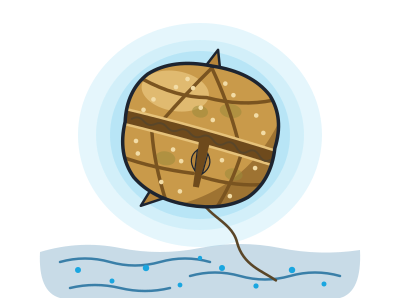
Paddle a kayak across a dark bay in Puerto Rico and every stroke lights up in sparkling blue. The light comes from this tiny living thing. When the water is disturbed, each cell flashes blue-green for about a tenth of a second. A few litres of bay water can hold hundreds of thousands of these cells, so all those flashes add up to glowing trails behind every paddle.
In 2006, Guinness World Records named Mosquito Bay, on the island of Vieques, the brightest bioluminescent bay on record. The bay's narrow mouth stops the cells being washed out to sea. Fallen leaves from the mangrove trees around it rot and feed the water with nutrients.
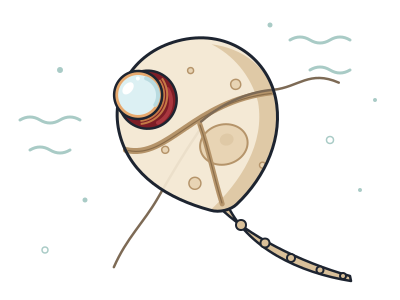
Each cell is less than a tenth of a millimetre long and wrapped in thick plates like armour. Like a plant, it uses sunlight to make food. It is a dinoflagellate. It swims with two whip-like tails: one wraps around its middle and the other trails behind like a rudder.
Here is the surprise. Dinoflagellates belong to the same larger group as the parasite that causes malaria, and as ciliates. So this beautiful bay glow is a relative of the malaria parasite.
Whirling fire
Scientists first described it in 1906, from waters near New Providence Island in the Bahamas. Its name comes from Greek words for fire and whirling, so it is sometimes called 'whirling fire'.
Hidden poison
It makes saxitoxin, a nerve poison that can build up in shellfish and pufferfish. It has made more people ill, and caused more deaths, than any other dinoflagellate that makes this kind of poison. Paddling in the glow is harmless; the danger comes only from eating contaminated seafood.
Slow and warm
It lives in warm tropical and subtropical coastal waters and estuaries. It grows slowly, splitting in two less than once every two days.
Next to it on the tree
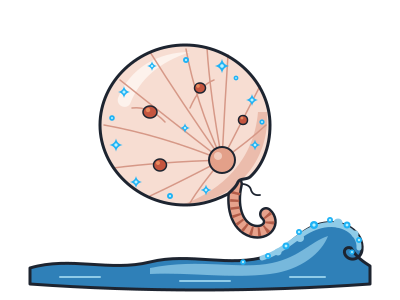
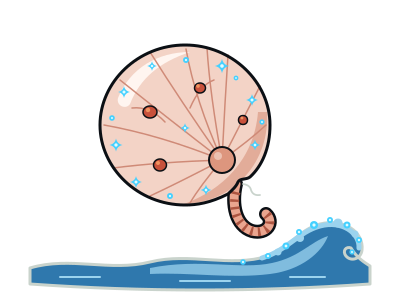
- Sea sparkleMakes breaking waves glow electric blue at night when the water is disturbed.
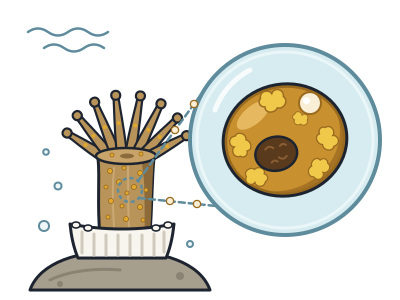
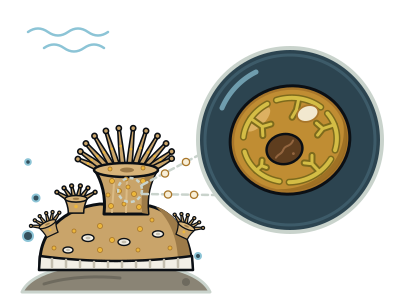
- Coral's algae partnerLives inside coral and feeds it sugar; when heat drives it out, the coral bleaches white.
- Florida red tideIts blooms tint the sea red-brown and release toxins that kill fish and make beachgoers cough.
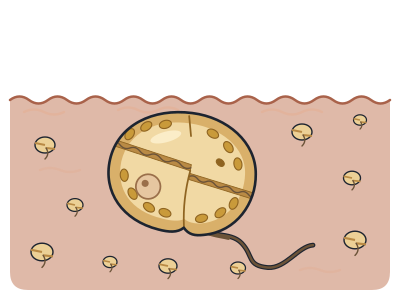
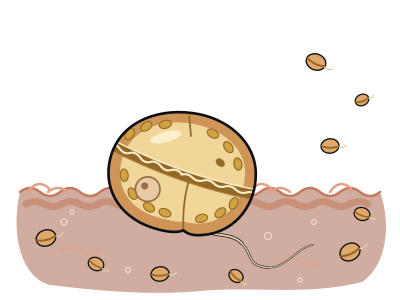
- Horned dinoflagellateAn armoured cell with long horns, common in lakes and a favourite under school microscopes.
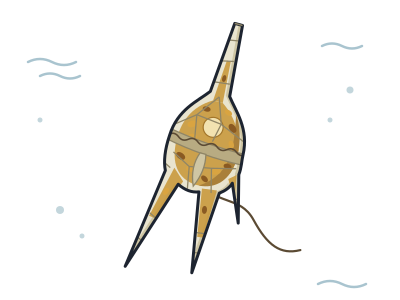
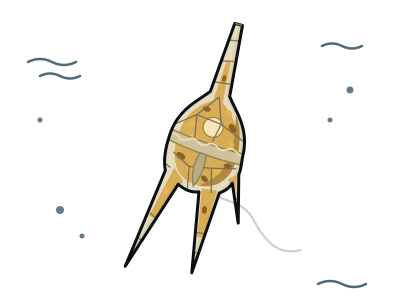
- Single-celled eyeA single cell with a camera-like eye, complete with a lens, built from its own parts.