A species
Coral's algae partner
Symbiodinium microadriaticum
The tiny golden partner that feeds coral reefs
You and the coral's algae partner meet in the Eukaryotes branch, shown at about 1.8 billion years ago (on 28 July, in a calendar from life's shared ancestor to today).
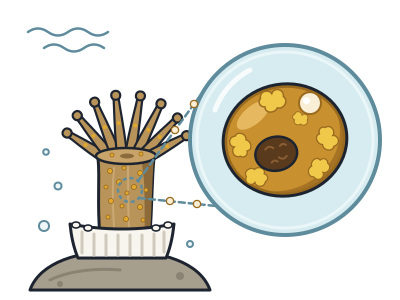
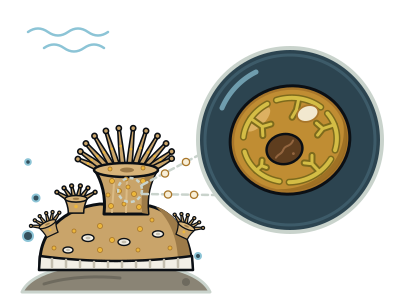
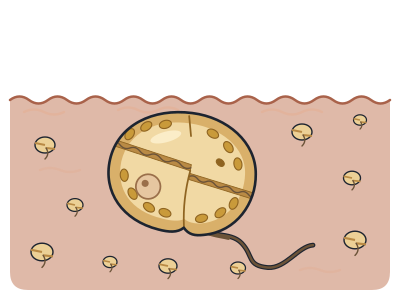
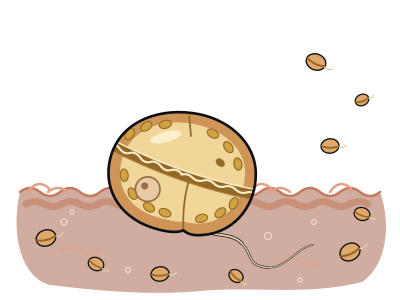
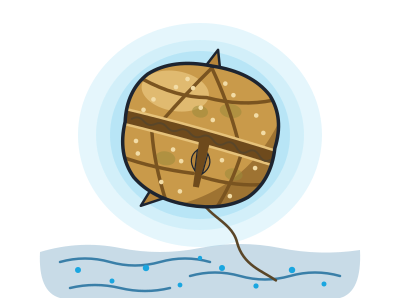
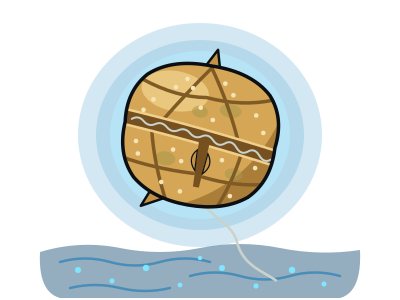
A healthy reef coral does not work alone. Huge numbers of tiny golden-brown algae cells live packed inside its see-through tissue. This alga belongs to that family of partners. It was first found inside an upside-down jellyfish, and it also lives in some corals. It uses sunlight to make sugar and passes much of it to its host. In return, the host gives it nutrients. Much of the brown and gold colour of a healthy reef comes from algae like this one.
When the water stays too warm for too long, stressed corals lose their algae. Without its partners, the coral's clear tissue shows the white skeleton underneath. This is called bleaching. A bleached coral is not dead yet. If the heat passes quickly, the algae can come back. If they stay away too long, the coral starves and can die.
The word 'alga' makes many people think of a plant, but this is not a plant. It is a dinoflagellate, a single-celled living thing more closely related to the parasite that causes malaria than to any plant. Its relatives on the tree include sea sparkle and the Florida red tide.
Each cell is tiny. About ten in a row would match the width of a human hair. Outside a host it becomes a smaller swimming cell with two whip-like tails, and many young corals pick up their algae from the seawater around them.
A smaller instruction book than ours
Its genome is about 1.1 billion DNA letters long. That is roughly a third the size of ours, and it holds about 49,000 genes.
Not just corals
Algae from this group also live inside sea anemones, giant clams, sponges, flatworms and some single-celled creatures.
Cold can do it too
Heat is not the only cause of bleaching. In 2010, unusually cold water made corals in the Florida Keys bleach.
Next to it on the tree
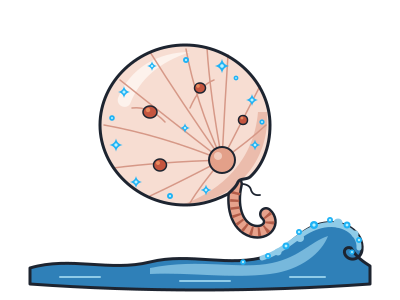
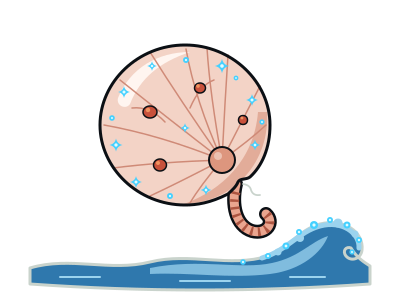
- Sea sparkleMakes breaking waves glow electric blue at night when the water is disturbed.
- Florida red tideIts blooms tint the sea red-brown and release toxins that kill fish and make beachgoers cough.
- Bioluminescent bay glowMakes the famous glowing bays of Puerto Rico, where every paddle stroke lights up blue.
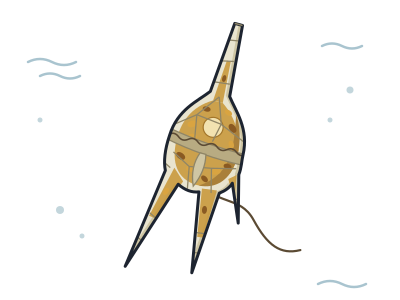
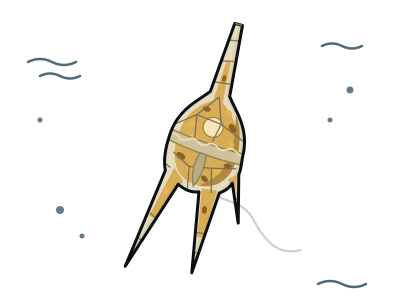
- Horned dinoflagellateAn armoured cell with long horns, common in lakes and a favourite under school microscopes.
- Single-celled eyeA single cell with a camera-like eye, complete with a lens, built from its own parts.