A species
Single-celled eye
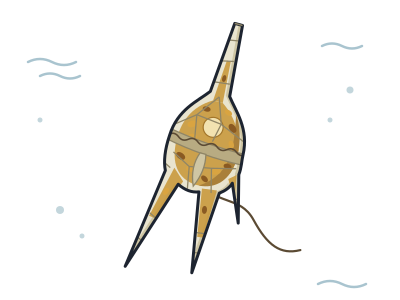
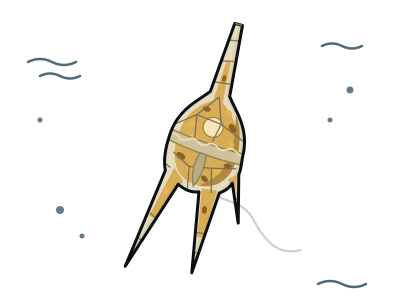
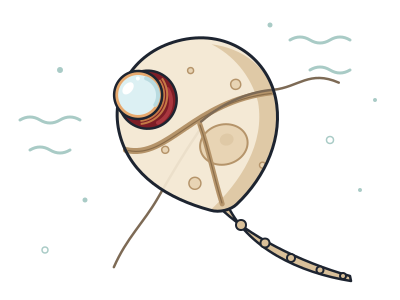
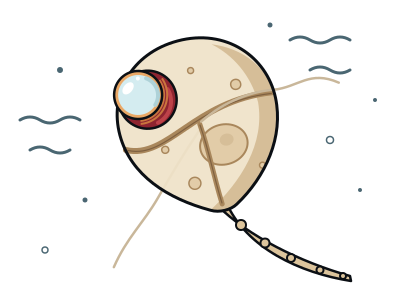
Erythropsidinium agile
One cell with a camera-like eye, built from its own parts
You and the single-celled eye meet in the Eukaryotes branch, shown at about 1.8 billion years ago (on 28 July, in a calendar from life's shared ancestor to today).
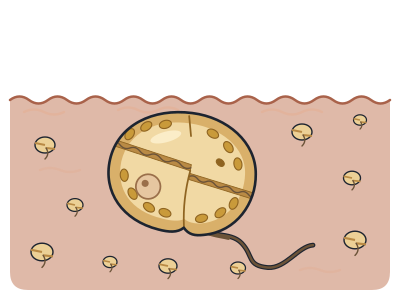
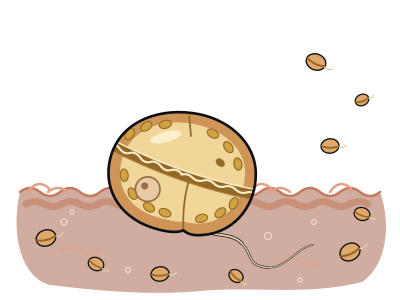
Imagine an eye with a lens, a cornea, an iris and a retina, all squeezed inside one cell. This tiny sea drifter has one. It is not an animal, and it has no brain or nerves. Yet its 'eye' is laid out like a camera.
What the eye is made from is even stranger. A 2015 study found that the cornea-like layer is made of mitochondria and the retina-like part is made of linked-up plastids. Both of these cell parts trace back to microbes that were swallowed long ago and became permanent parts of cells. So the eye is built from 'tamed' microbes.
Its relatives are other dinoflagellates, such as sea sparkle, the algae partners that live inside corals and the tiny cells that cause red tides. None of them has an eye like this. Only its own small family does. Its light-sensing protein is more like the ones found in bacteria than the ones in animal eyes.
Each cell is at most about a tenth of a millimetre long. It drifts in warm seas around the world. It cannot make food from sunlight, so it eats other living things.
Not a stolen eye
In the 1880s, a scientist argued that the 'eye' had really come from a jellyfish the cell had eaten. We now know the eye belongs to the cell itself.
It reacts to light
Researchers in Japan found that the retina-like part changes shape between light and dark, which suggests the eye really does sense light.
Hard to find
No one has managed to grow it in a lab, so scientists have to fish it fresh from the sea. Finding more than five in one dish counts as lucky.
Next to it on the tree
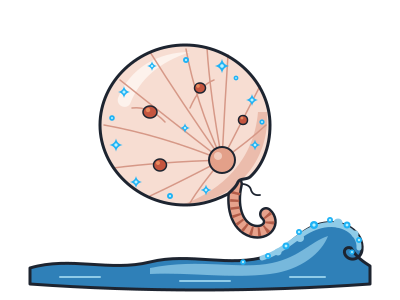
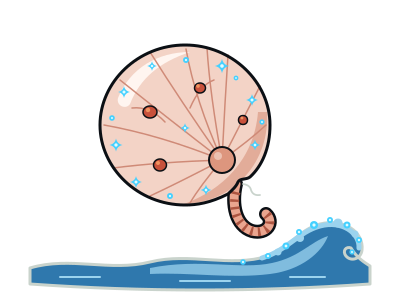
- Sea sparkleMakes breaking waves glow electric blue at night when the water is disturbed.
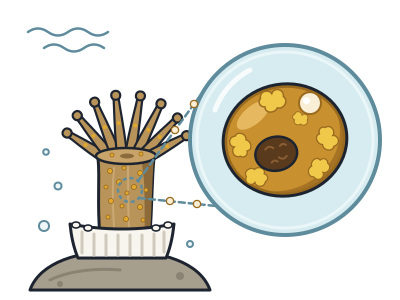
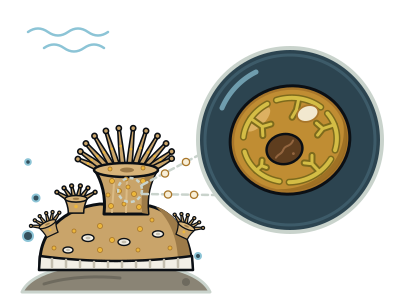
- Coral's algae partnerLives inside coral and feeds it sugar; when heat drives it out, the coral bleaches white.
- Florida red tideIts blooms tint the sea red-brown and release toxins that kill fish and make beachgoers cough.
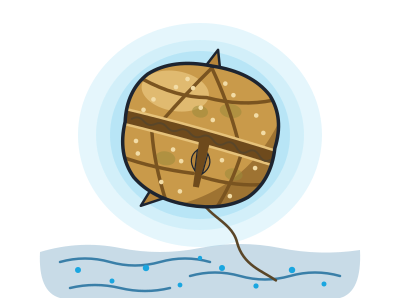
- Bioluminescent bay glowMakes the famous glowing bays of Puerto Rico, where every paddle stroke lights up blue.
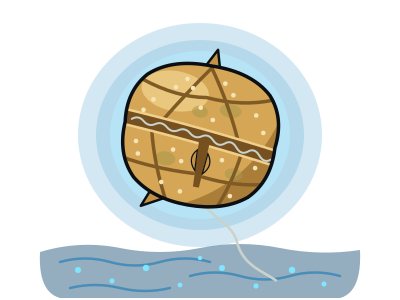
- Horned dinoflagellateAn armoured cell with long horns, common in lakes and a favourite under school microscopes.