A species
Sea grape
Gromia sphaerica
A single cell the size of a grape that leaves tracks like an animal's
You and the sea grape meet in the Eukaryotes branch, shown at about 1.8 billion years ago (on 28 July, in a calendar from life's shared ancestor to today).
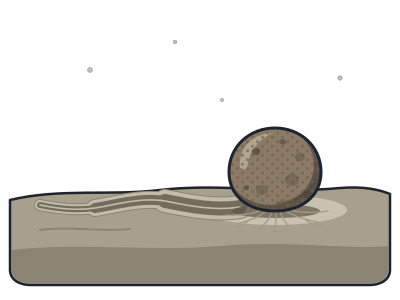
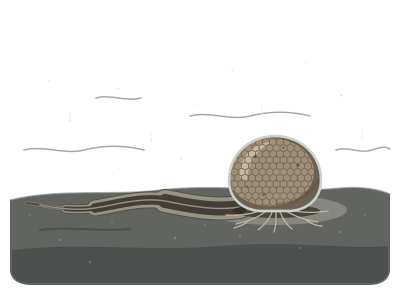
Picture a grape lying on the deep seabed, coated in mud. Now picture it slowly rolling along and leaving a groove behind it, like a snail's trail. That is the sea grape. The surprising part is that it is just one cell. Most cells are far too small to see, but this one is usually about 1 to 3 centimetres across.
In 2008, scientists in a research submersible found sea grapes about 800 metres down off the Bahamas. Behind them ran tracks up to about 50 centimetres long, with a ridge on each side and a thin ridge down the middle. The trails went in different directions, changed course and even climbed out of a dip, so currents or slopes could not explain them. It was the first time a single cell was shown to make tracks like an animal's.
This matters for reading ancient rocks. Some very old groove fossils had been credited to early animals. The sea grape shows that one cell could make similar marks.
It was once grouped with the forams, mostly tiny shelled cells, because of its shell and thread-like false feet. DNA tests showed it is not a foram. Instead it is a relative of the forams and radiolarians, and of the plant parasite clubroot.
The 'doo-doo balls'
The scientists who found them in the Bahamas first thought snails had made the trails, and nicknamed the drab, muddy blobs 'doo-doo balls'.
Slower than slow
It moves less than about 2.5 centimetres a day. That is far too slow to film from a submersible, so nobody has seen one moving.
Crowds on the seabed
It was first described in 2000 from the Arabian Sea. In one spot about 1,600 metres down, there were about 77 of them in every square metre.
Next to it on the tree
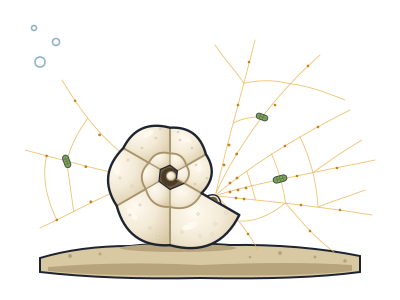
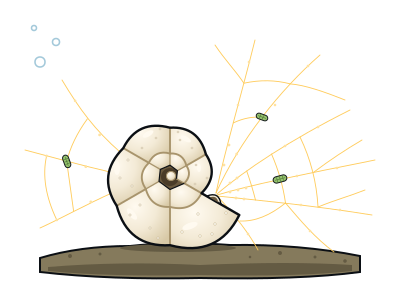
- ForamsShell-building single cells whose fossils fill limestone and record past ocean temperatures.
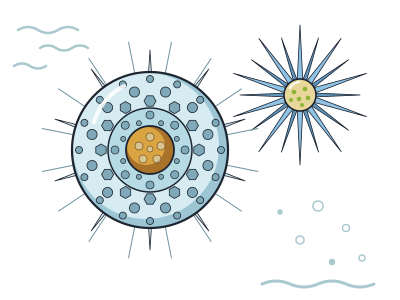
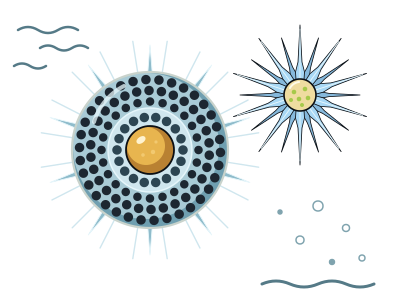
- RadiolariansPlankton with glass or crystal skeletons like snowflakes, made famous by Ernst Haeckel's drawings.
- Green amoeba algaAn amoeba that captured a green alga, which still keeps a miniature leftover nucleus.
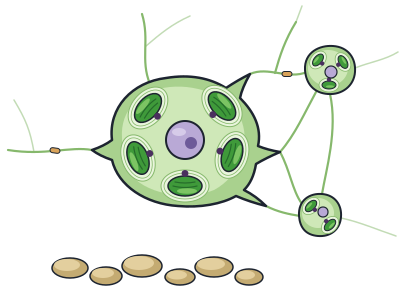
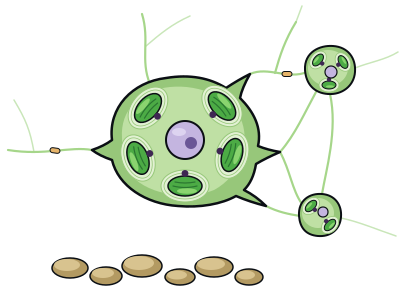
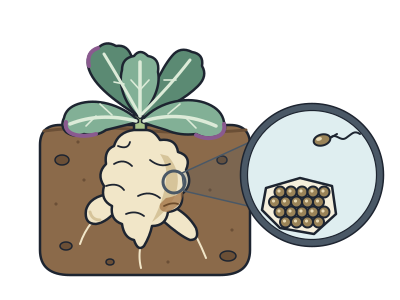
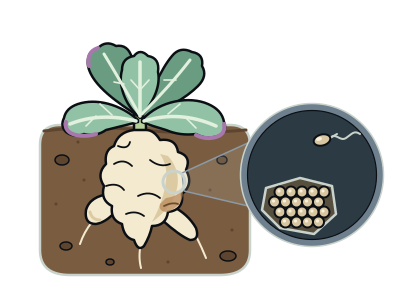
- ClubrootA cabbage disease that swells roots into knobbly clubs; it is a rhizarian, not a fungus.
- PaulinellaA shelled amoeba that swallowed a cyanobacterium and made its own solar panel, separately from plants.
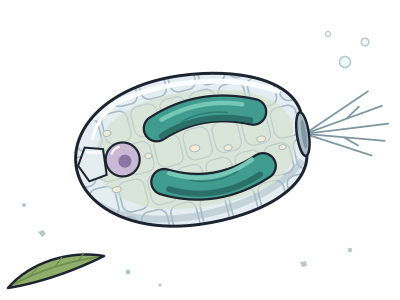
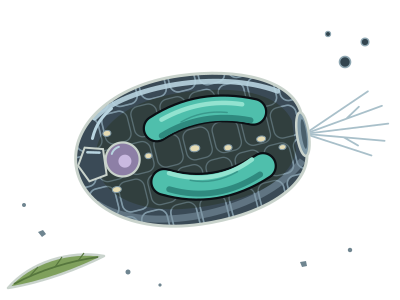
- Glass-scale amoebaBuilds a see-through shell from overlapping glass scales, like a tiny shingled urn.
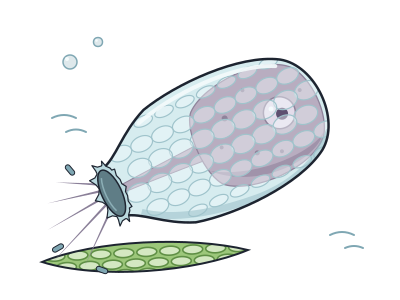
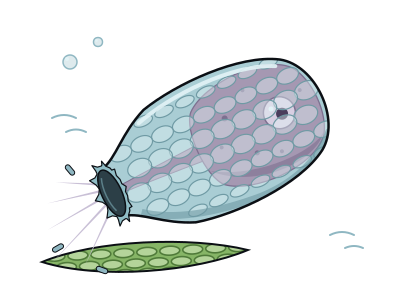
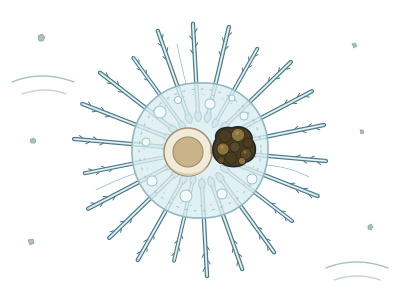
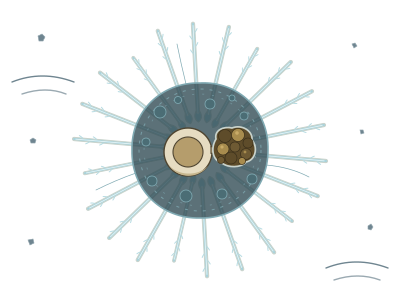
- PhaeodarianA deep-sea plankton cell bristling with hollow glass spines around a dark food bundle.