A species
Green amoeba alga
Chlorarachnion reptans
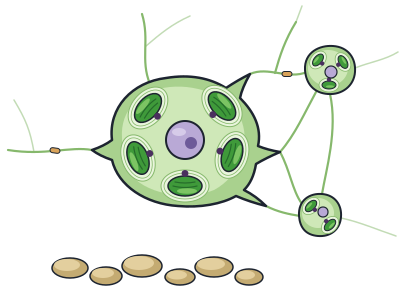
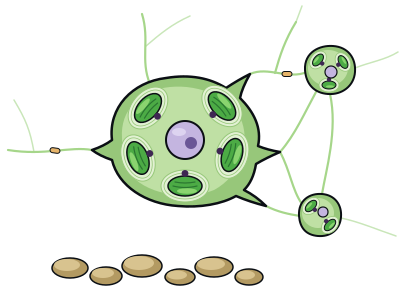
An amoeba that swallowed a green alga and still carries a tiny leftover of its nucleus
You and the green amoeba alga meet in the Eukaryotes branch, shown at about 1.8 billion years ago (on 28 July, in a calendar from life's shared ancestor to today).
This tiny green cell is the story of one living thing swallowed by another. Long ago, an amoeba-like ancestor of this cell took in a whole green alga. Instead of digesting it, the cell kept it as a permanent partner. Over time the alga shrank down until it became the cell's chloroplasts, the green parts that make food from sunlight. Amazingly, a shrunken leftover of the alga's own nucleus is still there, tucked inside the wrapping of each chloroplast. It is called a nucleomorph, and it still holds a little DNA.
Despite its green colour, it is not a plant. Its relatives include forams and radiolarians, other single-celled living things that are mostly found in the sea. Those relatives are not green. Its ancestors borrowed the colour by capturing a green alga.
Each cell is only about 3 to 10 micrometres across, so roughly ten to twenty would fit across the width of a human hair. Each cell sends out fine, branching threads that join up with its neighbours. Together they form a green net, like beads strung on a spider's web. It lives in warm and mild seas, probably among grains of sand. As well as making its own food, it catches bacteria and smaller single-celled creatures.
Four wrappings
Each chloroplast is wrapped in four layers of membrane, not the two found in plants. That extra wrapping is a clue that a whole alga was swallowed, not just its chloroplast.
The same trick, twice
A different group of algae, called cryptophytes, swallowed a red alga and also kept a shrunken leftover nucleus. The two cases happened separately but ended up looking strikingly similar.
The first of its kind
It was the first member of its group ever described, named in 1930 from the Canary Islands. Its scientific name means roughly 'creeping green spider'.
Next to it on the tree
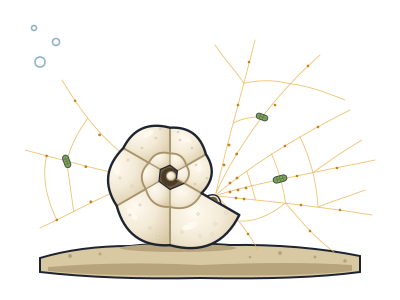
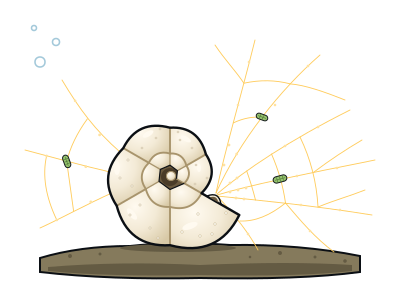
- ForamsShell-building single cells whose fossils fill limestone and record past ocean temperatures.
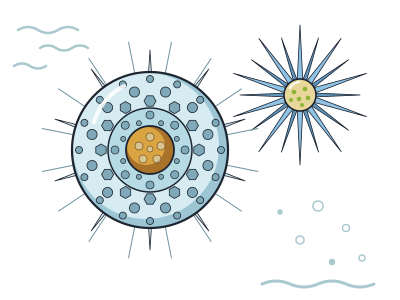
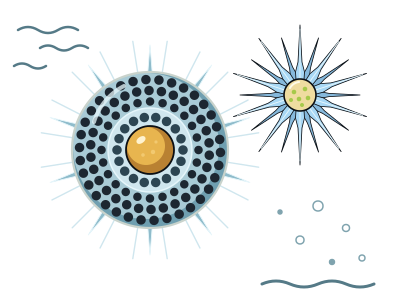
- RadiolariansPlankton with glass or crystal skeletons like snowflakes, made famous by Ernst Haeckel's drawings.
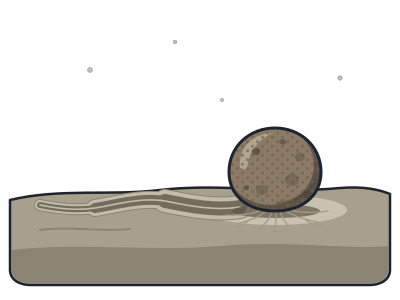
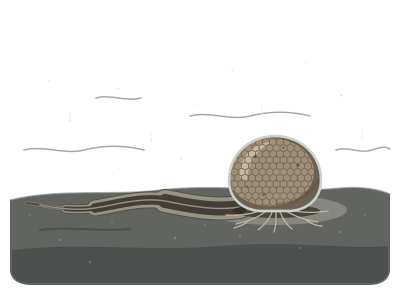
- Sea grapeA grape-sized single cell that rolls along the deep seabed, leaving tracks like an animal's.
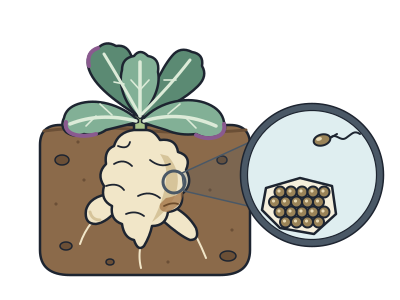
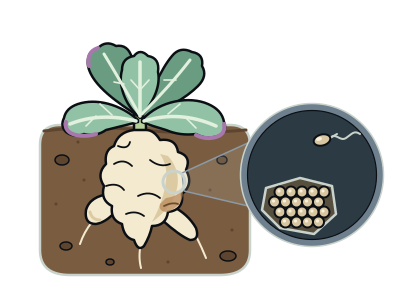
- ClubrootA cabbage disease that swells roots into knobbly clubs; it is a rhizarian, not a fungus.
- PaulinellaA shelled amoeba that swallowed a cyanobacterium and made its own solar panel, separately from plants.
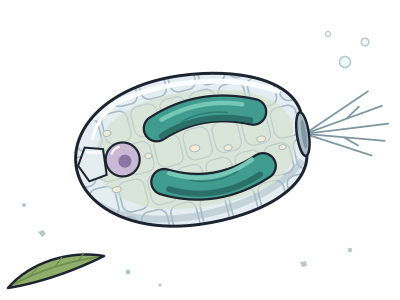
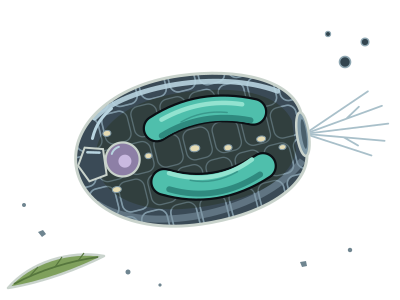
- Glass-scale amoebaBuilds a see-through shell from overlapping glass scales, like a tiny shingled urn.
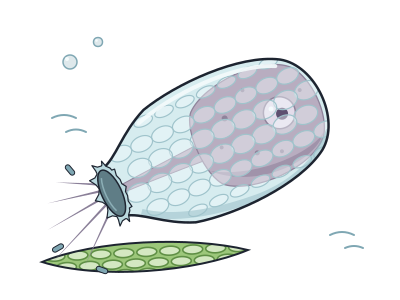
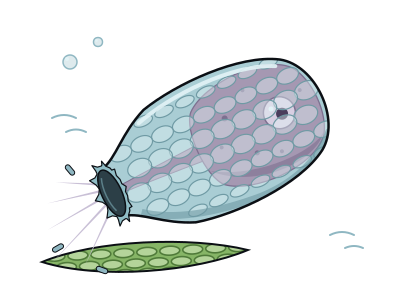
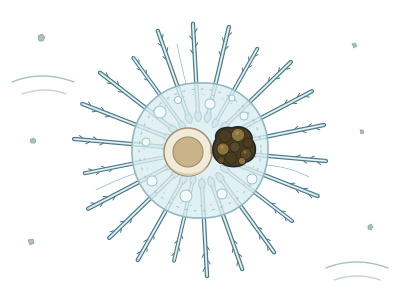
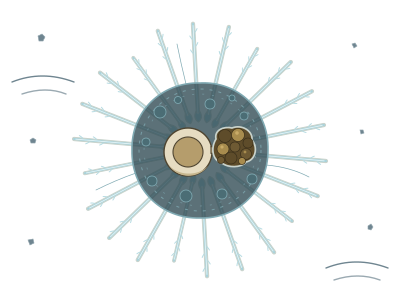
- PhaeodarianA deep-sea plankton cell bristling with hollow glass spines around a dark food bundle.