A species
Glass-scale amoeba
Euglypha tuberculata
A single cell that builds itself a see-through urn from glass tiles.
You and the glass-scale amoeba meet in the Eukaryotes branch, shown at about 1.8 billion years ago (on 28 July, in a calendar from life's shared ancestor to today).
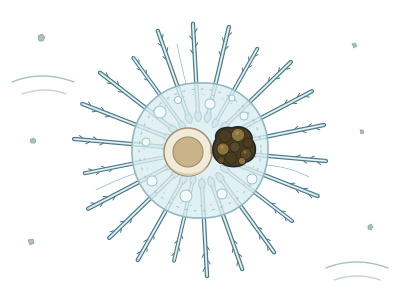
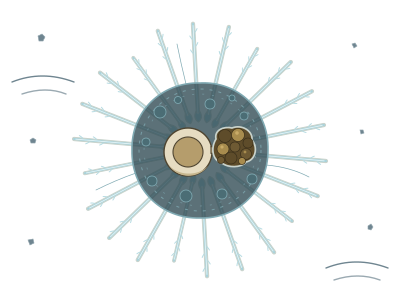
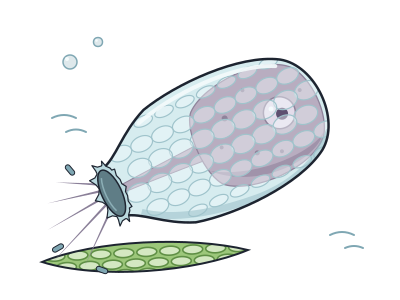
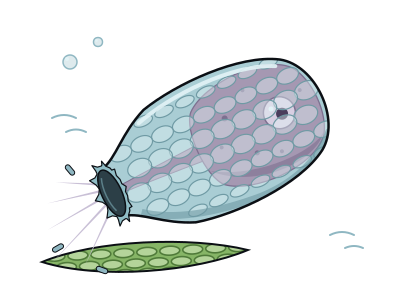
Imagine a tiny urn made of glass roof tiles. That is the shell of the glass-scale amoeba. Its single cell takes up silicon dissolved in water. Inside the cell, it turns this into small, oval or nearly round scales of glassy silica. The scales overlap in lengthwise rows, like shingles on a roof. Around the opening sit one or two rings of special scales with tiny teeth, so the rim looks like a little crown.
The whole shell is usually only about 0.05 to 0.1 millimetres long, roughly the width of a human hair. The soft cell inside fills only part of it. Thin, pointed threads reach out of the opening to crawl along and catch bacteria and other microscopic food.
Despite its name, it is not a close relative of the well-known pond amoeba. It belongs to a large group that also includes forams and radiolarians, which are famous for their delicate shells and skeletons. Paulinella, shown beside it on the tree, belongs to the same smaller group of scale-building shelled amoebae.
It lives in wet moss, bog peat, soil, pond mud and between water plants.
A shell for each twin
Just before it divides, it builds a second shell mouth to mouth with the old one. One daughter cell keeps the old shell and the other moves into the new one, so neither is left unprotected.
Stolen scales
Some other shelled amoebae eat it and then reuse its glass scales to build their own shells. Scientists call this scale stealing 'kleptosquamy'.
Bog history keeper
In high mountain bogs in south-eastern Australia, shells of this type are among the most common. Scientists use them to work out how wet the bogs were in the past.
Next to it on the tree
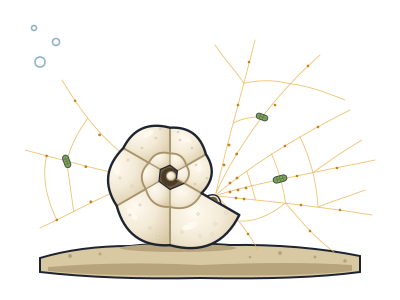
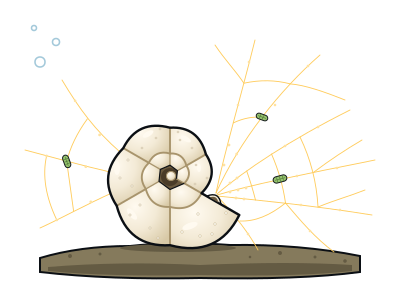
- ForamsShell-building single cells whose fossils fill limestone and record past ocean temperatures.
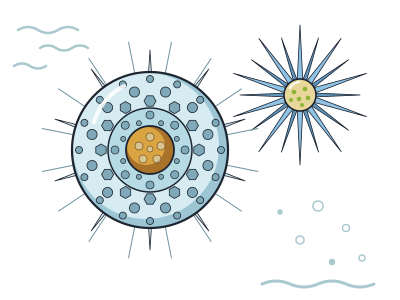
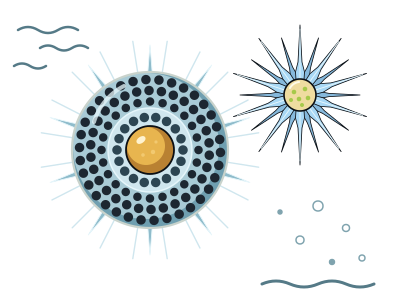
- RadiolariansPlankton with glass or crystal skeletons like snowflakes, made famous by Ernst Haeckel's drawings.
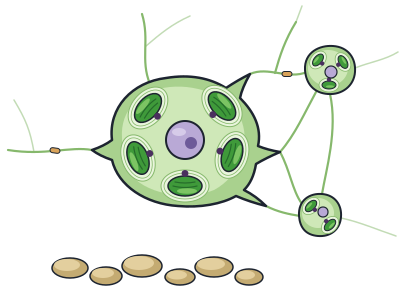
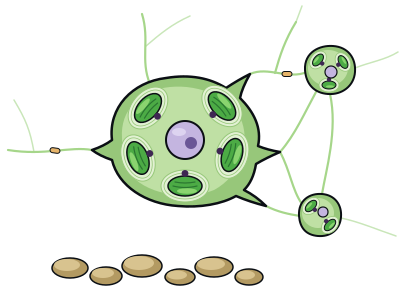
- Green amoeba algaAn amoeba that captured a green alga, which still keeps a miniature leftover nucleus.
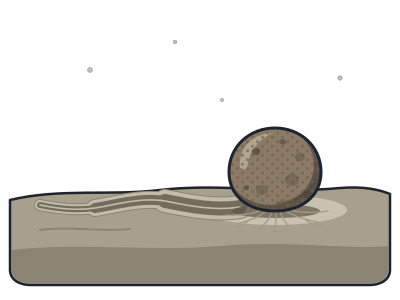
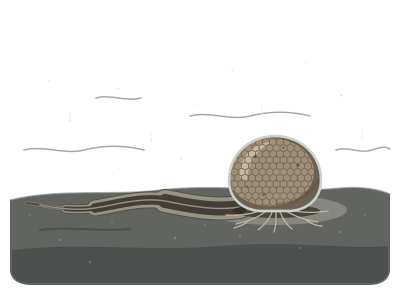
- Sea grapeA grape-sized single cell that rolls along the deep seabed, leaving tracks like an animal's.
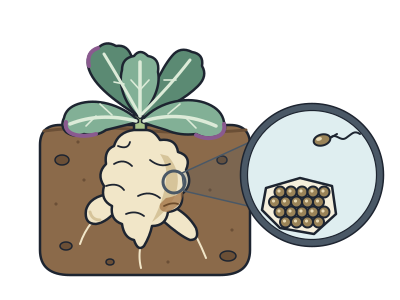
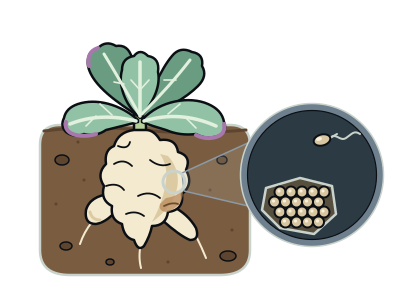
- ClubrootA cabbage disease that swells roots into knobbly clubs; it is a rhizarian, not a fungus.
- PaulinellaA shelled amoeba that swallowed a cyanobacterium and made its own solar panel, separately from plants.
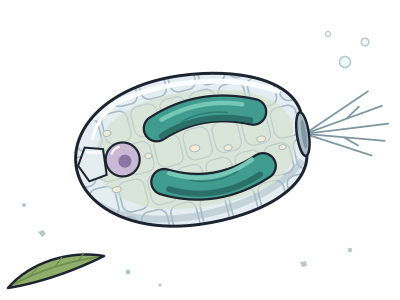
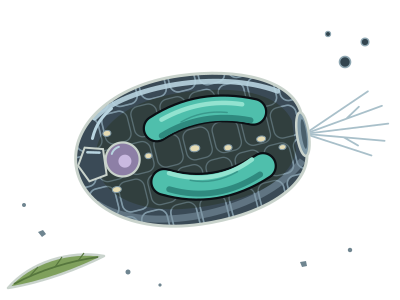
- PhaeodarianA deep-sea plankton cell bristling with hollow glass spines around a dark food bundle.