A species
Phaeodarian
Aulacantha scolymantha
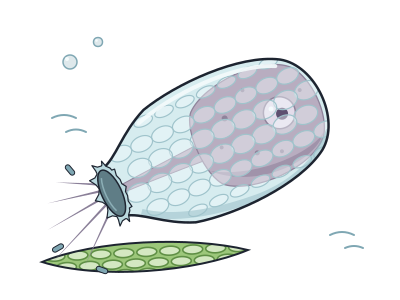
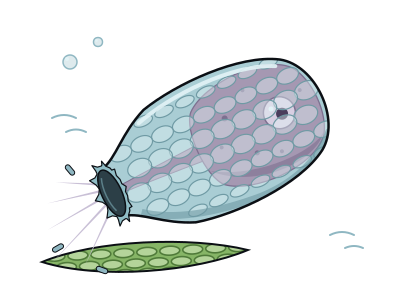
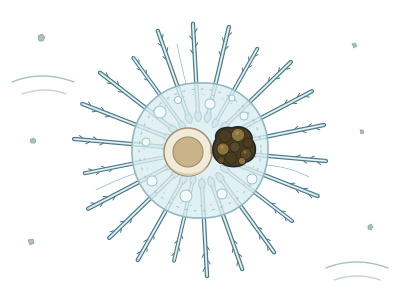
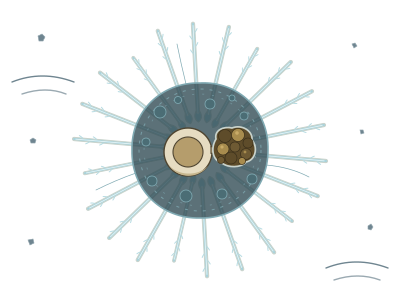
A drifting glass pincushion with a dark bundle of food beside its centre
You and the phaeodarian meet in the Eukaryotes branch, shown at about 1.8 billion years ago (on 28 July, in a calendar from life's shared ancestor to today).
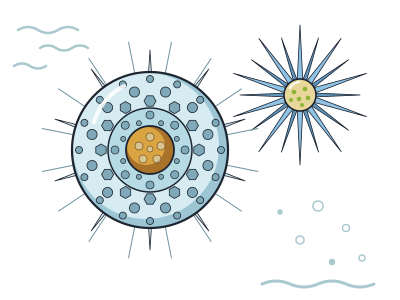
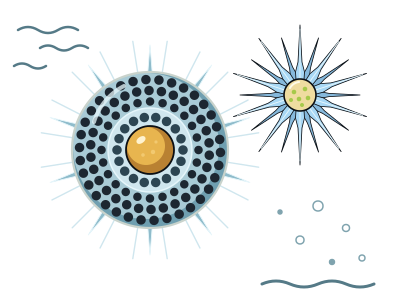
Picture a speck smaller than a grain of rice, bristling like a glass pincushion. This is a single cell drifting through the open ocean, with long, hollow glass spines pointing in every direction. Close to its centre sits a dark brown blob called the phaeodium, a bundle of partly digested food and debris.
For more than a century, scientists grouped it with the radiolarians, the ocean's other spiky drifters, because it looks so much like them. DNA studies changed that. It belongs to a separate group called Cercozoa. It is still a relative of radiolarians and forams, because all three sit on the same bigger branch, but its spiky glass look evolved separately. Radiolarians build their skeletons from solid rods. This one builds hollow tubes.
Each spine is about 0.5 to 1 millimetre long but thinner than most human hairs. Around the cell is a thick, clear jelly full of tiny bubble-like spaces.
It lives only in salty sea water and spends its whole life as plankton. It has been found in the Mediterranean and in the Atlantic, Indian and Pacific oceans, from surface waters down into deeper water. In studies off California and Central America, its group was usually found about 100 metres down. There they probably feed on 'marine snow', which is tiny bits of dead material sinking from above.
The most common of its kind
It is described as the most common member of its family, and perhaps the most common phaeodarian species of all.
Saw-toothed tips
Near the tip, each spine carries about 10 to 40 tiny pointed teeth that curve outwards, a bit like a very fine saw.
Mostly water
One related family of phaeodarians has big glass skeletons that are mostly filled with water. This means they need very little food to grow.
Next to it on the tree
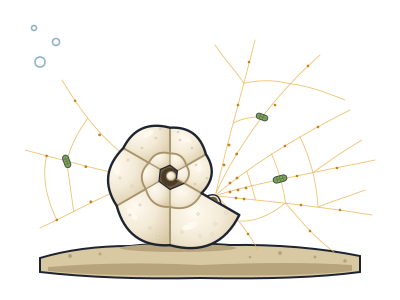
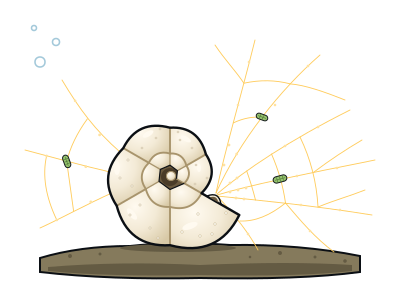
- ForamsShell-building single cells whose fossils fill limestone and record past ocean temperatures.
- RadiolariansPlankton with glass or crystal skeletons like snowflakes, made famous by Ernst Haeckel's drawings.
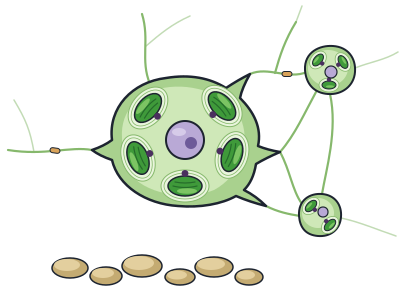
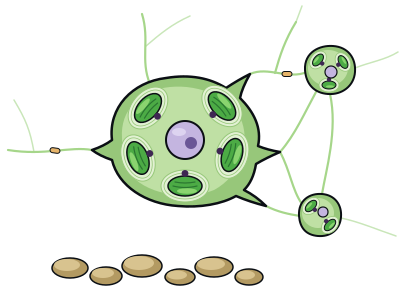
- Green amoeba algaAn amoeba that captured a green alga, which still keeps a miniature leftover nucleus.
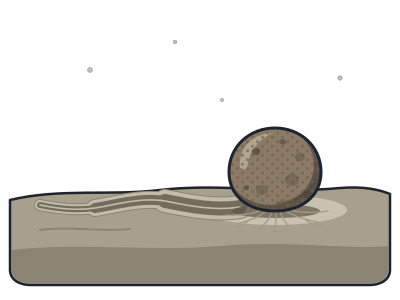
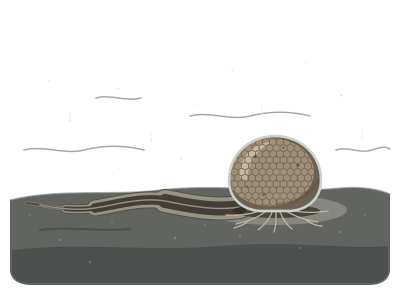
- Sea grapeA grape-sized single cell that rolls along the deep seabed, leaving tracks like an animal's.
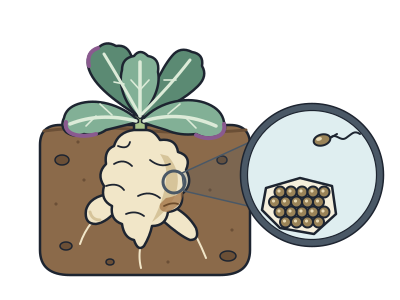
- ClubrootA cabbage disease that swells roots into knobbly clubs; it is a rhizarian, not a fungus.
- PaulinellaA shelled amoeba that swallowed a cyanobacterium and made its own solar panel, separately from plants.
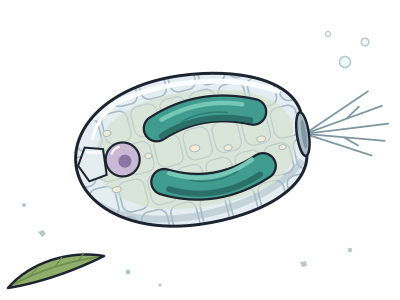
- Glass-scale amoebaBuilds a see-through shell from overlapping glass scales, like a tiny shingled urn.