A species
Colonial radiolarian
Collozoum inerme
A drifting jelly bead packed with single cells
You and the colonial radiolarian meet in the Eukaryotes branch, shown at about 1.8 billion years ago (on 28 July, in a calendar from life's shared ancestor to today).
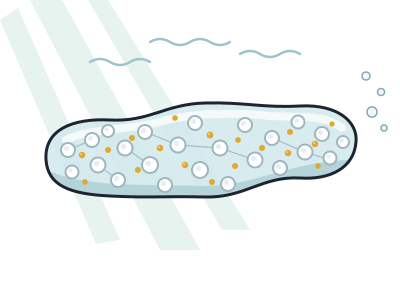
Picture thousands of tiny cells sharing one jelly home. Some close relatives of this radiolarian build jelly tubes up to about 3 metres long, longer than a grown person. This species keeps things smaller. Its clear jelly colonies are short blobs or little sausages, usually only about 1 to 2 centimetres long.
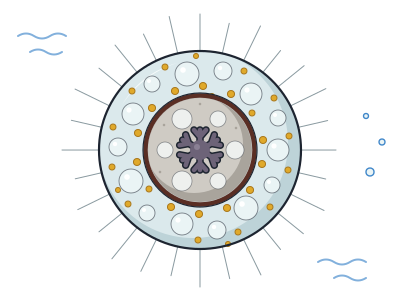
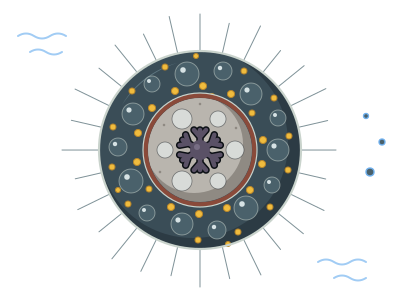
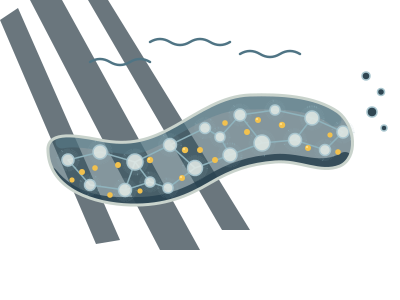
Each white dot in the jelly is a whole living thing: a single cell, and the dot is its round central part. So the colony is not an animal or a jellyfish. It is a crowd of hundreds to thousands of separate cells sharing one jelly. Fine threads of cytoplasm link them together.
Most radiolarians build tiny glassy skeletons, but this one has none at all. Its name even means 'unarmed'. Its neighbours on the tree, the acantharians, are radiolarians too, but they make their skeletons from crystals of a different mineral, called strontium sulfate. The wider group that radiolarians belong to also includes the forams.
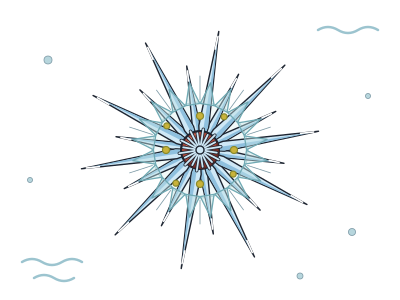
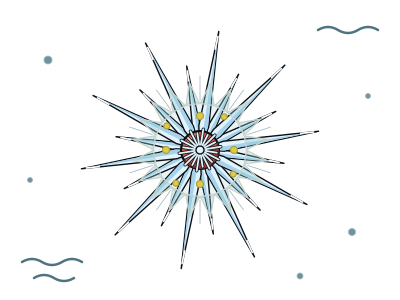
The small golden-yellow dots are algae living in the jelly. They make food from sunlight, which helps the colony survive in open seas where nutrients are scarce. Without any fins or tail, the colony simply drifts in the sunlit water near the surface.
Millions of helpers
One large colony can hold about 2 million algae cells. That is many more algae than radiolarian cells.
An ancient line
Radiolarians go back more than 500 million years, and about nine in ten known radiolarian species are now extinct.
Tough enough to tow
A relative's metre-long jelly tubes are so tough that divers have towed one along by holding it in the middle.