A species
Common ostrich
Struthio camelus
The biggest living bird, built for running
You and the common ostrich meet in the Amniotes branch, shown at about 320 million years ago (on 4 December, in a calendar from life's shared ancestor to today).
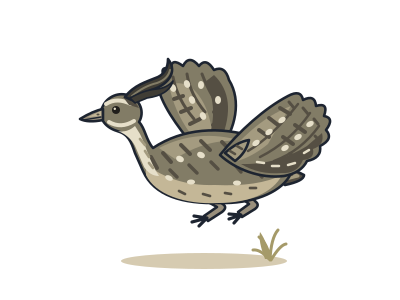
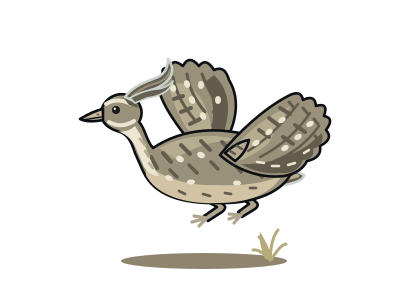
The common ostrich is the tallest and heaviest living bird. It also lays the largest eggs of any living bird and can sprint at about 70 km/h, though only in short bursts. It belongs to the same bird branch as emus, cassowaries, rheas, kiwis and tinamous. The surprise is that tinamous can fly: this branch is not entirely grounded.
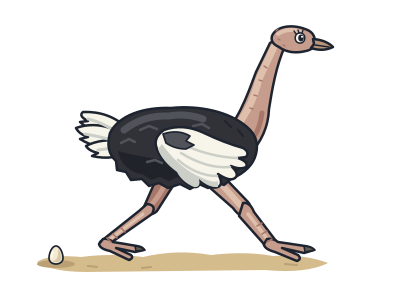
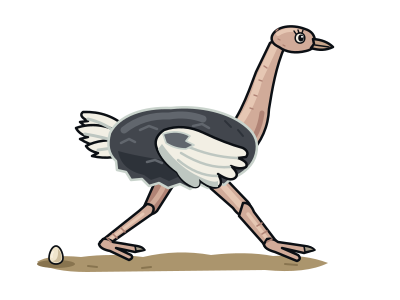
An ostrich cannot fly, but its wings still help it balance and change direction while running. Its feathers look loose and fluffy, rather than forming the tightly linked surfaces seen in many flying birds. Adult males have black body feathers with white wing and tail feathers. Females are grey-brown.
Wild ostriches live in open parts of Africa, including grasslands, shrublands and deserts. They eat mostly plants, but also insects and small animals. Several females may lay eggs in one shared nest, a shallow hollow scraped in the ground. Eggs average about 1.5 kilograms and measure about 15 by 13 centimetres.
Just two toes
An ostrich has just two toes on each foot.
Eyes with dust guards
An ostrich eye is about five centimetres across. Eyelashes help protect it from dust.
A six-week wait
The eggs hatch after about six weeks.
Next to it on the tree
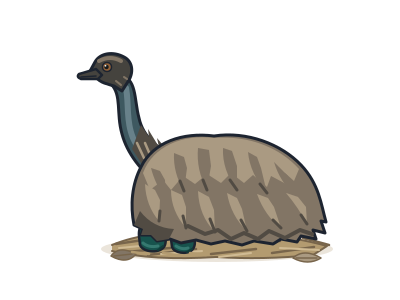
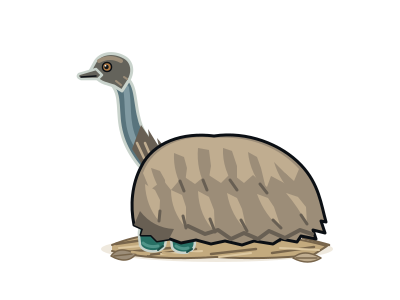
- EmuAustralia's tall runner: the father sits on the eggs for eight weeks.
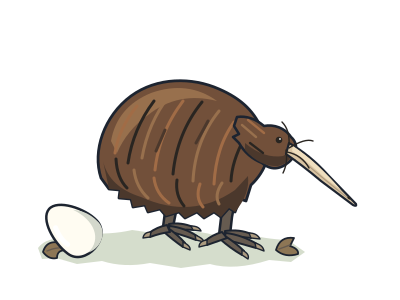
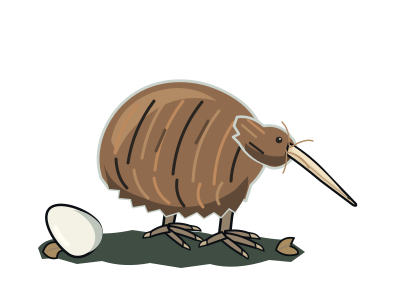
- North Island brown kiwiA hen-sized bird that lays an egg about a fifth of its own weight.
- Elephant birdA 3-metre Madagascar giant whose eggs held as much as 150 hen's eggs.
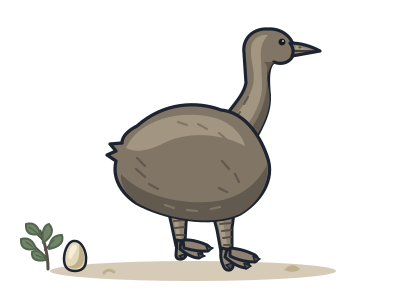
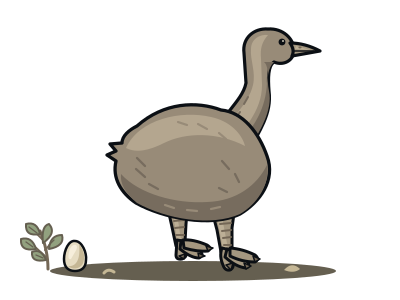
- South Island giant moaA wingless giant up to 3.6 metres tall, hunted out within about 200 years of people arriving.
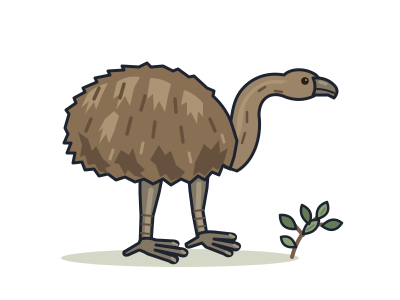
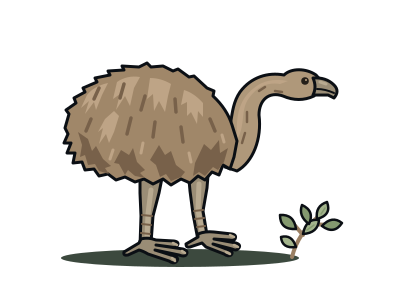
- Southern cassowaryA dinosaur-like rainforest bird with a helmet and a dagger claw on each foot.
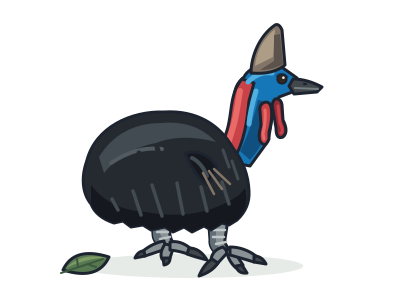
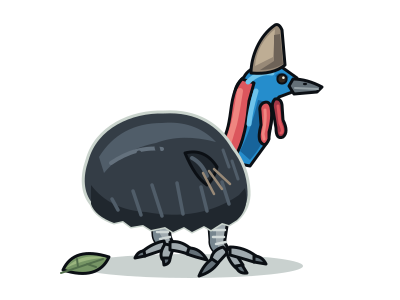
- Greater rheaSouth America's big runner; males raise chicks from several females' eggs.
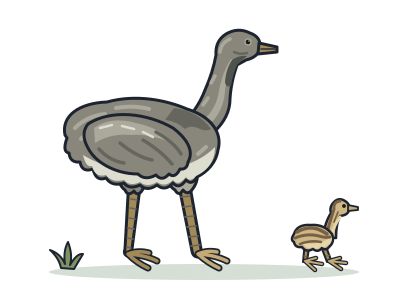
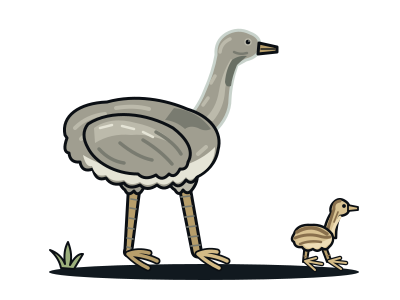
- Elegant crested tinamouA tinamou: a palaeognath that can still fly, and the moa's closest living relative.