A species
North Island brown kiwi
Apteryx mantelli
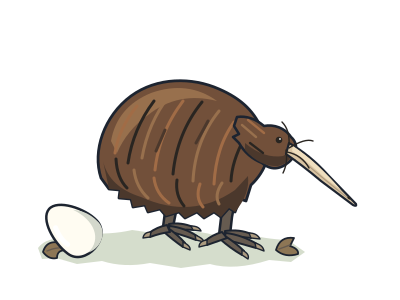
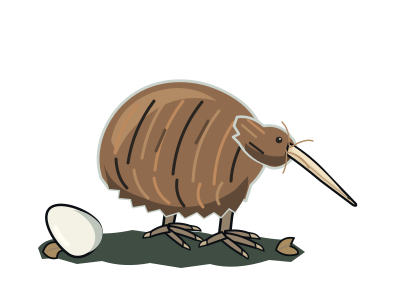
A hen-sized bird with an egg about a fifth of its weight
You and the north island brown kiwi meet in the Amniotes branch, shown at about 320 million years ago (on 4 December, in a calendar from life's shared ancestor to today).
A North Island brown kiwi is about the size of a hen, yet a female can lay an egg weighing about a fifth of her own weight. The exact share varies, but the contrast is striking: a small bird with a very large egg.
Its family connection is just as surprising. DNA evidence shows that the kiwi group's closest relatives outside the group are Madagascar's extinct elephant birds, not New Zealand's moa. Elephant birds are the sister group of kiwi: the two groups sit on branches joined at the same fork of the family tree.
This kiwi lives on New Zealand's North Island and nearby islands, in places including forest, scrub and rough farmland. It is mainly active at night and rests somewhere sheltered during the day. Earthworms and other small animals without backbones make up most of its food, though it also eats some fallen fruit and leaves.
About 12 cm long
The white eggs average about 12 cm long and 8 cm wide.
A long wait
An egg takes about two and a half to three months to hatch.
A nighttime duet
Males give high whistles and females give deeper, throaty calls. Partners sometimes answer one another.
Next to it on the tree
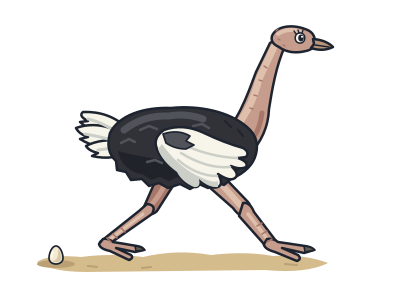
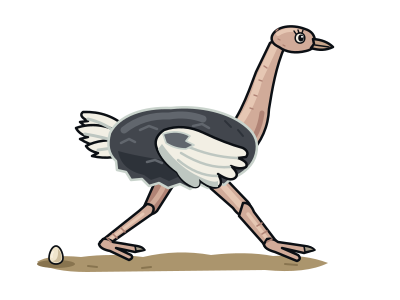
- Common ostrichThe largest living bird lays the largest egg and runs at about 70 km/h.
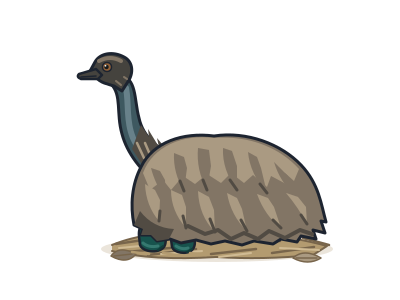
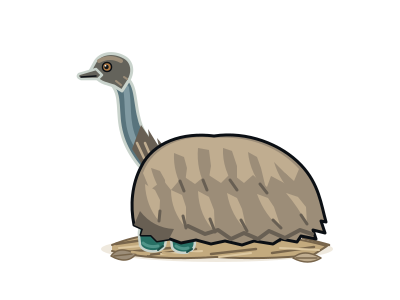
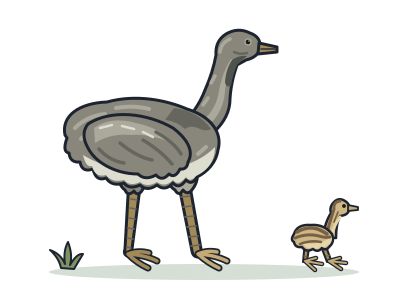
- EmuAustralia's tall runner: the father sits on the eggs for eight weeks.
- Elephant birdA 3-metre Madagascar giant whose eggs held as much as 150 hen's eggs.
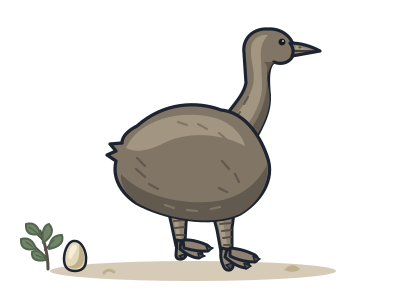
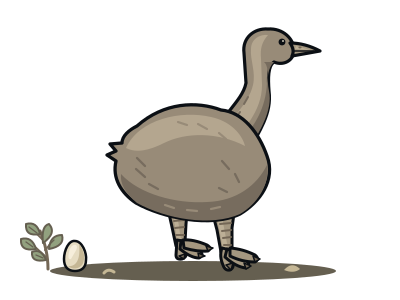
- South Island giant moaA wingless giant up to 3.6 metres tall, hunted out within about 200 years of people arriving.
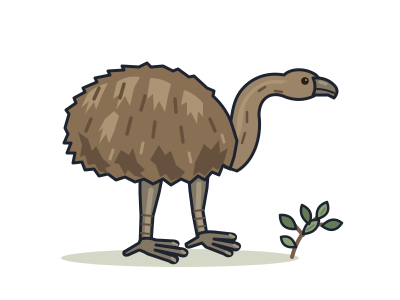
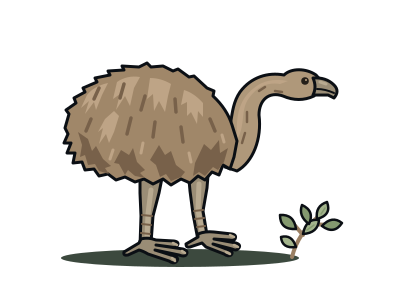
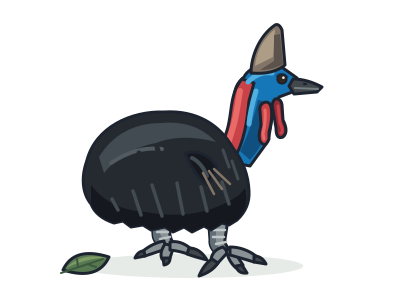
- Southern cassowaryA dinosaur-like rainforest bird with a helmet and a dagger claw on each foot.
- Greater rheaSouth America's big runner; males raise chicks from several females' eggs.
- Elegant crested tinamouA tinamou: a palaeognath that can still fly, and the moa's closest living relative.