A species
Emu
Dromaius novaehollandiae
Australia’s tall runner, with dad on egg duty.
You and the emu meet in the Amniotes branch, shown at about 320 million years ago (on 4 December, in a calendar from life's shared ancestor to today).
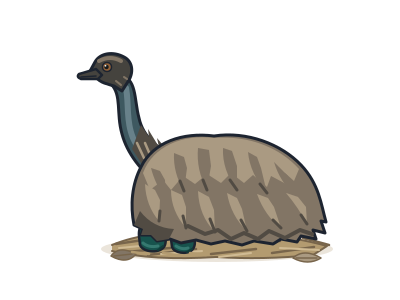
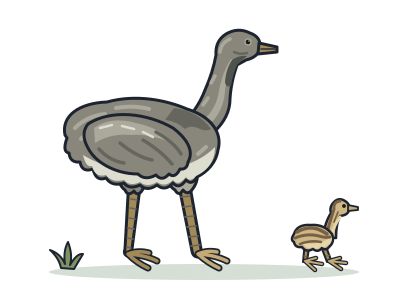
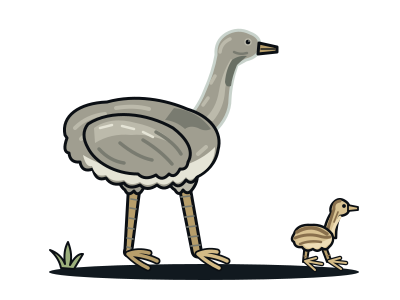
Australia’s tallest native bird leaves the egg-warming to dad. The male emu sits on the eggs for about eight weeks, usually going without food and water and living on stored reserves. The female usually leaves him to hatch them and may lay again with another mate. Once the chicks hatch, their father guards them and stays with them for months.
An emu is not an Australian ostrich. Its closest living relatives are cassowaries. Ostriches, kiwi, rheas and the extinct moa and elephant birds belong to the same broader bird branch. So do tinamous, which can fly: being part of this branch does not mean every member is flightless.
Emus cannot fly, but they roam widely in search of food and water. Their menu includes seeds, fruits, flowers, young shoots and insects. As they travel, they can spread seeds that survive the journey through their bodies and come out in their droppings.
Large green eggs
Fresh eggs are dark bluish-green and about 13 centimetres long and 9 centimetres wide.
Feathers, not fur
The shaggy coat is made of feathers. Each feather has two shafts with loosely arranged strands.
Swimmers too
Despite being land runners, emus are also strong swimmers.
Next to it on the tree
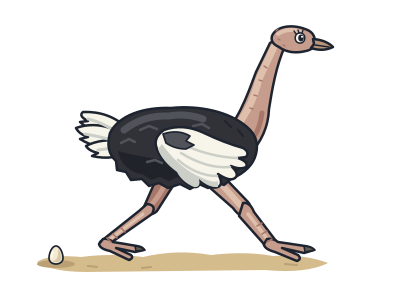
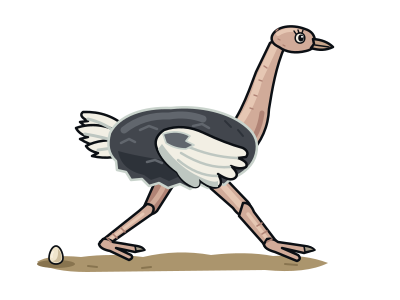
- Common ostrichThe largest living bird lays the largest egg and runs at about 70 km/h.
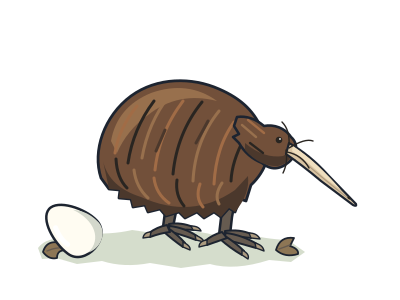
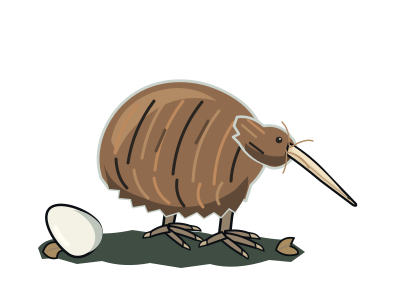
- North Island brown kiwiA hen-sized bird that lays an egg about a fifth of its own weight.
- Elephant birdA 3-metre Madagascar giant whose eggs held as much as 150 hen's eggs.
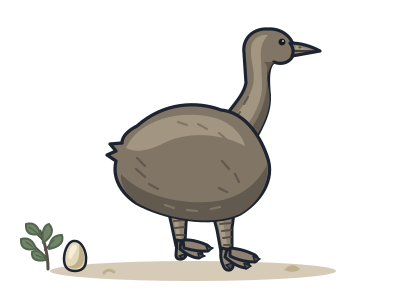
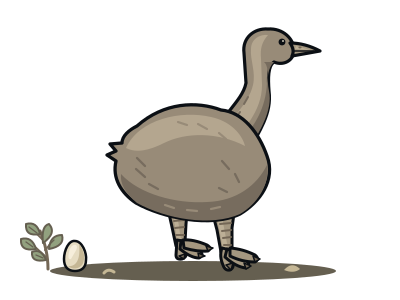
- South Island giant moaA wingless giant up to 3.6 metres tall, hunted out within about 200 years of people arriving.
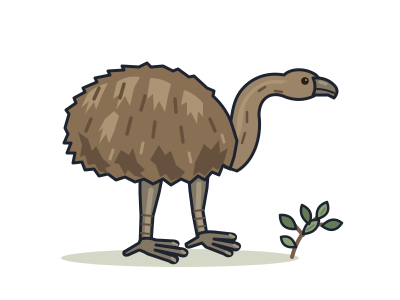
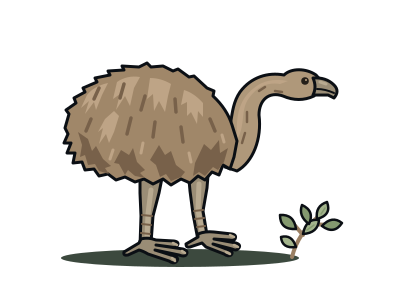
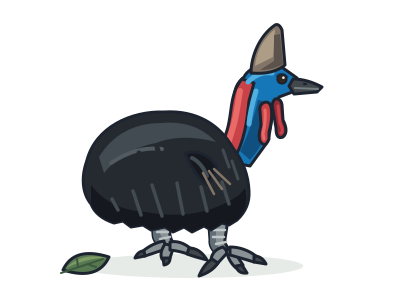
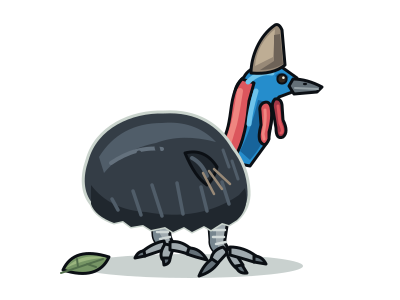
- Southern cassowaryA dinosaur-like rainforest bird with a helmet and a dagger claw on each foot.
- Greater rheaSouth America's big runner; males raise chicks from several females' eggs.
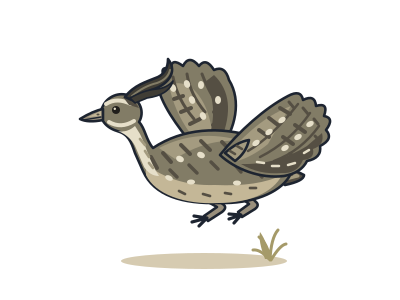
- Elegant crested tinamouA tinamou: a palaeognath that can still fly, and the moa's closest living relative.