An extinct species
Hesperornis †
Hesperornis regalis
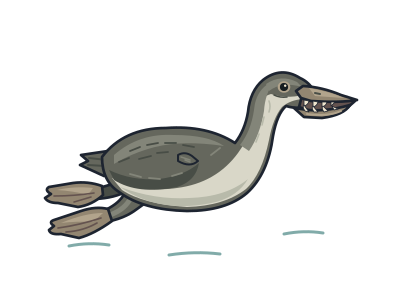
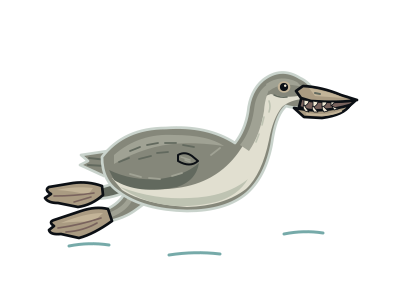
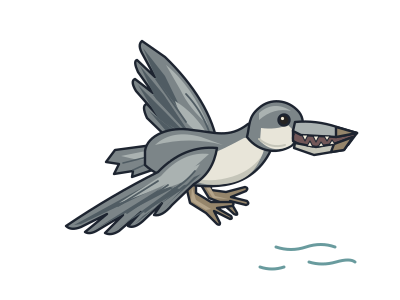
A toothed diving bird with tiny wings and powerful paddling legs.
Lived about 84–78 million years ago.
You and the hesperornis meet in the Amniotes branch, shown at about 320 million years ago (on 4 December, in a calendar from life's shared ancestor to today).
This flightless, toothed diving bird had wing bones reduced to tiny stubs. It belonged to an extinct branch outside the group containing all living birds, not to the penguin family. Like the neighbouring Ichthyornis on this tree, it had real teeth—a striking difference from living birds.
It lived about 84 to 78 million years ago in the Western Interior Seaway, an inland sea that divided North America into two land masses. Its long, slender neck gave it an outline rather like a grebe, but that resemblance did not make it part of the grebe family.
Fossil bones gave researchers clues to how it moved. They inferred that powerful hind legs drove it through the water, rather than wing strokes like a penguin's. Its breastbone lacked the large projecting ridge that anchored strong flight muscles in many flying birds. Those tiny wings were not evidence of underwater flippers.
Slightly hooked teeth
Its pointed teeth curved backwards, giving them a slightly hooked shape.
An unusual tooth groove
Its lower-jaw teeth sat mainly in a long groove. In one fossil jaw, researchers interpreted a tiny hole at the front as a separate tooth socket.
A rebuilt museum skull
For Yale Peabody Museum's 2024 reopening, a mounted skeleton received a more accurate 3D-printed skull reconstruction based on scans of fossil fragments.
Next to it on the tree
- BirdsThe dinosaurs that survived the asteroid; feathers came before flight.
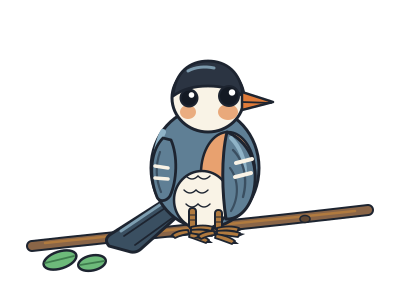
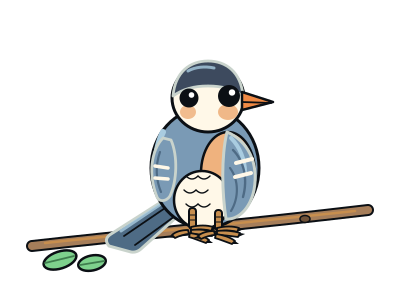
- ArchaeopteryxHalf bird, half dinosaur: feathered wings, but also teeth, claws and a bony tail.
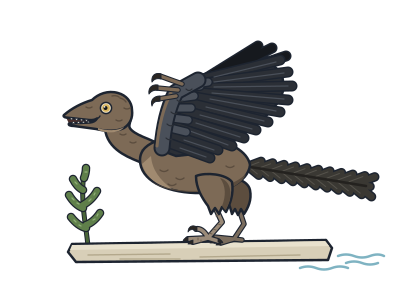
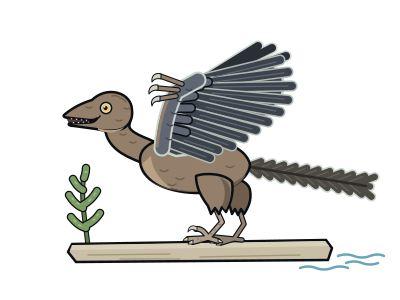
- IchthyornisA seabird with a modern wing and a beak still full of teeth.
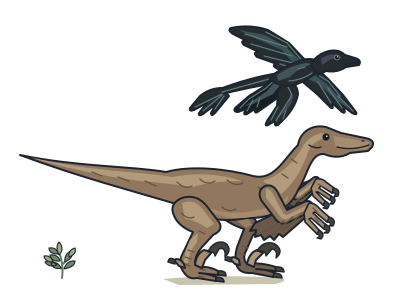
- RaptorsSickle-clawed, feathered hunters, from crow-sized gliders to five-metre giants.
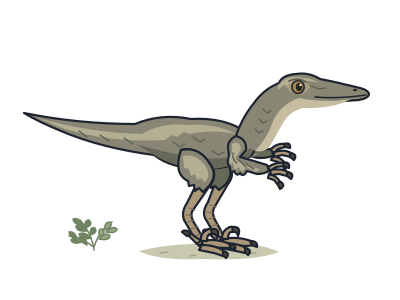
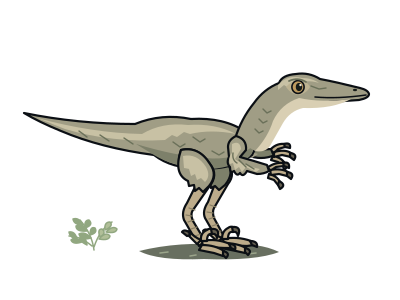
- TroodonA big-eyed, big-brained hunter, once nicknamed the smartest dinosaur.
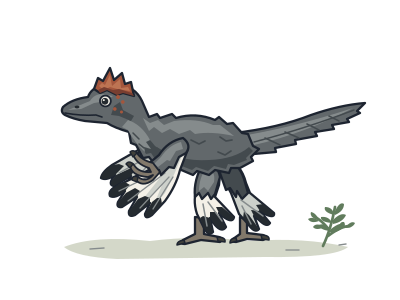
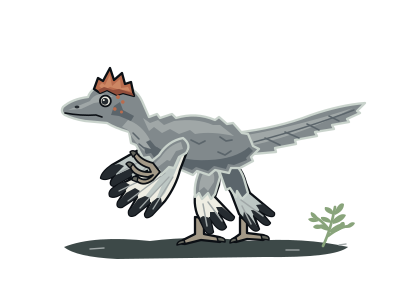
- AnchiornisThe first dinosaur whose whole colour pattern was worked out: grey with a red crest.
- ConfuciusornisOne of the first birds with a toothless beak, known from thousands of fossils.