An extinct species
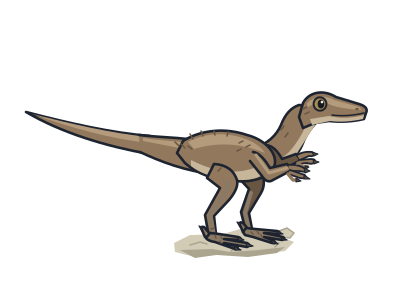
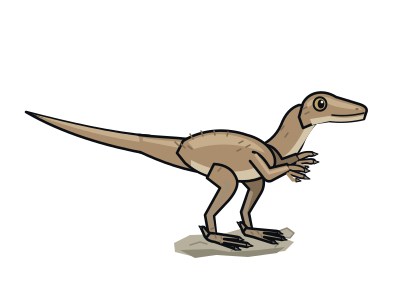
Compsognathus †
Compsognathus longipes
A chicken-sized hunter with a meal preserved inside
Lived about 151–149 million years ago.
You and the compsognathus meet in the Amniotes branch, shown at about 320 million years ago (on 4 December, in a calendar from life's shared ancestor to today).
The smaller known animal was roughly chicken-sized. This two-legged hunter belonged to the wider dinosaur branch that also included birds. Its fossil preserved the bones of a small lizard inside its belly. That was direct evidence of a meal, not just a guess about its diet based on its teeth. It was a relative of birds, not an established direct ancestor of them.
It lived about 151 to 149 million years ago, in places that became Germany and France. Its small body came with a very long tail, so chicken-sized did not mean chicken-length. The smaller skeleton was reconstructed at about 70 centimetres from nose to tail. The French fossil was buried in a coastal lagoon, but burial there did not show that this land animal lived in the water.
An elegant name
Its name meant ‘pretty jaw’ or ‘elegant jaw’.
Two main skeletons
The species was known from two main skeletons: one from Bavaria and a larger one from southern France.
No preserved feathers
Neither European skeleton preserved feathers. A fuzzy covering remained a possible reconstruction, not a demonstrated feature.
Next to it on the tree
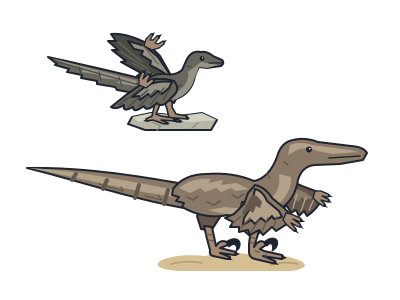
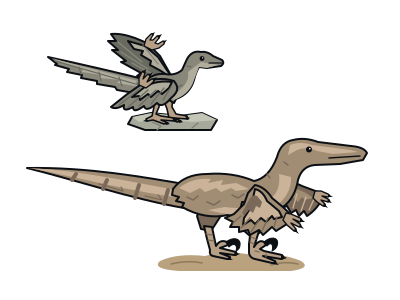
- Raptors and birdsVelociraptor is one of the closest cousins of birds and had feathered arms.
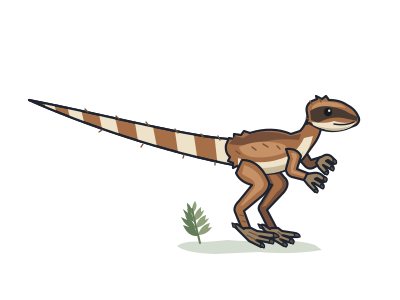
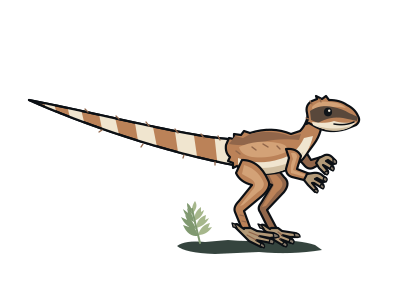
- SinosauropteryxThe first dinosaur found with feathers; its fuzz shows a ginger-and-white striped tail.
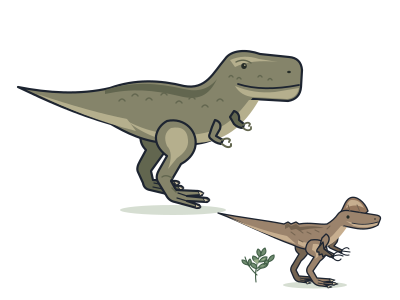
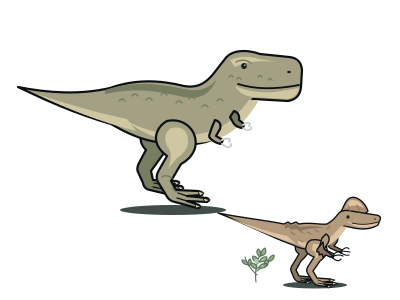
- TyrannosaursTyrannosaurs started small and feathered; giants came only at the very end.
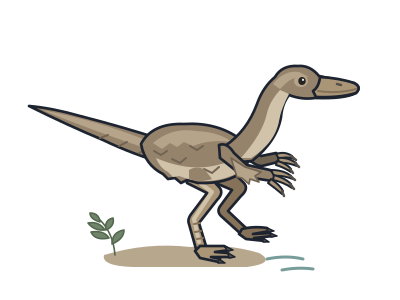
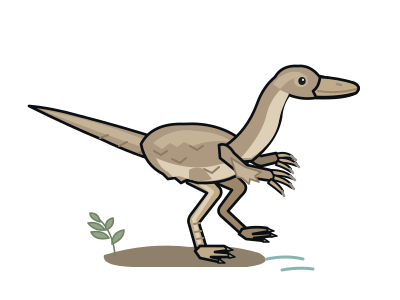
- GallimimusAn ostrich-like dinosaur with a toothless beak, built to sprint.
- TherizinosaurusA pot-bellied plant-eating theropod with metre-long claws like scythes.
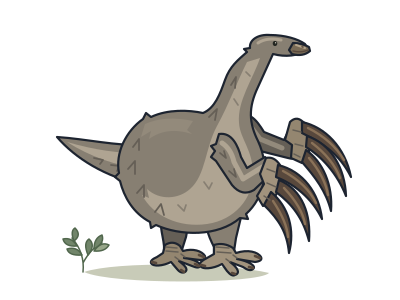
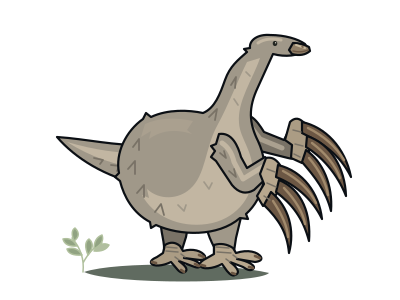
- OviraptorNamed 'egg thief', but later fossils showed its relatives were sitting on their own nests.
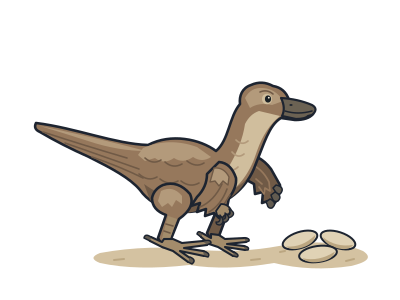
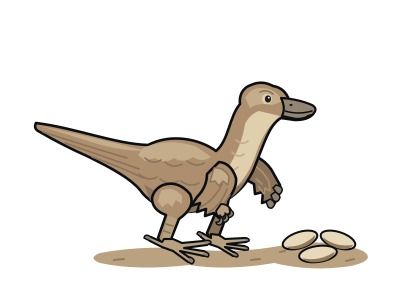
- DeinocheirusKnown for decades only from giant arms, it turned out to be a humpbacked, duck-billed ostrich dinosaur.