An extinct species
Deinocheirus †
Deinocheirus mirificus
A giant dinosaur known mainly from its arms turned out to have a hump, a duck-like bill and an ostrich-dinosaur family.
Lived about 71–69 million years ago.
You and the deinocheirus meet in the Amniotes branch, shown at about 320 million years ago (on 4 December, in a calendar from life's shared ancestor to today).
For almost 50 years, this dinosaur was a puzzle built around two giant arms. In 1965, an expedition in Mongolia's Gobi Desert dug up a pair of arms with shoulder bones and a few other scraps. Each arm was about 2.4 metres long, which is taller than most grown-ups. Scientists guessed the owner was a huge meat-eater, or even a tree climber like a sloth.
Then new skeletons were found in 2006 and 2009. Poachers had also dug up a skull, a hand and feet and sold them to a private collection in Europe. These bones came back to Mongolia in 2014, and together the fossils solved the mystery. It was a giant ostrich dinosaur, a relative of Gallimimus, but very different from its slim, fast-running cousins.
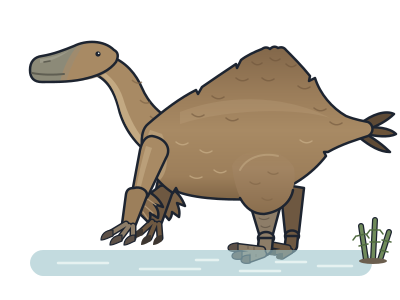
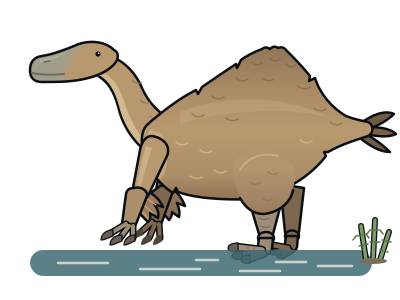
It was about 11 metres long, about the length of a bus, and weighed about 6 tonnes, nearly as much as Tyrannosaurus rex. Tall spines on its backbone made a hump over its hips. It had a long, horse-like head about 1 metre long, ending in a flat, toothless bill like a duck's. Its legs were short and sturdy, so it probably moved slowly.
It lived about 71 to 69 million years ago, among rivers and wetlands. Fish bones and scales found with its stomach contents suggest it ate both plants and animals.
A 'terrible hand'
Its name means 'terrible hand'. Scientists gave it that name in 1970, when the giant arms were almost all anyone had found.
A belly full of stones
More than 1,400 small stones were found in the belly area of one skeleton. Like many birds today, it probably swallowed stones to help grind up its food.
Tooth marks from a tyrannosaur
Two belly ribs from the first find carry bite marks from Tarbosaurus, a relative of T. rex. One fed on the body, but nobody knows whether it hunted the animal or found it already dead.
Next to it on the tree
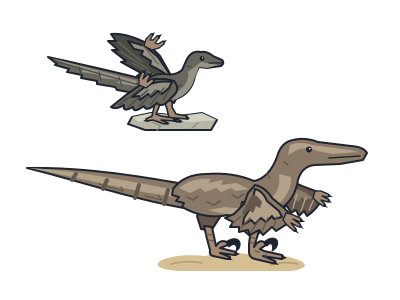
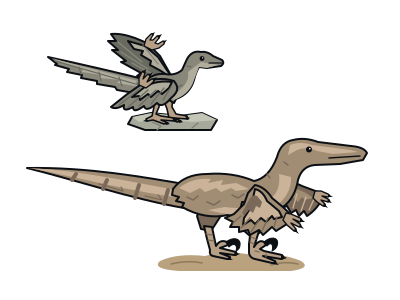
- Raptors and birdsVelociraptor is one of the closest cousins of birds and had feathered arms.
- CompsognathusA chicken-sized hunter; one fossil has a lizard in its stomach.
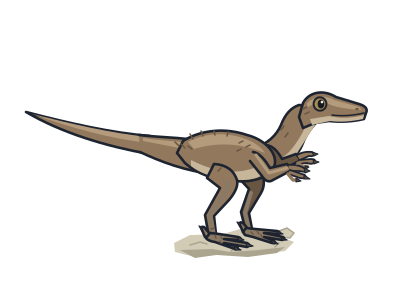
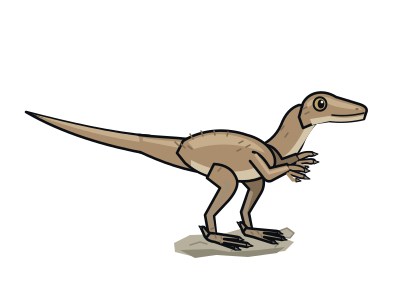
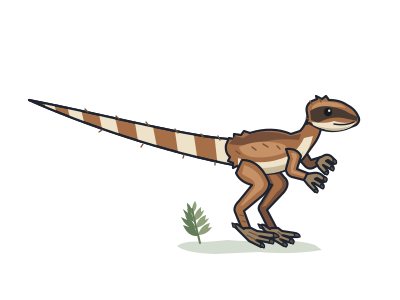
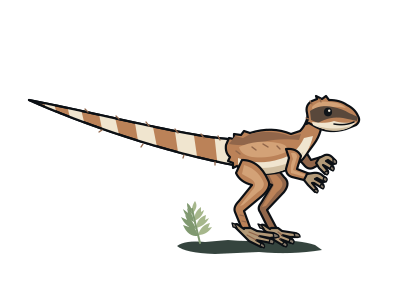
- SinosauropteryxThe first dinosaur found with feathers; its fuzz shows a ginger-and-white striped tail.
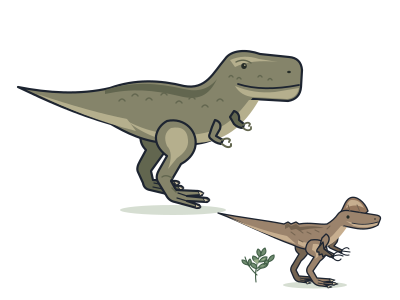
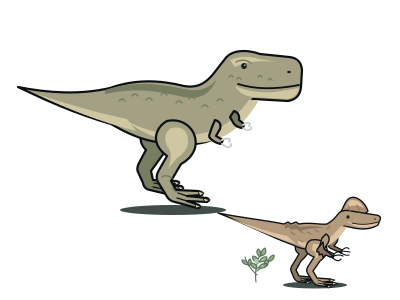
- TyrannosaursTyrannosaurs started small and feathered; giants came only at the very end.
- GallimimusAn ostrich-like dinosaur with a toothless beak, built to sprint.
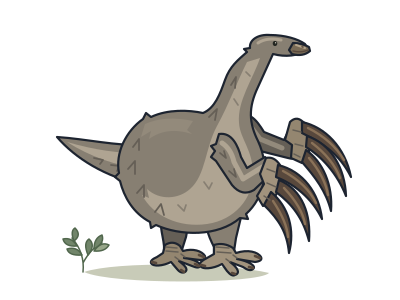
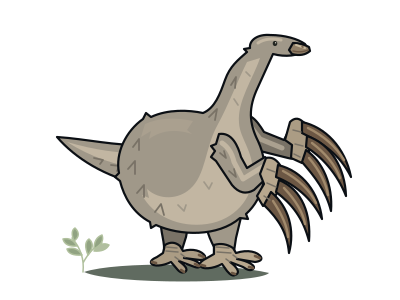
- TherizinosaurusA pot-bellied plant-eating theropod with metre-long claws like scythes.
- OviraptorNamed 'egg thief', but later fossils showed its relatives were sitting on their own nests.