An extinct species
Megalosaurus †
Megalosaurus bucklandii
The dinosaur that started the naming
Lived about 168–166 million years ago.
You and the megalosaurus meet in the Amniotes branch, shown at about 320 million years ago (on 4 December, in a calendar from life's shared ancestor to today).
In 1824, bones from Stonesfield, near Oxford, became the basis for the first formally named non-bird dinosaur. This meat-eater belonged to the two-legged dinosaur group called theropods. Spinosaurus and Baryonyx were relatives, but that did not mean either was descended from it.
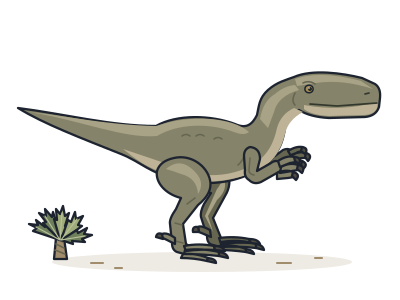
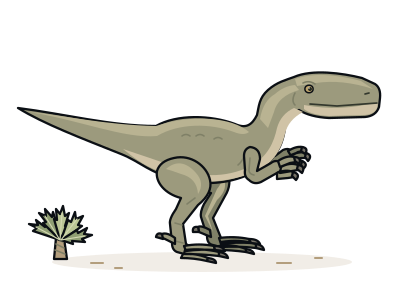
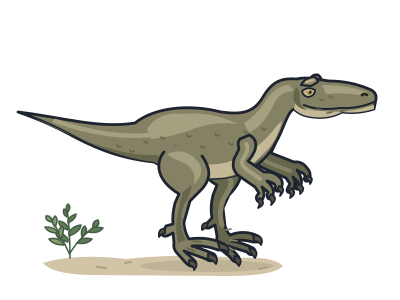
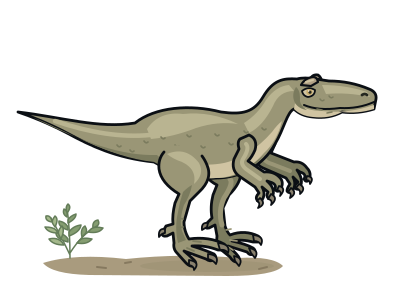
It lived in what is now England about 168 to 166 million years ago. It walked on its hind legs, rather than on all fours as early researchers had imagined. Being named first did not mean it was the first dinosaur to exist.
The fossil evidence was incomplete: no whole skeleton had been found. Researchers pieced together its appearance from separate bones and comparisons with related dinosaurs. Its roughly horizontal body and raised tail were parts of that reconstruction, rather than an outline preserved from head to tail.
A misleading name
Its name meant ‘great lizard’, although it was not a true lizard.
An artist behind the discovery
Naturalist and illustrator Mary Morland helped with the description and drew the famous lower jaw.
Named before dinosaurs
The word ‘dinosaur’ did not exist in 1824. Richard Owen introduced the group name Dinosauria in 1842.
Next to it on the tree
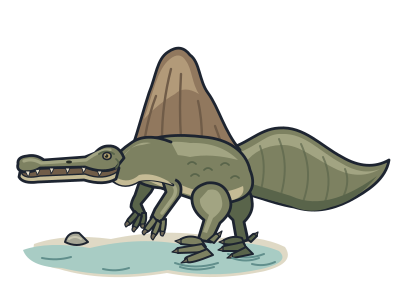
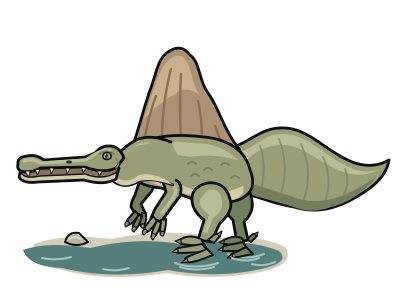
- SpinosaurusA sail-backed river hunter longer than T. rex that probably fished like a heron.
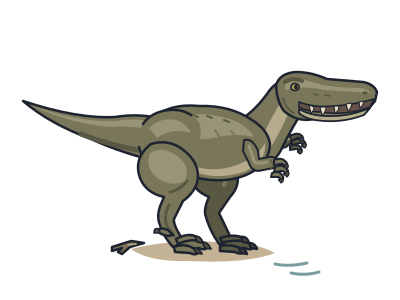
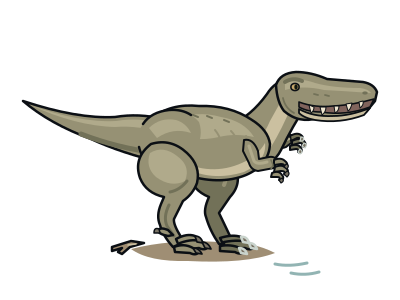
- AllosaurusThe top predator of the Jurassic, millions of years before T. rex.
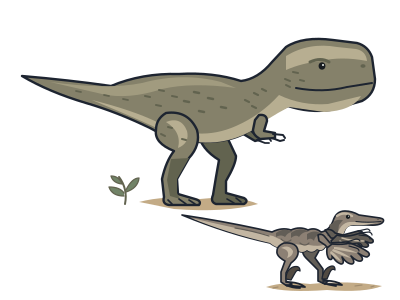
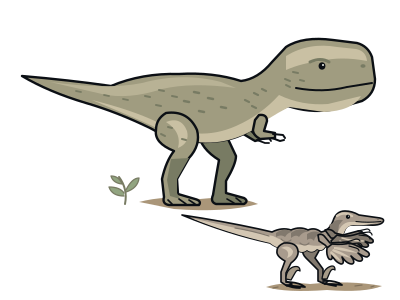
- Feathered theropodsFeathers spread through this group long before any of them flew.
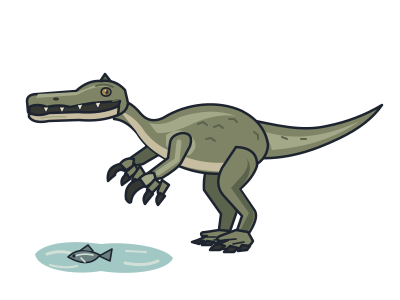
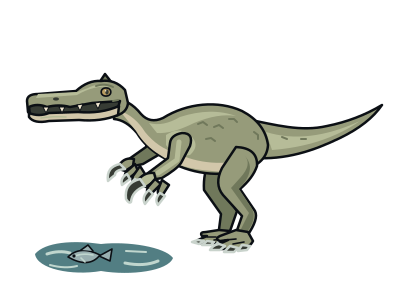
- BaryonyxA fish-eater with a huge thumb claw, found with fish scales in its stomach.
- GiganotosaurusA South American predator as big as T. rex, but with a narrower, blade-toothed skull.
- CarcharodontosaurusA giant African predator named for its shark-like, blade-shaped teeth.