An extinct species
Giganotosaurus †
Giganotosaurus carolinii
A South American giant with blade-like teeth
Lived about 99–97 million years ago.
You and the giganotosaurus meet in the Amniotes branch, shown at about 320 million years ago (on 4 December, in a calendar from life's shared ancestor to today).
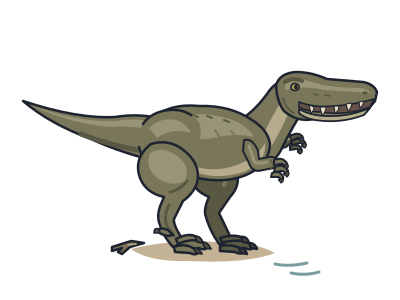
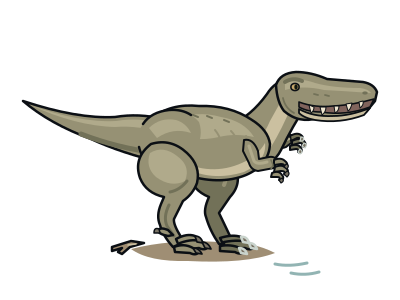
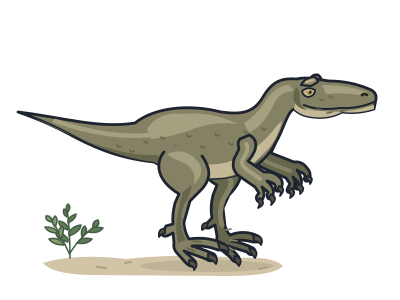
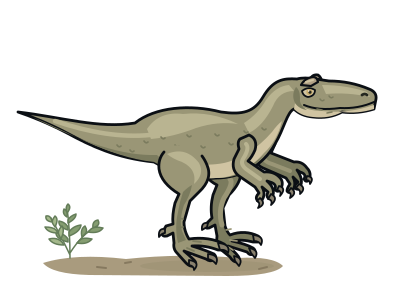
This South American predator rivalled T. rex in length, but its head was built differently. Reconstructed skulls suggested a proportionally narrower, less heavily built shape, armed with blade-like teeth. Despite the resemblance, it was not a kind of T. rex. It belonged to the allosaur branch instead, making Allosaurus a useful family connection among its neighbours on this tree.
It lived in what became Patagonia, Argentina, traditionally placed at about 99 to 97 million years ago. Its long teeth had tiny saw-like edges, suited to slicing. Those teeth were evidence of a meat-eater, but they did not reveal exactly which animals it hunted or how it hunted them.
It walked on two powerful hind legs. Reconstructions gave it two much smaller arms. Museum skeletons helped show its enormous shape, but they were not complete fossil discoveries. Missing bones had to be reconstructed to fill the gaps.
A discovery in 1993
Fossil hunter Rubén Carolini discovered the first specimen in 1993.
A southern name
Its name meant “giant southern lizard”, referring to its size and southern discovery location.
Bony brows
Bony ridges rose above its eyes.
Next to it on the tree
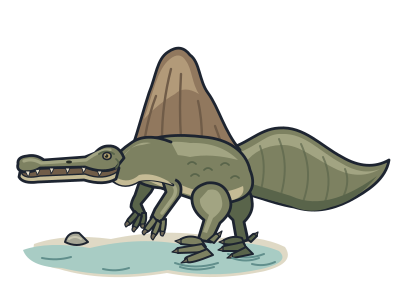
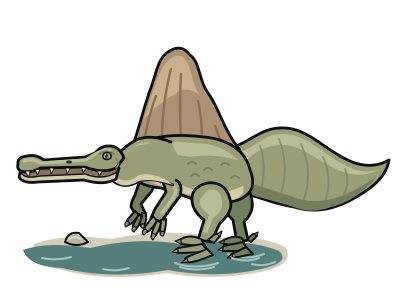
- SpinosaurusA sail-backed river hunter longer than T. rex that probably fished like a heron.
- AllosaurusThe top predator of the Jurassic, millions of years before T. rex.
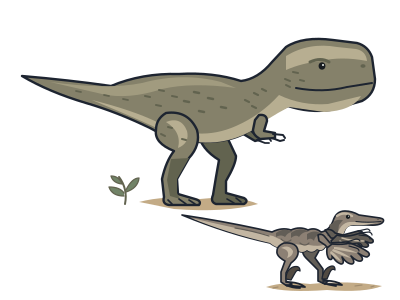
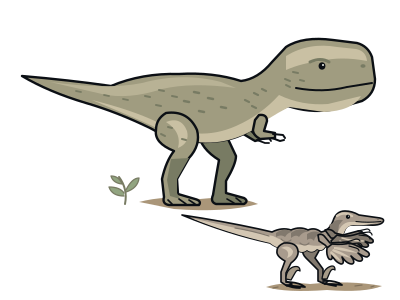
- Feathered theropodsFeathers spread through this group long before any of them flew.
- MegalosaurusThe first dinosaur ever named, in 1824, from bones found near Oxford.
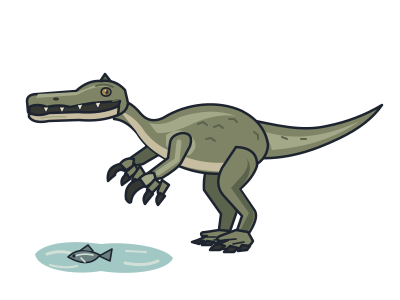
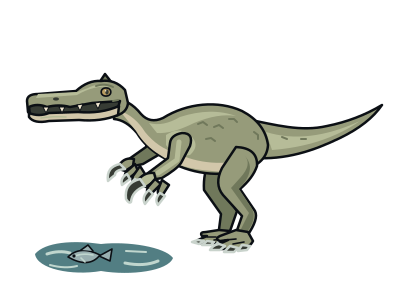
- BaryonyxA fish-eater with a huge thumb claw, found with fish scales in its stomach.
- CarcharodontosaurusA giant African predator named for its shark-like, blade-shaped teeth.