An extinct species
Spinosaurus †
Spinosaurus aegyptiacus
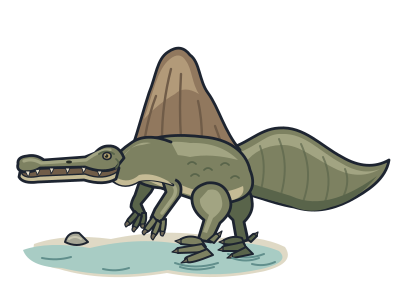
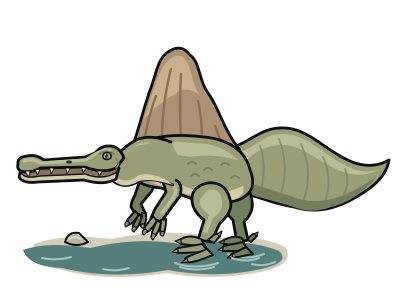
A sail-backed river hunter longer than T. rex
Lived about 99–93 million years ago.
You and the spinosaurus meet in the Amniotes branch, shown at about 320 million years ago (on 4 December, in a calendar from life's shared ancestor to today).
This sail-backed river hunter was estimated at about 14 metres long—about the length of a large bus, and longer than the roughly 12-metre T. rex called SUE. That did not mean it was heavier. It lived about 99 to 93 million years ago, around northern Africa’s waterways.
Despite its crocodile-like snout, it belonged to the theropods, the dinosaur branch that included many meat-eaters. Baryonyx, nearby on this tree, was a close relative. Both belonged to the same dinosaur family and had long, narrow jaws, unlike those of many other predatory dinosaurs.
Its fossil teeth were cone-shaped and suited to gripping slippery prey such as fish. Its surroundings included rivers and coastal plains, with large fish in the water. Fossil bones from its back had tall upward extensions that supported its striking sail. Those bones were direct evidence; the tissue joining them had to be reconstructed.
Short back legs
Its hind legs were unusually short in proportion to its body, unlike those in many older reconstructions.
A name from its backbone
Its name meant ‘spine lizard’. Ernst Stromer named it in 1915.
Nostrils set back
Its small nostril openings sat farther back than the tip of its snout.
Next to it on the tree
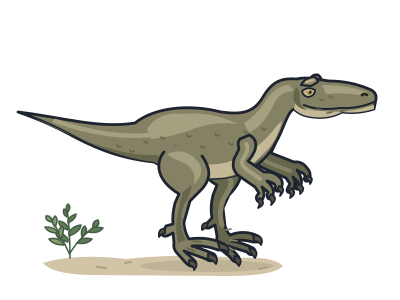
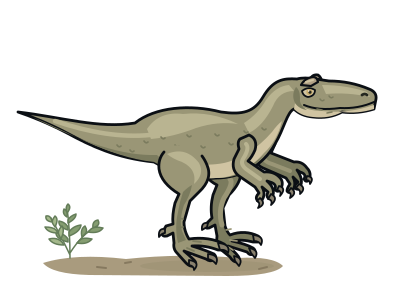
- AllosaurusThe top predator of the Jurassic, millions of years before T. rex.
- Feathered theropodsFeathers spread through this group long before any of them flew.
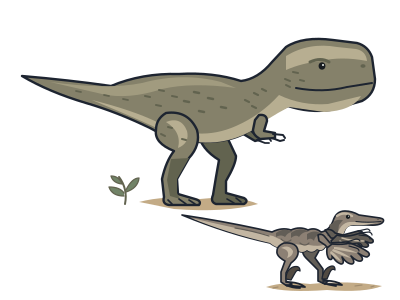
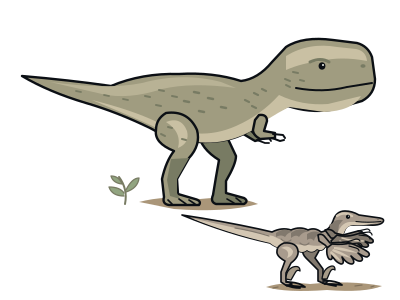
- MegalosaurusThe first dinosaur ever named, in 1824, from bones found near Oxford.
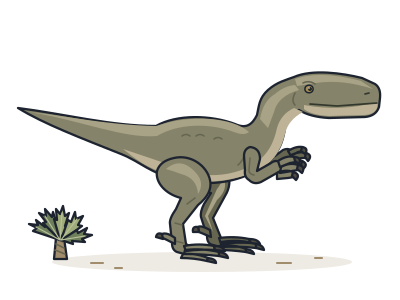
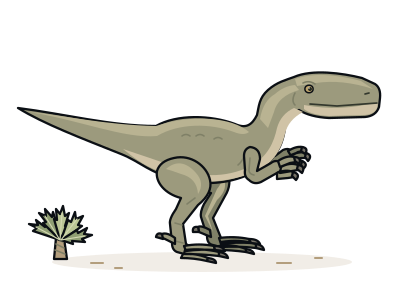
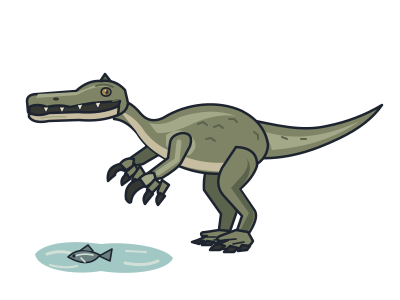
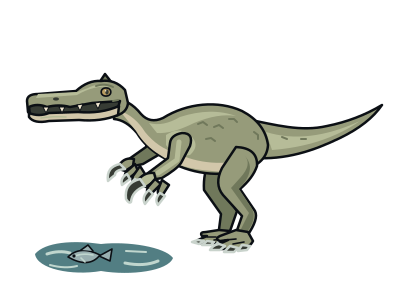
- BaryonyxA fish-eater with a huge thumb claw, found with fish scales in its stomach.
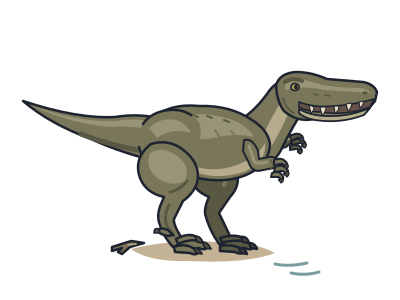
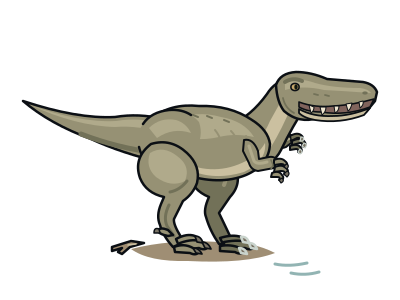
- GiganotosaurusA South American predator as big as T. rex, but with a narrower, blade-toothed skull.
- CarcharodontosaurusA giant African predator named for its shark-like, blade-shaped teeth.