An extinct species
Oviraptor †
Oviraptor philoceratops
An ‘egg thief’ whose relatives told a different story.
Lived about 75–71 million years ago.
You and the oviraptor meet in the Amniotes branch, shown at about 320 million years ago (on 4 December, in a calendar from life's shared ancestor to today).
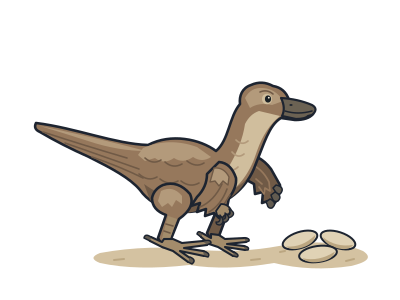
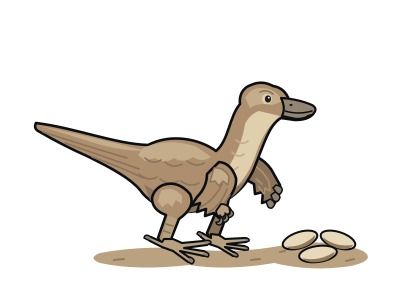
Its name meant ‘egg thief’, but later fossils of its relatives told a different story. The first skeleton lay above eggs thought to belong to another dinosaur. Then fossils of its relative Citipati showed adults sitting over nests, with their arms spread around the eggs. Scientists interpreted these poses as nest care, much like that of living birds. Those nesting adults were relatives, not this exact species.
It lived about 75 to 71 million years ago in what is now southern Mongolia. The rocks holding its fossils recorded a landscape of sand dunes, occasional water flows and shallow ponds. The dates were approximate: the age of those rocks was not settled precisely.
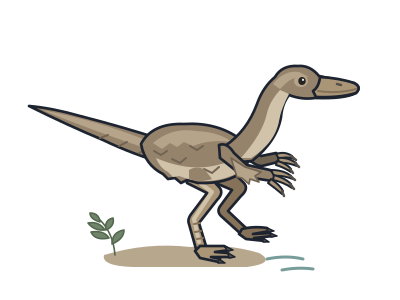
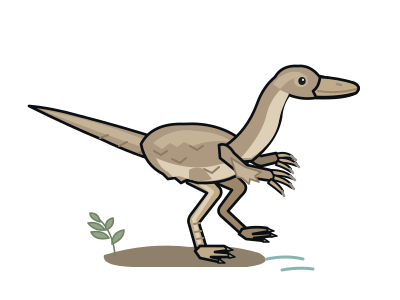
This bird-related dinosaur walked on two legs. Museum estimates put its length at about 1.8 to 2 metres, including its tail—roughly the length of a bed. Its family’s nesting fossils changed the egg-thief story, but did not establish exactly what it ate.
A beak without teeth
It had a toothless beak with curved upper and lower jaws.
A lightweight dinosaur
One museum estimate put its weight at about 20 kilograms.
Named in 1924
Henry Fairfield Osborn formally named it in 1924.
Next to it on the tree
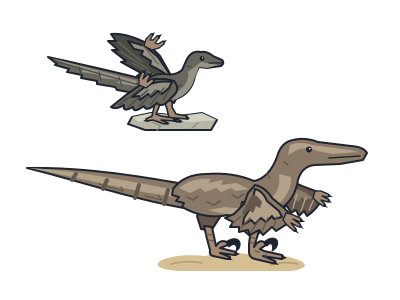
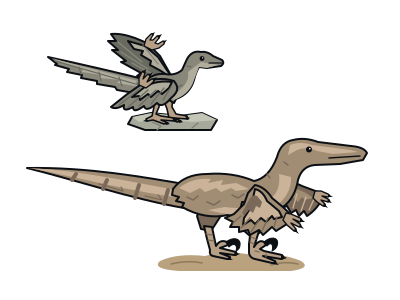
- Raptors and birdsVelociraptor is one of the closest cousins of birds and had feathered arms.
- CompsognathusA chicken-sized hunter; one fossil has a lizard in its stomach.
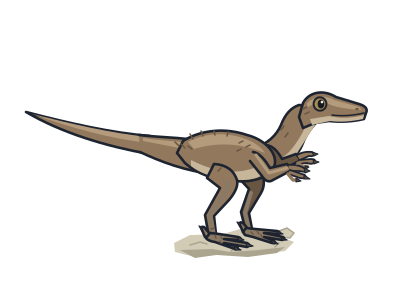
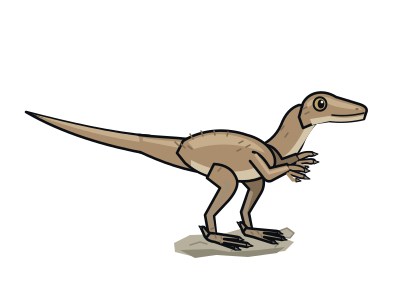
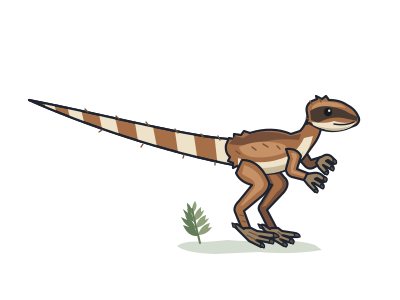
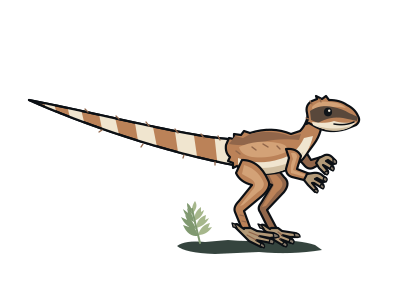
- SinosauropteryxThe first dinosaur found with feathers; its fuzz shows a ginger-and-white striped tail.
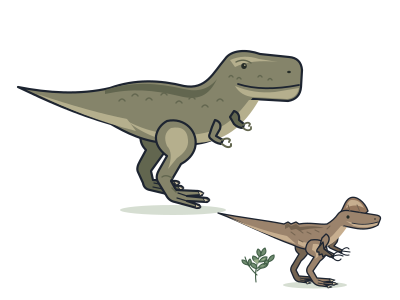
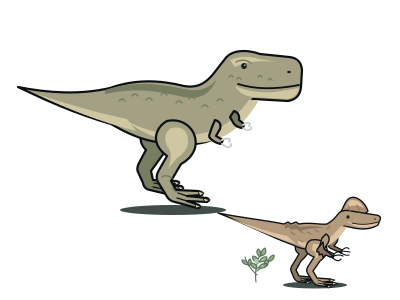
- TyrannosaursTyrannosaurs started small and feathered; giants came only at the very end.
- GallimimusAn ostrich-like dinosaur with a toothless beak, built to sprint.
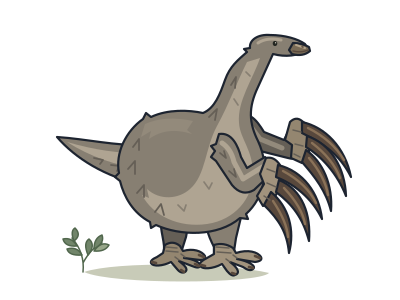
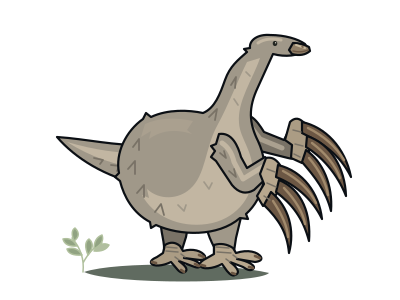
- TherizinosaurusA pot-bellied plant-eating theropod with metre-long claws like scythes.
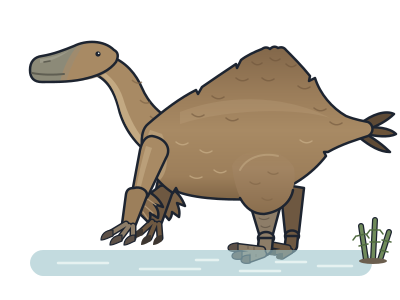
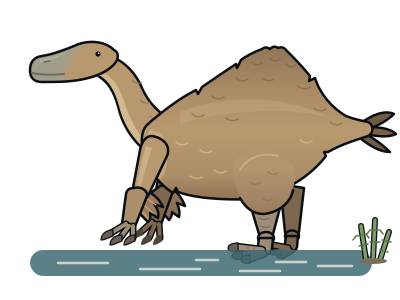
- DeinocheirusKnown for decades only from giant arms, it turned out to be a humpbacked, duck-billed ostrich dinosaur.