An extinct species
Anchiornis †
Anchiornis huxleyi
A fluffy dinosaur whose fossil feathers revealed a colourful past
Lived about 161–160 million years ago.
You and the anchiornis meet in the Amniotes branch, shown at about 320 million years ago (on 4 December, in a calendar from life's shared ancestor to today).
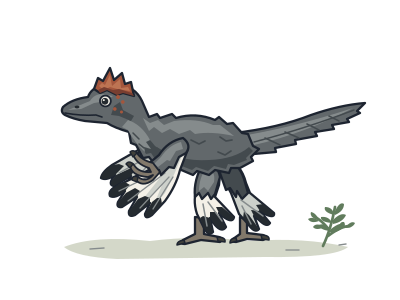
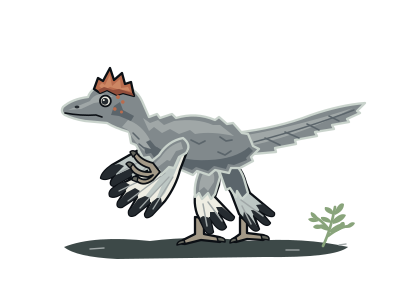
A grey coat and rusty-red crest made the famous reconstruction of this little bird relative stand out. In 2010, it became the first non-bird dinosaur whose feather colours were reconstructed across its body, rather than just a small patch. Scientists inferred the colours by comparing tiny colour-bearing structures in fossil feathers with those in living birds. The fossil did not preserve bright feathers with their colours unchanged.
It lived in what is now northeastern China about 161 to 160 million years ago. It belonged to the dinosaur group that included both birds and raptors such as Velociraptor. Its feathers made that family connection especially clear, but its coat was not sleek: loosely branched body feathers would have given it a fluffy, shaggy outline.
Fossils showed long feathers on both arms and both legs, giving it the appearance of four wings. These were still just four limbs, not wings plus extra legs. In the famous colour reconstruction, its long limb feathers were white with bold black tips.
A toothed mouth
Unlike living birds, it had many small, curved teeth.
Clues from meals
Fossilised food pellets contained lizard bones and fish scales, evidence that it ate small animals.
A fitting name
Its name meant ‘near bird’. It was formally named in 2009.
Next to it on the tree
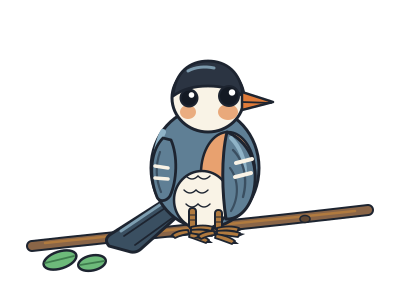
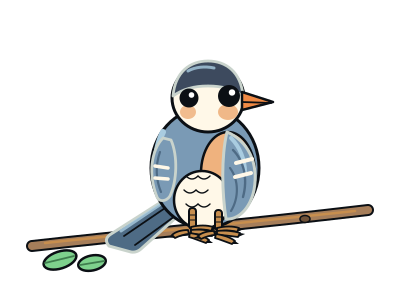
- BirdsThe dinosaurs that survived the asteroid; feathers came before flight.
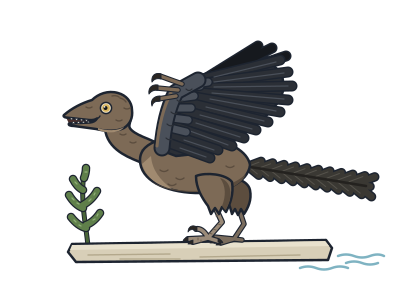
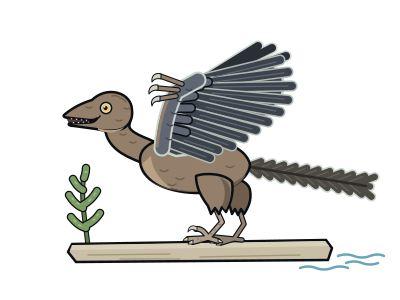
- ArchaeopteryxHalf bird, half dinosaur: feathered wings, but also teeth, claws and a bony tail.
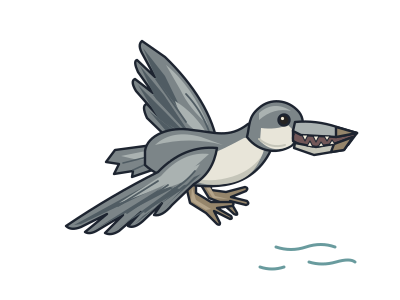
- IchthyornisA seabird with a modern wing and a beak still full of teeth.
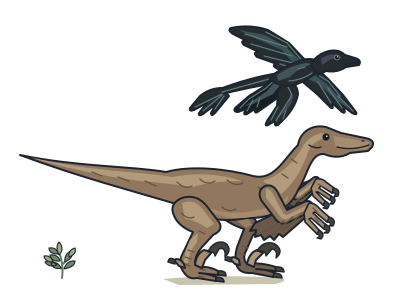
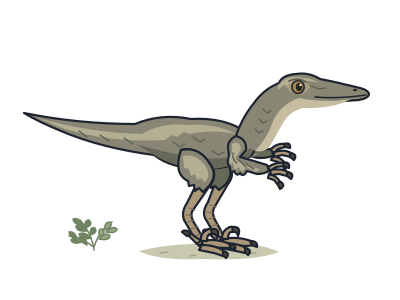
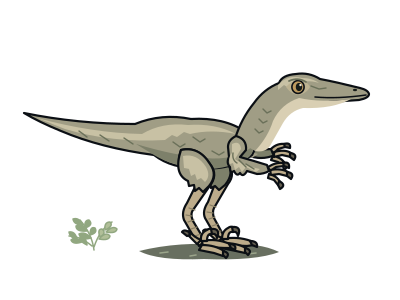
- RaptorsSickle-clawed, feathered hunters, from crow-sized gliders to five-metre giants.
- TroodonA big-eyed, big-brained hunter, once nicknamed the smartest dinosaur.
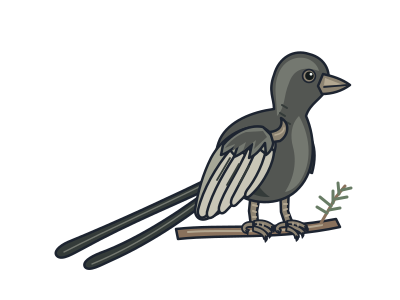
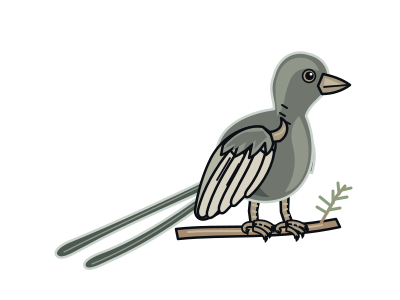
- ConfuciusornisOne of the first birds with a toothless beak, known from thousands of fossils.
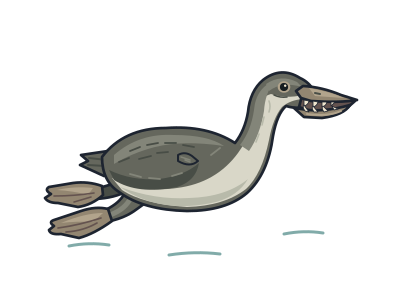
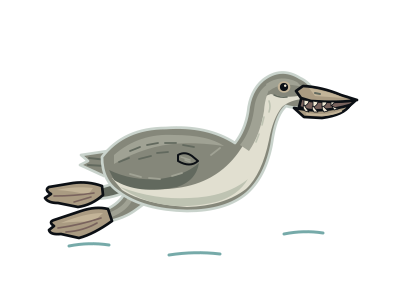
- HesperornisA flightless, toothed diving bird of Cretaceous seas, with tiny stub wings.