An extinct species
Confuciusornis †
Confuciusornis sanctus
An early toothless bird, preserved in thousands of fossils
Lived about 125–120 million years ago.
You and the confuciusornis meet in the Amniotes branch, shown at about 320 million years ago (on 4 December, in a calendar from life's shared ancestor to today).
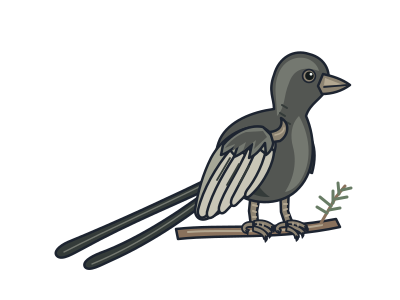
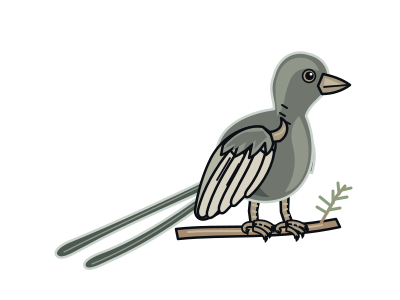
It was one of the first birds with a toothless beak, known from thousands of fossils. This roughly crow-sized bird lived about 125 to 120 million years ago. Its compact body was covered in feathers, much like the bodies of living birds.
Yet its familiar-looking beak hid a surprising family story. It belonged to an early branch outside the group formed by living birds, their closest shared ancestor and all its descendants. Its toothless beak evolved separately from theirs. Several branches closer to living birds still had teeth, so losing teeth was not a single step that all birds took together.
Some fossils preserved two exceptionally long tail feathers, trailing behind the body like ribbons. Others lacked these streamers. It lacked the broad feathered tail fan seen in many living birds.
Whole skeletons
Hundreds of complete skeletons were found. Some also preserved impressions of soft tissues.
A rarely preserved covering
A study of about 600 fossil birds from its wider group found visible traces of the beak’s outer covering in only two.
Patient preparation
Preparing Vienna’s specimen from its rock slab took more than 500 hours.
Next to it on the tree
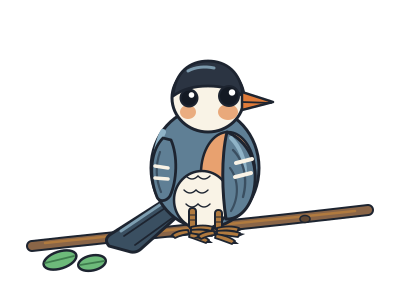
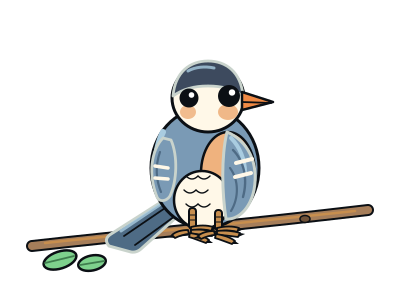
- BirdsThe dinosaurs that survived the asteroid; feathers came before flight.
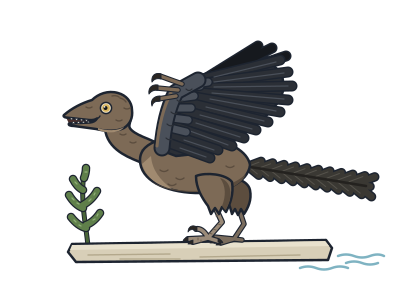
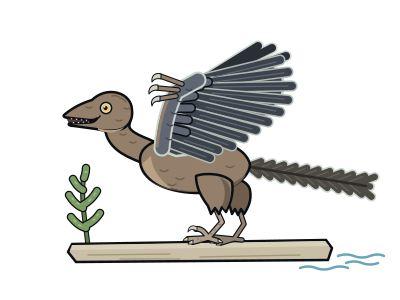
- ArchaeopteryxHalf bird, half dinosaur: feathered wings, but also teeth, claws and a bony tail.
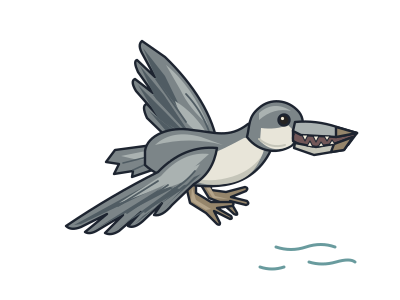
- IchthyornisA seabird with a modern wing and a beak still full of teeth.
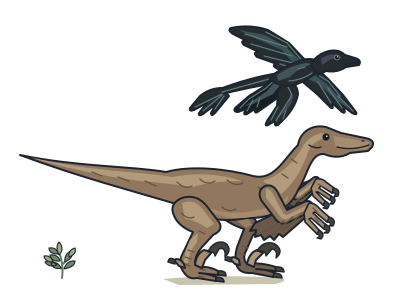
- RaptorsSickle-clawed, feathered hunters, from crow-sized gliders to five-metre giants.
- TroodonA big-eyed, big-brained hunter, once nicknamed the smartest dinosaur.
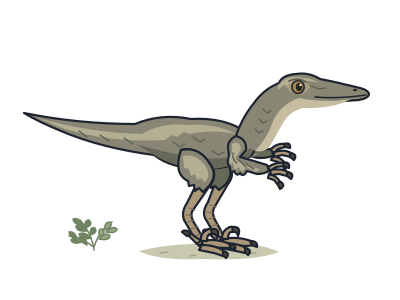
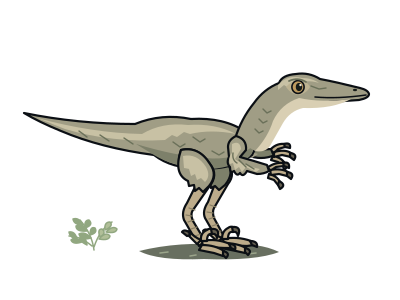
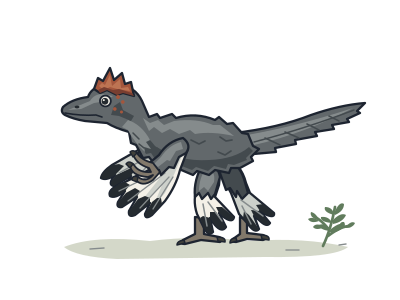
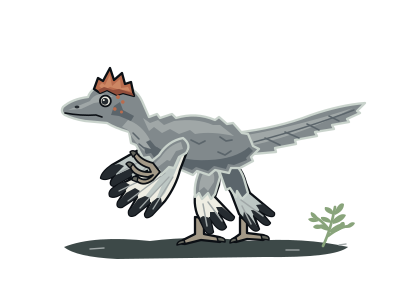
- AnchiornisThe first dinosaur whose whole colour pattern was worked out: grey with a red crest.
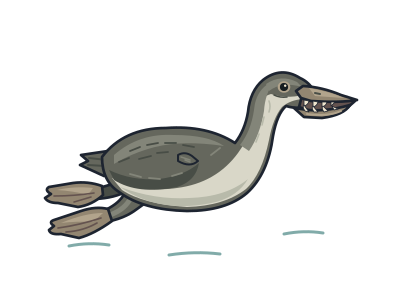
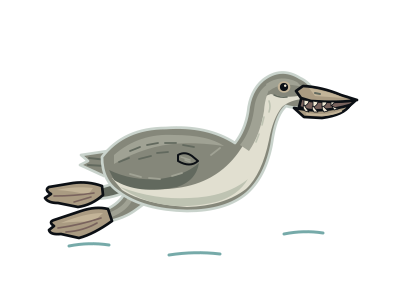
- HesperornisA flightless, toothed diving bird of Cretaceous seas, with tiny stub wings.