A species
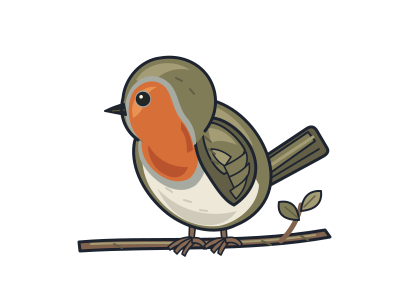
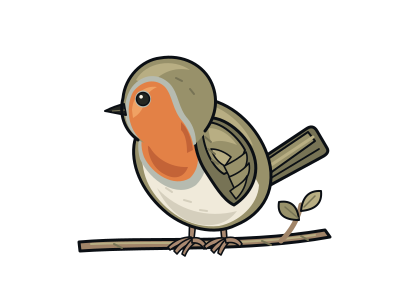
European robin
Erithacus rubecula
A small bird with a compass linked to its eyes.
You and the european robin meet in the Amniotes branch, shown at about 320 million years ago (on 4 December, in a calendar from life's shared ancestor to today).
The European robin finds its way with a magnetic compass linked to its eyes. It uses Earth's magnetic field to help choose a direction, and experiments connect this ability with vision. Scientists are still working out exactly how the compass works inside a living bird.
This unusual navigator belongs to the perching birds, in the Old World flycatcher family. Despite its name, the American robin belongs to a different family: the thrushes. The two birds share a name because of their similar orange breasts, not because they are particularly close relatives.
In much of continental Europe, robins live among dense plants in damp, shady woodland. In Britain and Ireland, they are especially familiar garden birds. A robin following a gardener may seem friendly, but there is a practical reason for staying nearby: digging uncovers worms and insects to eat.
Winter boundaries
Both males and females defend their own patches in winter, singing and chasing away intruders.
Unexpected nest sites
Robins sometimes nest in sheltered plant pots, old boots or on shelves.
A changing menu
Summer food is mainly small ground-dwelling animals without backbones. Robins also eat seeds and berries in winter.
Next to it on the tree
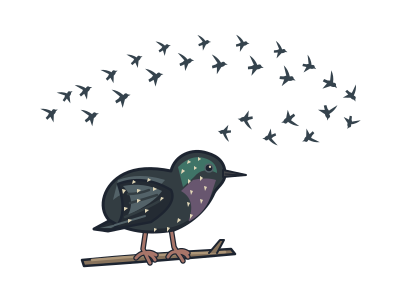
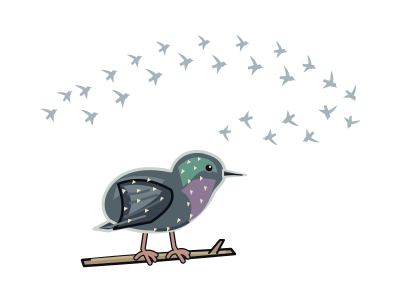
- Common starlingGathers in huge swirling flocks called murmurations.
- American robinA red-breasted thrush named after Europe's robin by homesick settlers; it is really a thrush.
- Common blackbirdCity blackbirds sing earlier, louder and higher than forest ones to beat the noise.
- Common nightingaleA plain brown bird with a famous night song of more than 200 phrases.
- Northern mockingbirdCopies the songs of dozens of other birds, as well as car alarms and squeaky gates.
- White-throated dipperA songbird that walks underwater along stream beds to hunt insect larvae.