A species
Common starling
Sturnus vulgaris
Thousands of birds, one swirling sky
You and the common starling meet in the Amniotes branch, shown at about 320 million years ago (on 4 December, in a calendar from life's shared ancestor to today).
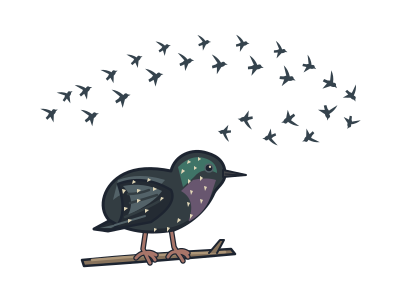
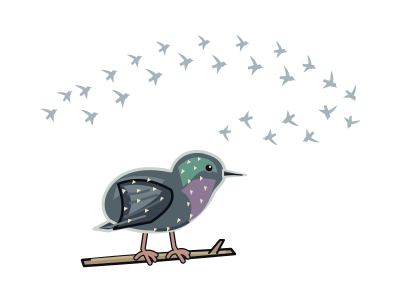
Thousands of common starlings can gather in swirling flocks called murmurations. Around sunset in autumn and winter, their changing shapes ripple across the sky. A change of speed or direction spreads through neighbouring birds, creating waves across the flock. These gatherings often happen just before the birds settle together to sleep.
Each tiny shape belongs to a songbird on the same broad perching-bird branch as sparrows and ravens. The common myna is a closer family connection: it belongs to the starling family too. Seen nearby, an adult starling is far from plain black. Its feathers shine green and purple, and its short tail and pointed wings help you recognise its outline.
Some starlings stay in the UK all year, while autumn arrivals from mainland Europe swell the winter flocks. In Australia, the story is different. People introduced common starlings between the late 1850s and 1870. Today they are familiar around settlements in the east and south-east.
A borrowed songbook
An individual can learn calls from as many as about 20 other bird species.
Spots that wear away
Fresh autumn feathers have pale tips. As these wear away, the bird becomes darker and glossier without replacing those feathers in spring.
Shared parenting
Both parents keep the pale blue eggs warm and help raise the chicks.
Next to it on the tree
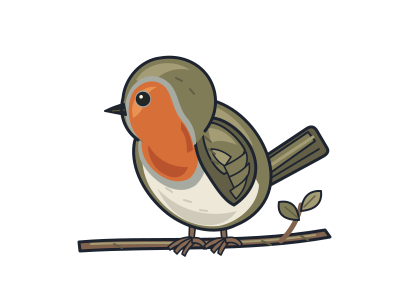
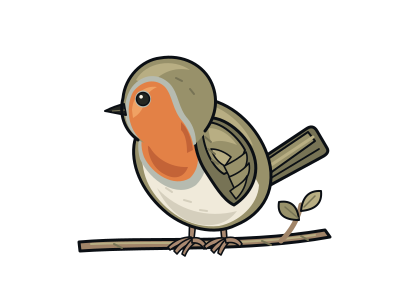
- European robinSenses Earth's magnetic field with its eyes to find its way.
- American robinA red-breasted thrush named after Europe's robin by homesick settlers; it is really a thrush.
- Common blackbirdCity blackbirds sing earlier, louder and higher than forest ones to beat the noise.
- Common nightingaleA plain brown bird with a famous night song of more than 200 phrases.
- Northern mockingbirdCopies the songs of dozens of other birds, as well as car alarms and squeaky gates.
- White-throated dipperA songbird that walks underwater along stream beds to hunt insect larvae.